
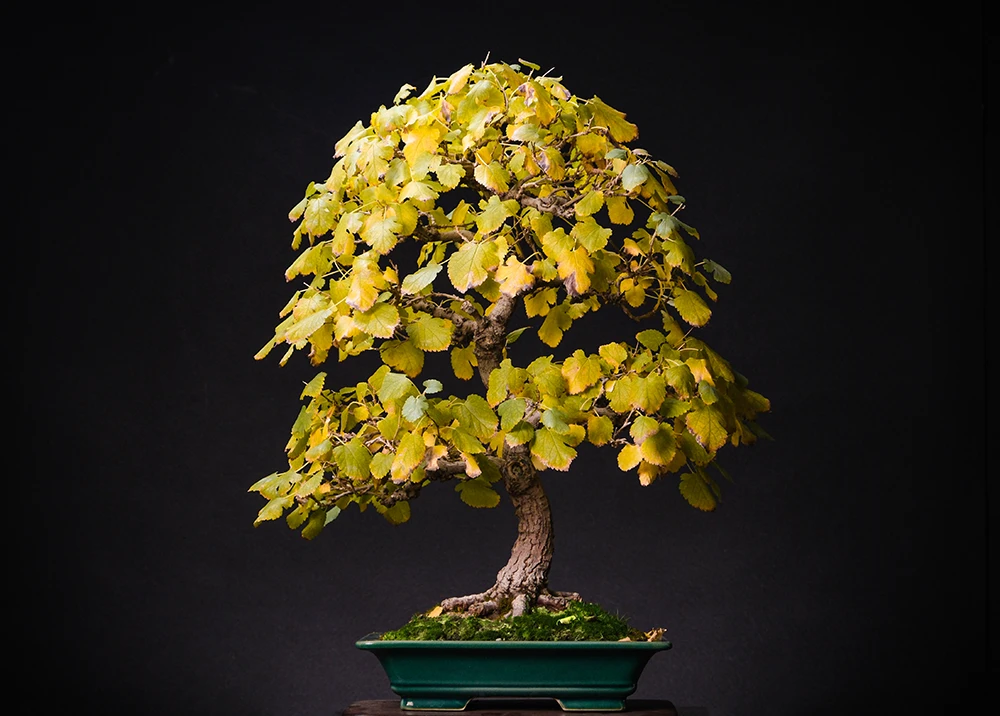
This bonsai is my first work; work on it began in 1990. It was grown from a mulberry seed that I found on the Vake-Saburtalo road and then planted. Starting work on a tree in this manner is considered a long and laborious process in the art of bonsai. During the initial stages of shaping and while studying the culture, this mulberry underwent several radical structural changes before reaching its final form.
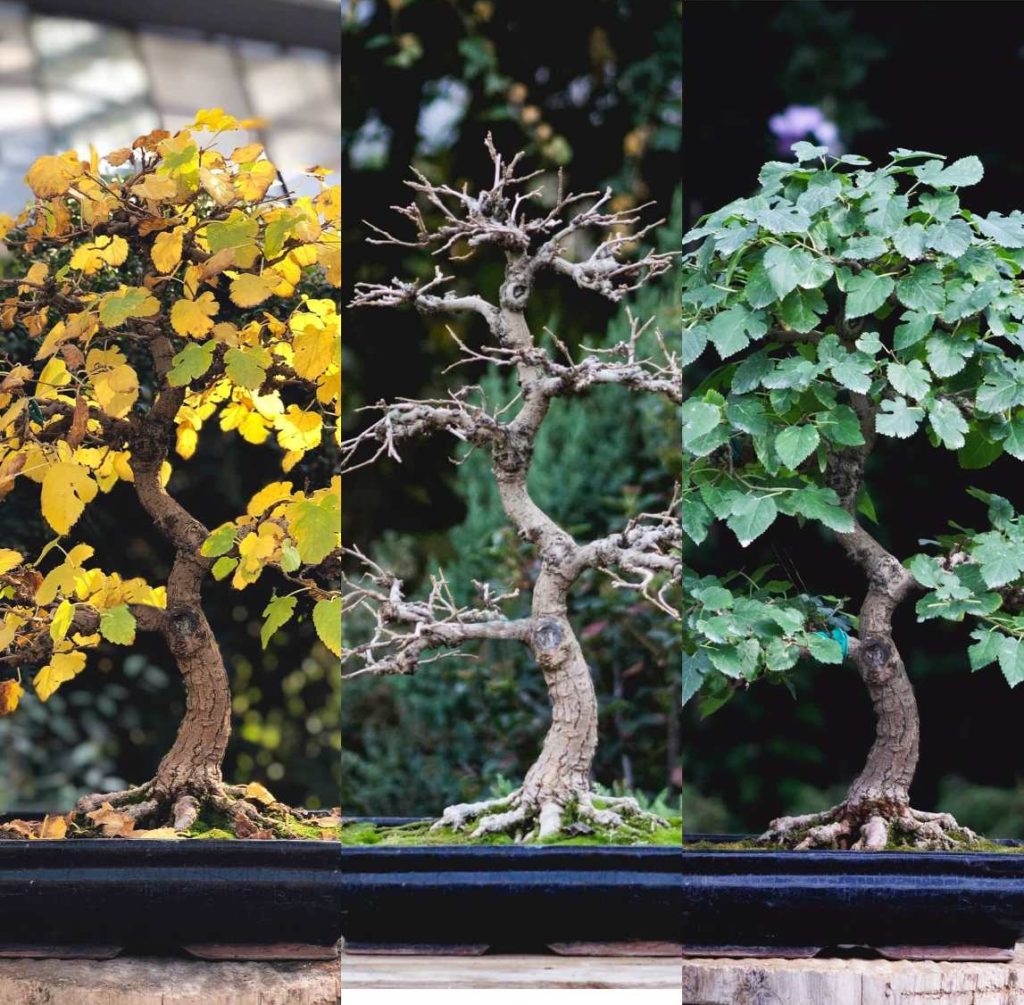
This mulberry is created in the Moyogi (模様木) style. Characteristic of this style are one or more curves in the trunk, where each subsequent bend proportionally diminishes toward the apex. According to the Moyogi rule, the apex of the tree is located on the central axis, perpendicular to the base of the bonsai trunk, which ensures the visual balance of the composition.
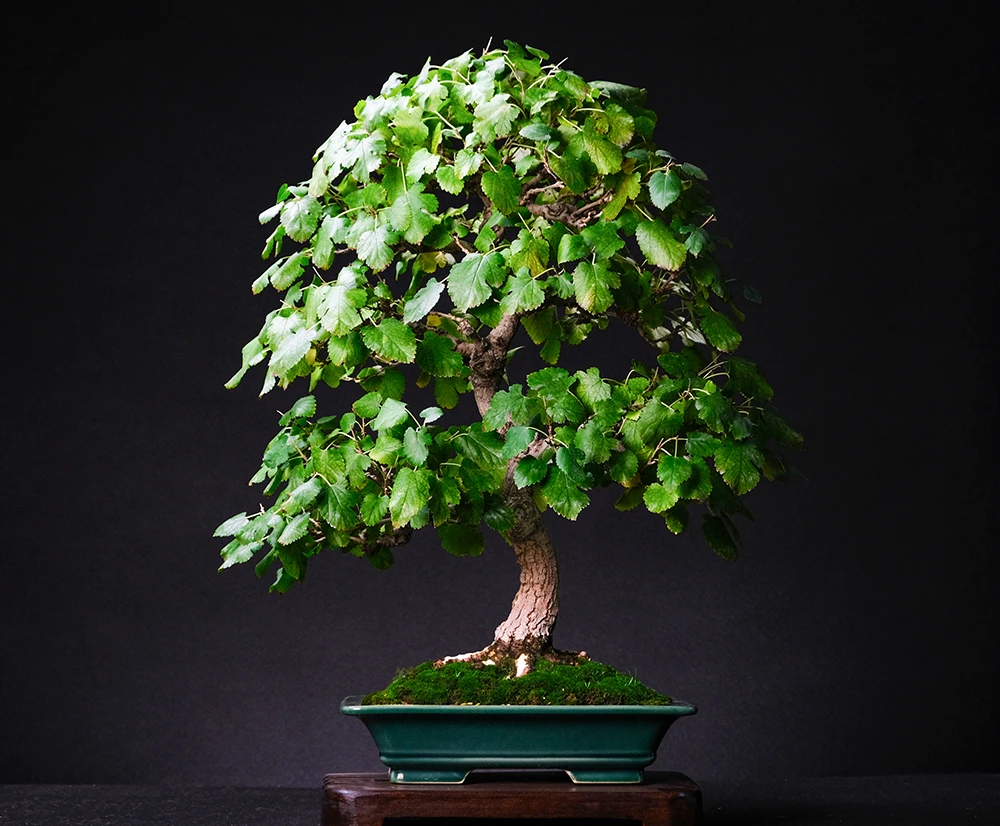
The mulberry is a resilient and fast-growing tree; it is pliable during shaping, pruning, and leaf trimming, which allows for a significant reduction in leaf size over the years. Its botanical characteristics make it possible to create a beautiful bonsai of any size.
The visual appearance of a bonsai is very important during the winter period as well. After the leaves fall, the tree's structure becomes visible — the arrangement and placement of the branches, which is what the bonsai specialist works on for years.
 EN
EN  KA
KA