Japanese maple
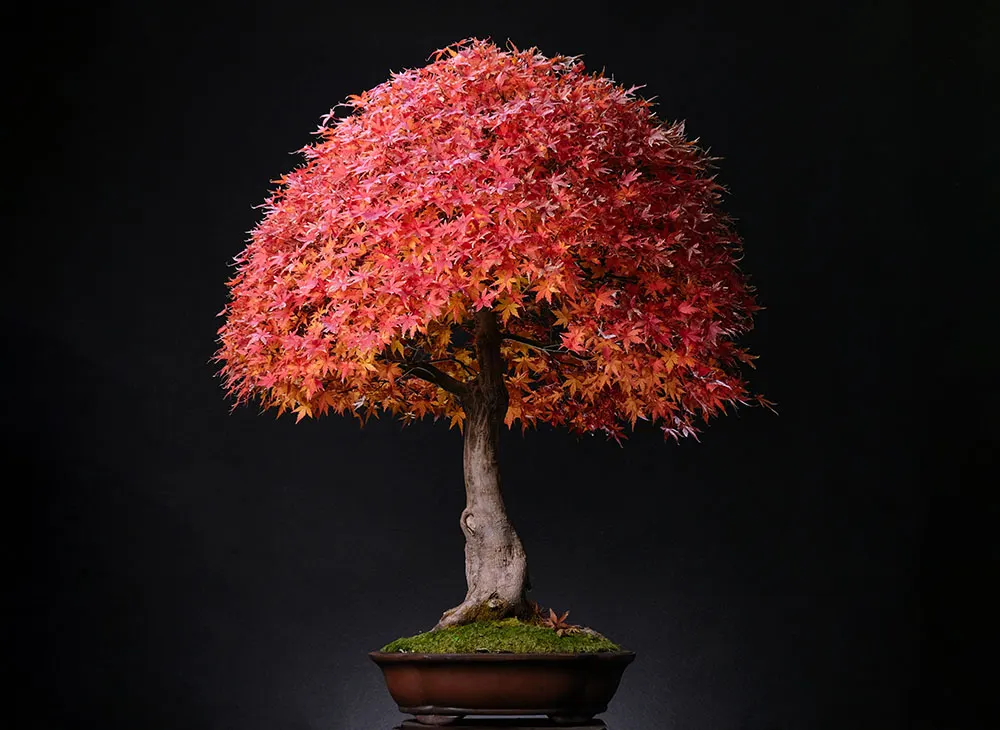
Work on this maple began in 2013–2014. It is styled in the Hokidachi (箒立ち), or broom, style. The tree itself is about 30–35 years old. During its styling the tree was moved to a new container (pot) several times, which was necessary for the proper development of the root system and to preserve the tree’s overall proportions.
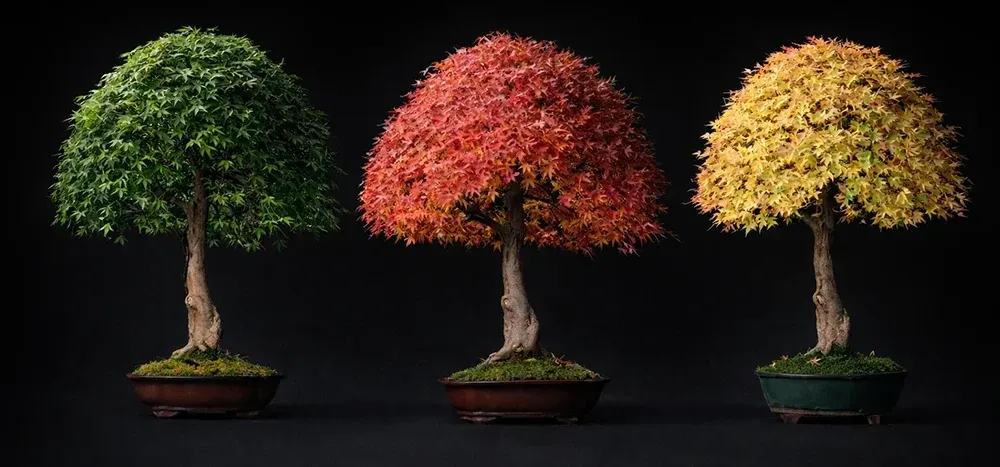
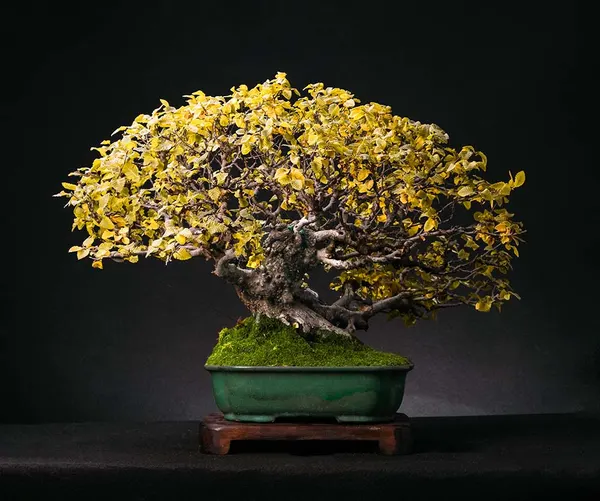
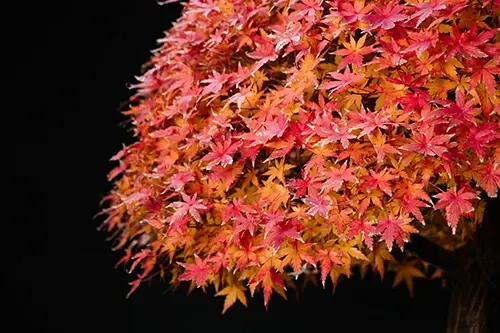
Japanese maple is considered one of the classic species in bonsai for its small leaves and beautiful branching. The tree responds well to styling, but it needs attention when it comes to humidity and placement. In autumn, the color of the leaves depends directly on the intensity of the sunlight. In direct light the leaves turn a vivid red, while leaves that develop in shade take on a bright yellow. This means the tree’s appearance can vary with its growing conditions.
A bonsai’s appearance matters a great deal in winter too. Once the leaves have fallen, the tree’s structure becomes visible – the arrangement and placement of the branches, which a bonsai artist works on for years.