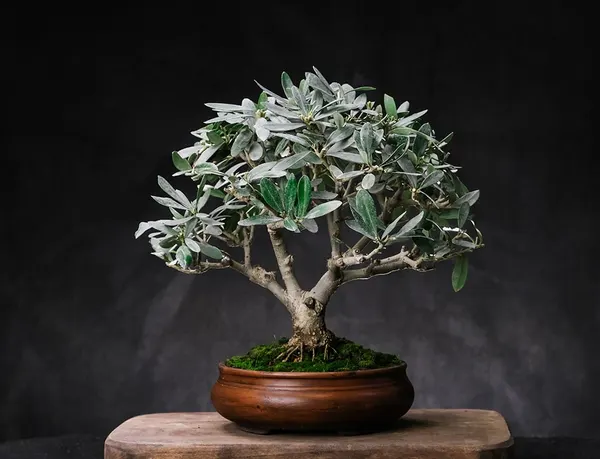
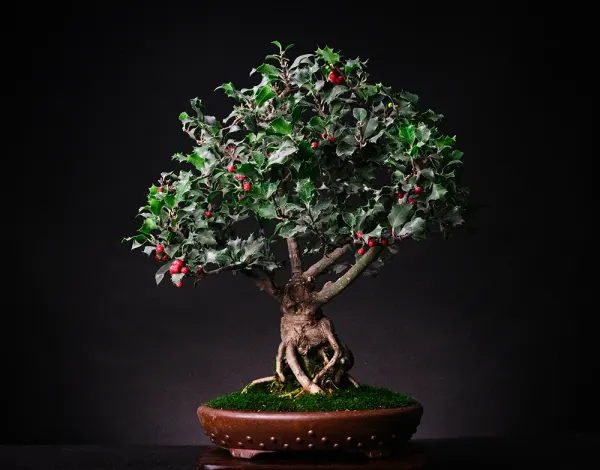
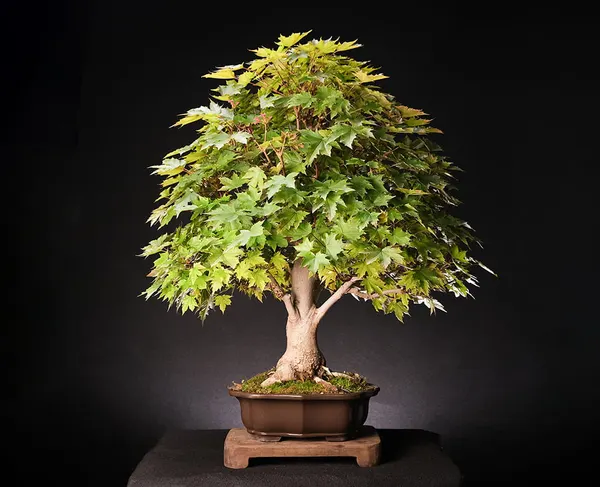
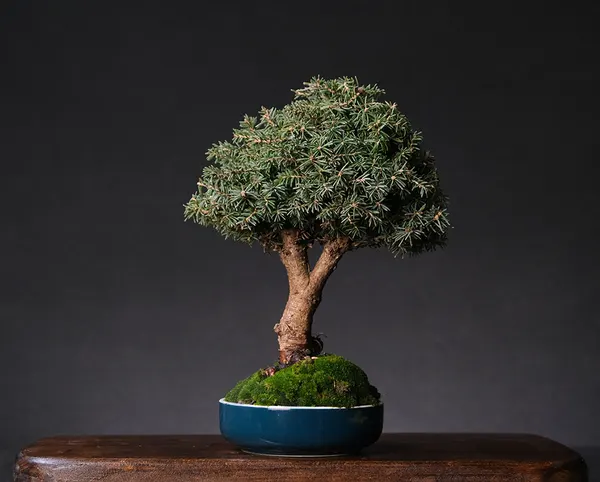
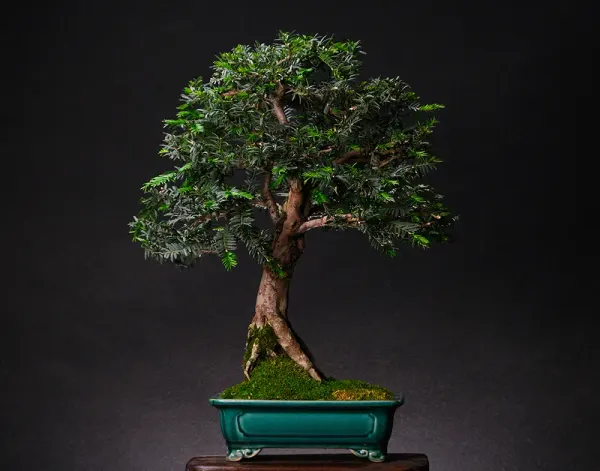
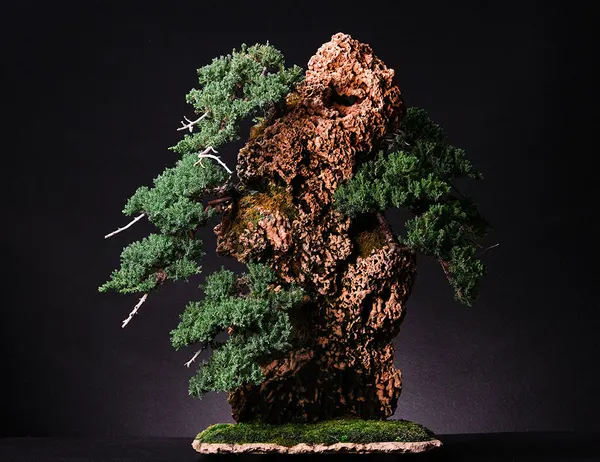
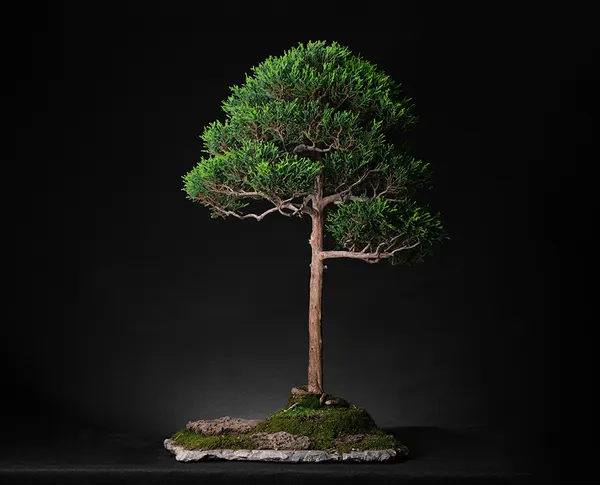
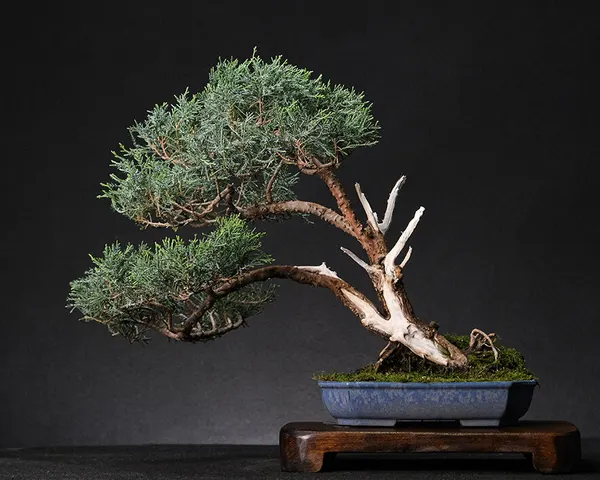
Bonsai aesthetics
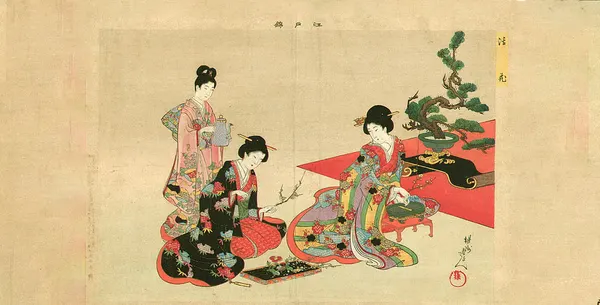
A distinctive way of life, traditional painting, gardening, philosophy and probably many other factors laid the foundation for bonsai to develop as one of the art forms of Japanese culture.
China has a centuries-old tradition of growing miniature trees in pots, and bonsai culture most likely “originates” there; a similar art exists in Korea as well. But the aesthetics and popularity of modern bonsai are undoubtedly tied to the Land of the Rising Sun. Although certain “variations” have emerged around the world, on every continent, the influence of the Japanese masters’ tradition can still be felt everywhere and in everything. And in my opinion, the most important thing the Japanese created in this culture is the bonsai styles.
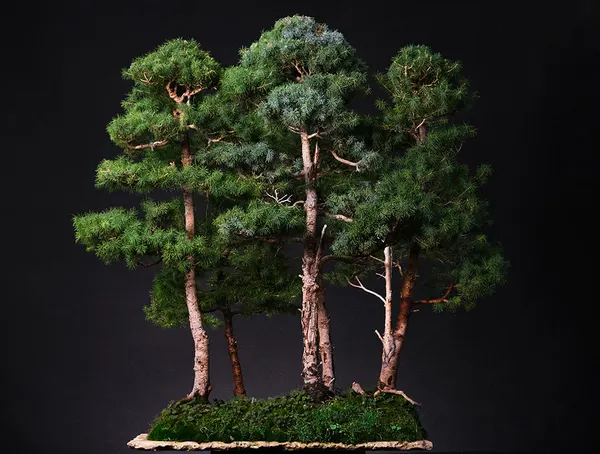
For an enthusiast, the basic starting point is a good understanding of bonsai styles. The practical experience gathered over centuries contains the key methods of creating bonsai and an aesthetic point of reference. Bonsai styles set out the shape of the trunk, the arrangement of the branches and roots, and the number of trees in the container, which makes it quite easy to connect an existing sketch with the future bonsai. Understanding the styles helps a person plan the direction in which to develop a future bonsai from the chosen young plant. “Standard” styles are of course a help to the bonsai enthusiast, but they are not a strictly fixed path to the final result. The system of styles is more a creative aid than a mandatory, rigidly defined form.
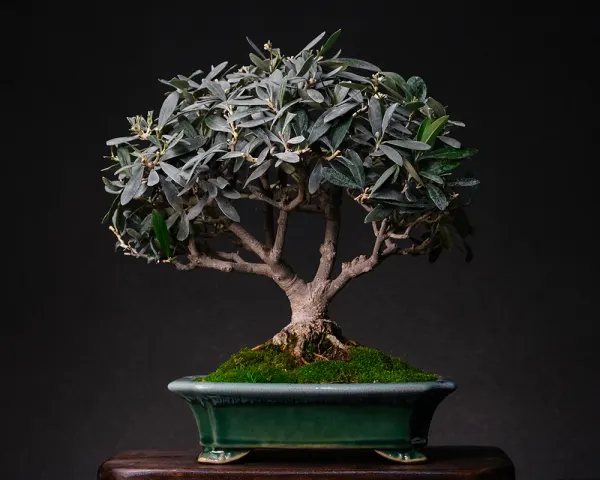
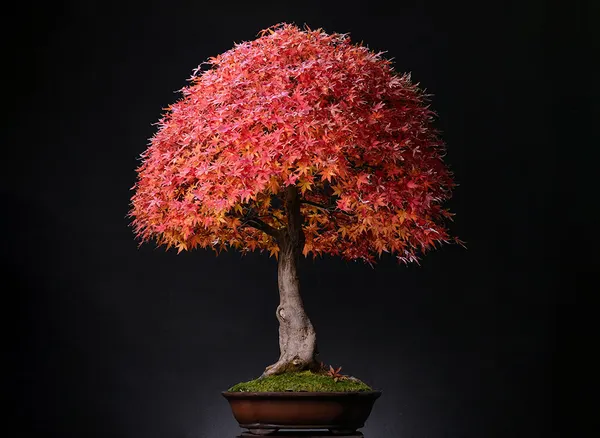
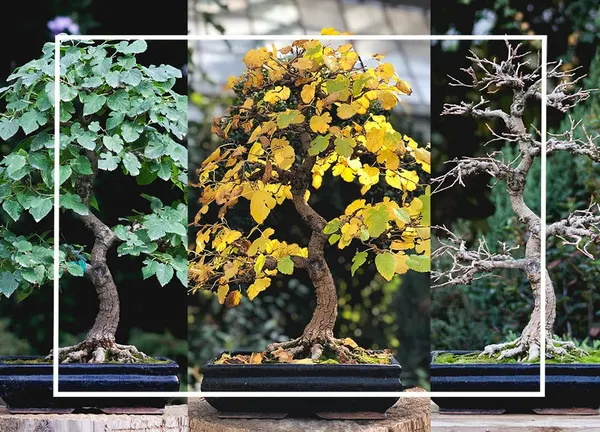
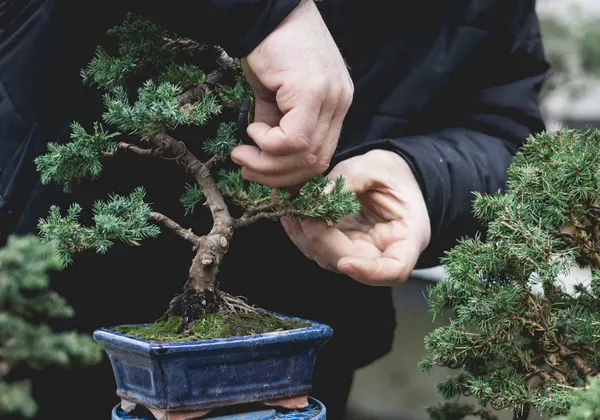
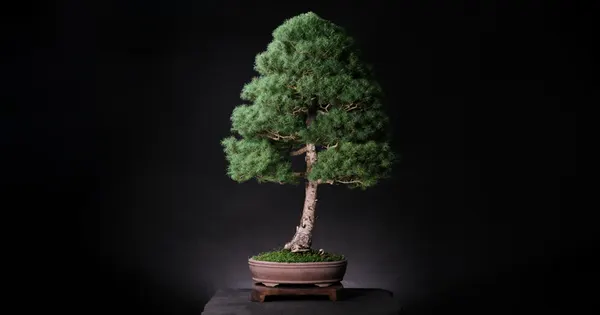
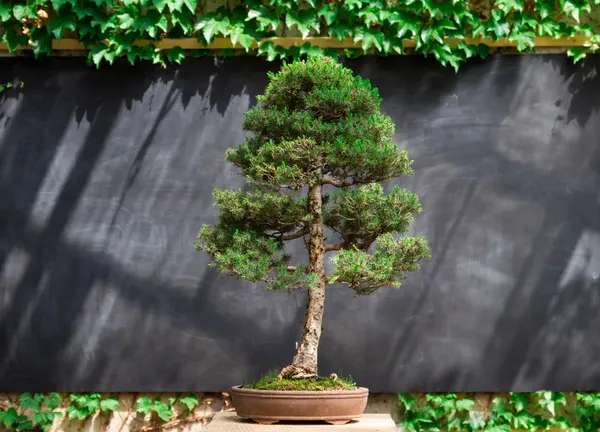
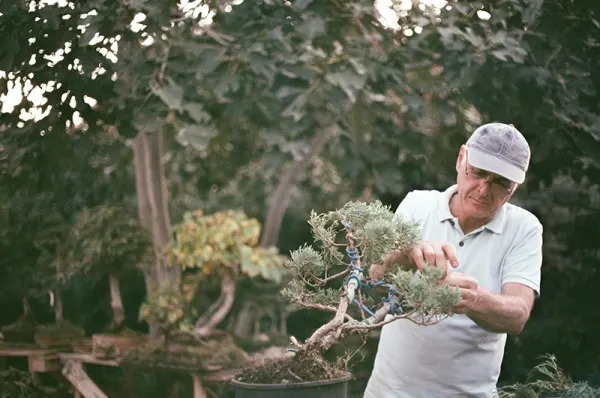
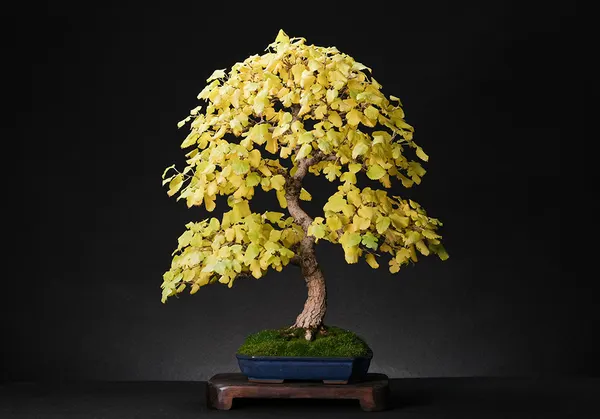
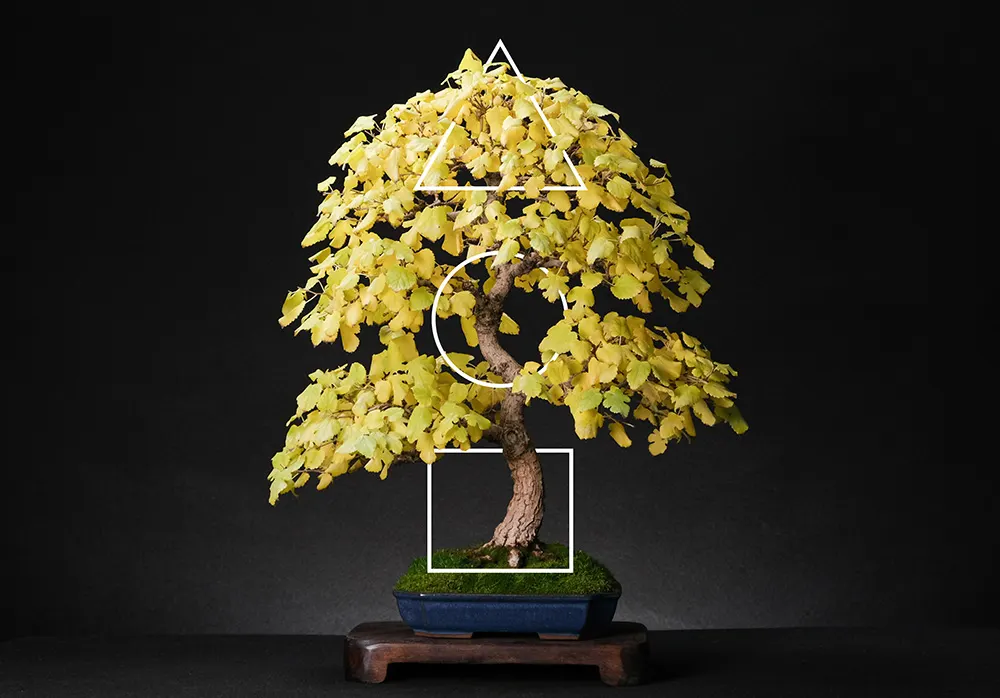
The main aim of bonsai aesthetics is a miniature tree with a fully mature, natural appearance, created with well-proportioned details. The enthusiast shapes the tree, emphasizing or enhancing its apparent age. He also creates a front “facade” from which the bonsai will be viewed from then on. But seen from some other side, the same tree may look unnatural, even unattractive.
An important factor is preserving the visual balance of roots, trunk and canopy.
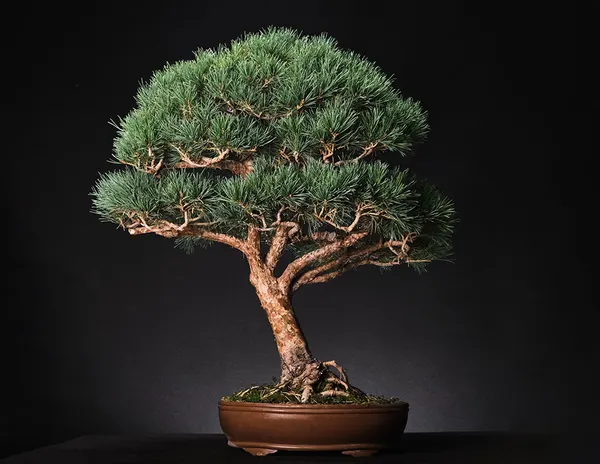
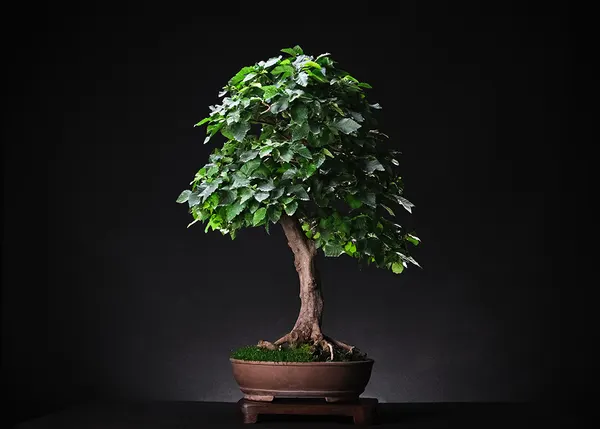
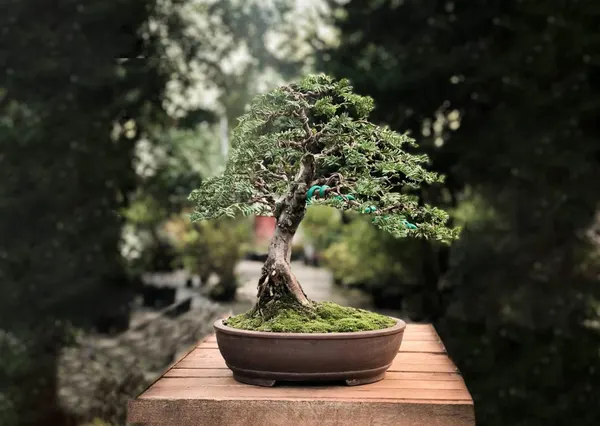
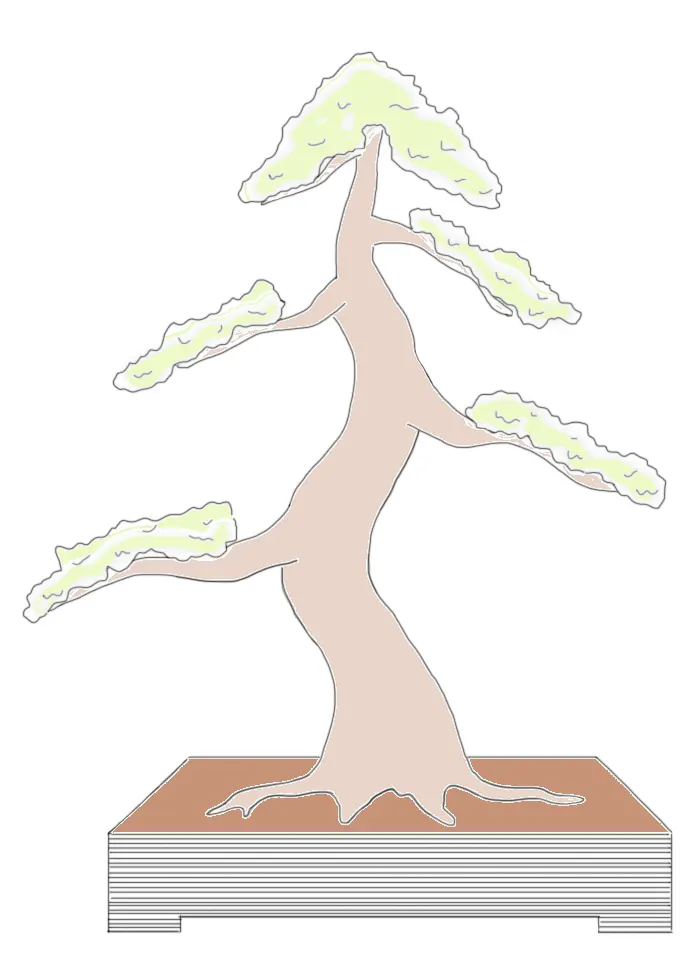
Balance is achieved by arranging the parts of the tree correctly; this creates a stable, calm form and the effect of a tree that has stood firm for decades. (For example, the “Chokkan” and “Moyogi” styles.)
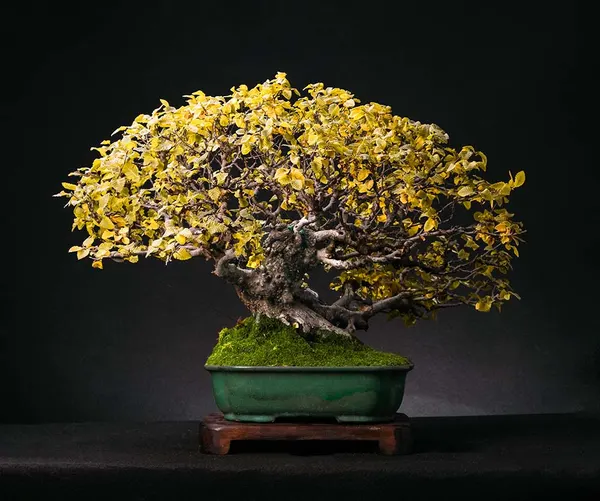
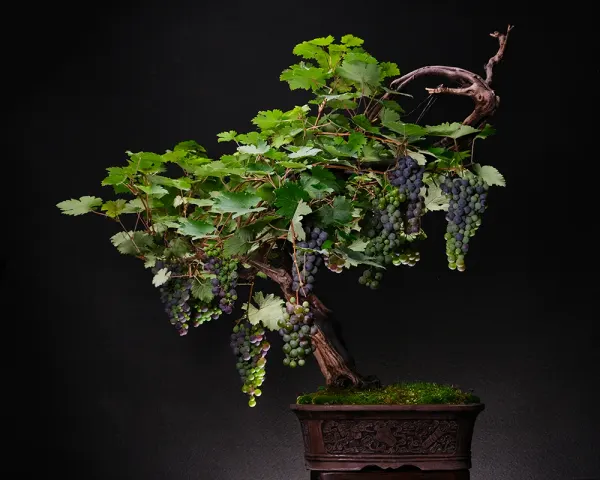
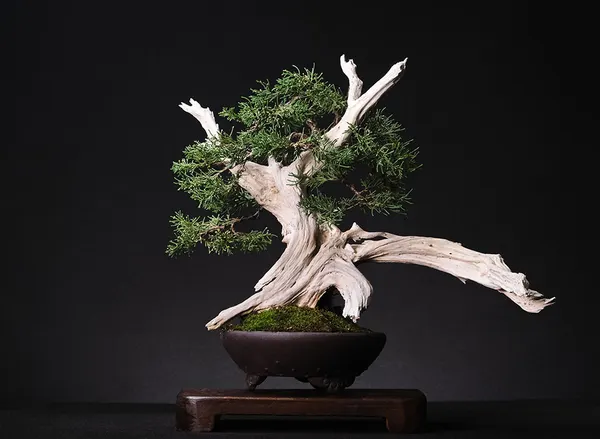
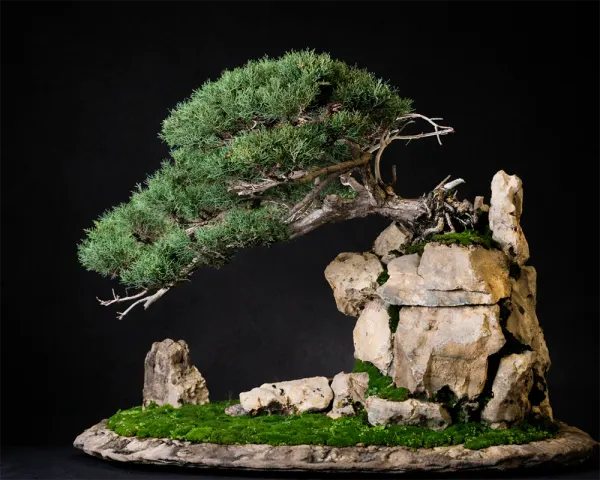
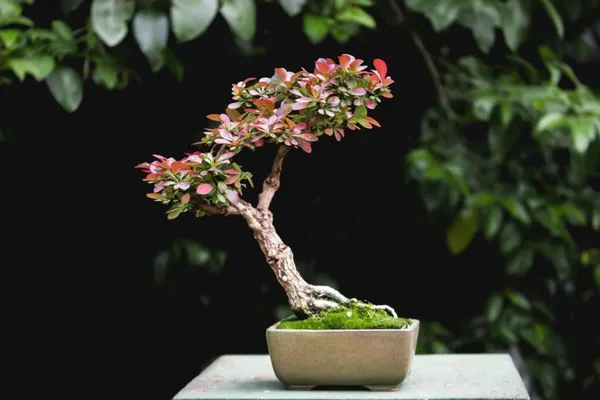
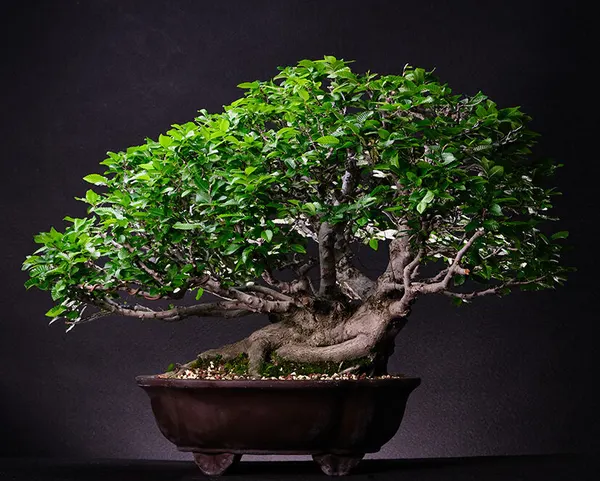
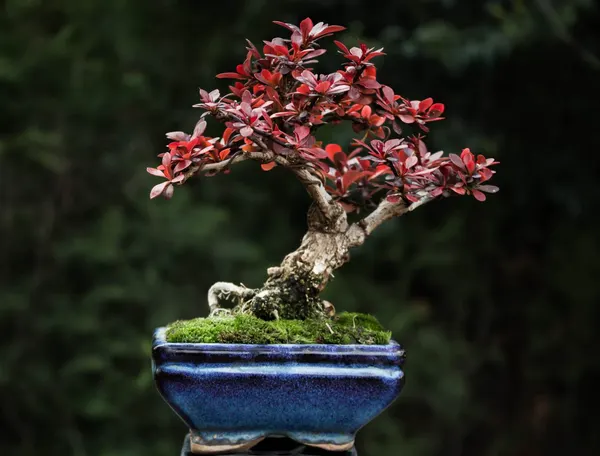
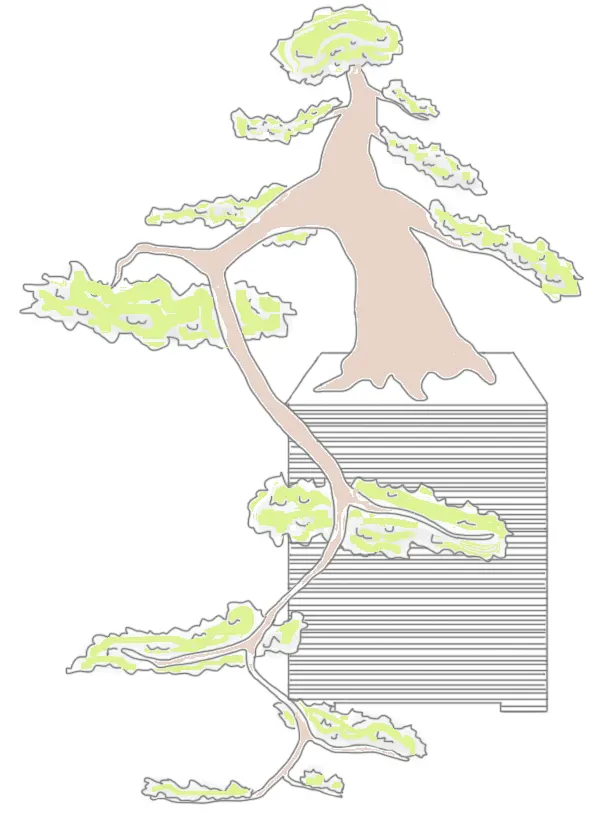
Dynamic balance, which is created with asymmetrical forms, produces an unstable, moving effect, as if the tree were battling the elements (for example, the “Han-kengai”, “Kengai” and “Fukinagashi” styles). Looking at an aesthetically valuable bonsai, one even gets a sense of physical weight, massiveness, great age and even “pride” — the same feeling an old tree standing alone in nature evokes in a person.
The desired visual balance is achieved by manipulating the shapes of the trunk, canopy and surface roots. The “empty spaces” in the canopy are in harmony with the overall form of the bonsai. Empty space and branches spreading toward the back create a certain illusion of depth. The interplay of empty space and branches makes the visual image of a bonsai more striking.
An important factor is the proportion between the elements of the tree:
- all the main elements are arranged compactly around the trunk;
- there are no needles or leaves of disproportionately large size;
- there are no branches thicker than the trunk;
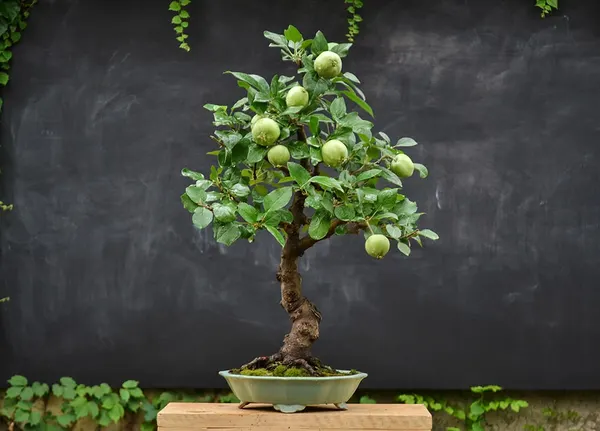
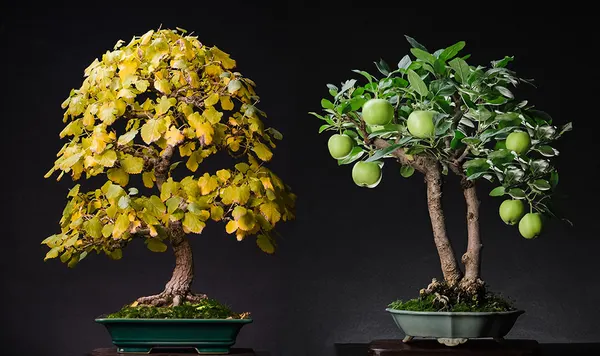
- there is no disproportionately large fruit or flowers;
- there is no strict symmetry in the arrangement of branches and roots;
- branches on the sides and at the back never grow at the same level;
- on the front, viewing side, there are always fewer secondary branches, so that the trunk can be seen clearly;
- no plant other than moss grows in the container;
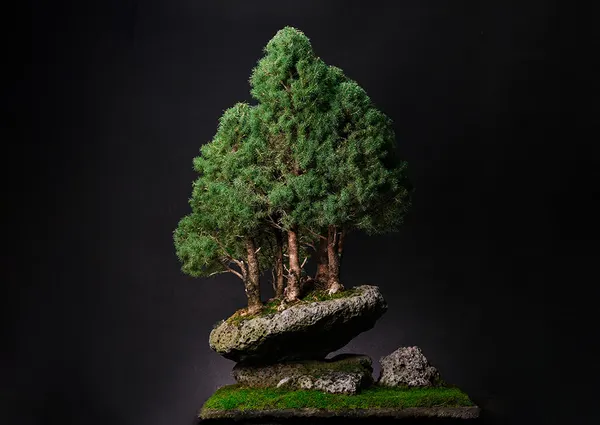
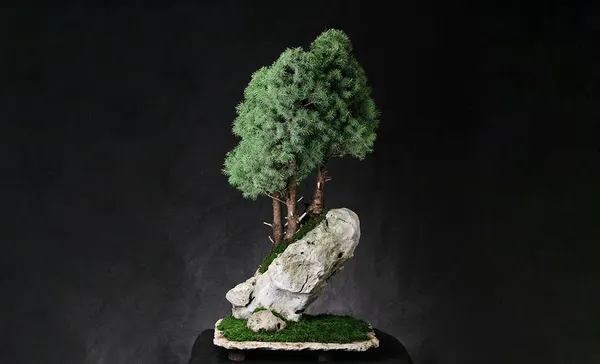
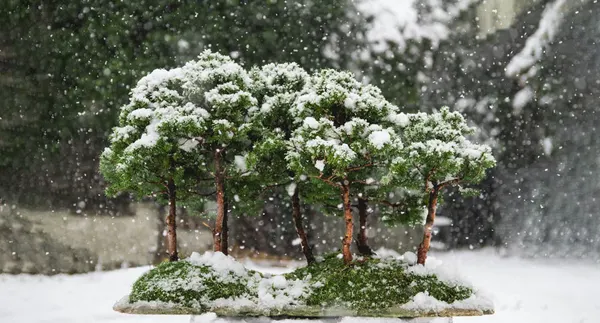
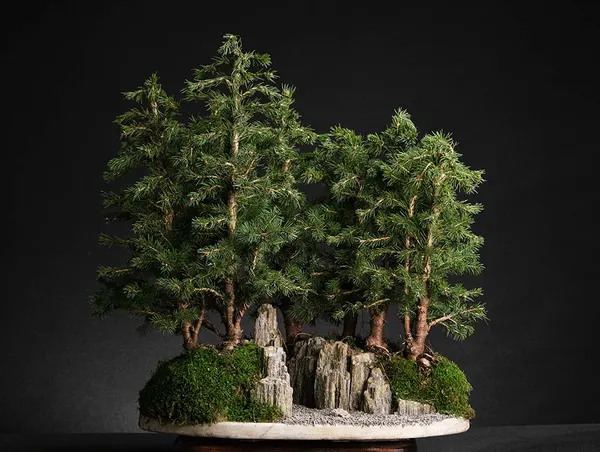
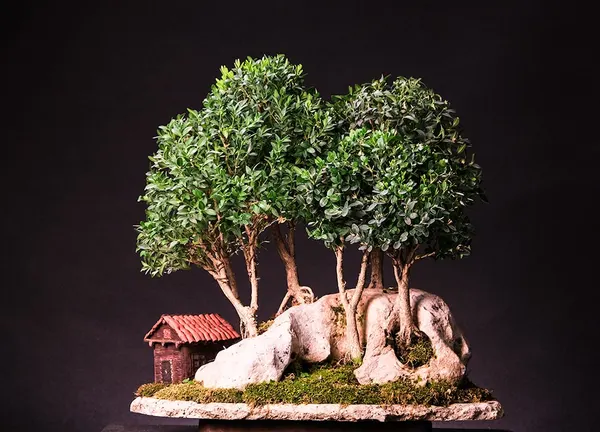
- if a composition is made with stones, no object other than soil, stones and moss should lie on the surface of the container.
At the same time, creating a bonsai is not an exact science, or some mechanism that will only work if every detail is made according to a drawing prepared in advance. Several of the basic principles of bonsai styling can be changed or ignored altogether without harming the tree’s essential aesthetics (its visual effect). If you study bonsai masterpieces closely, you will very often find such examples. A specialist working on styling a bonsai reaches the result through experience and intuition and does not think about rules and regulations.
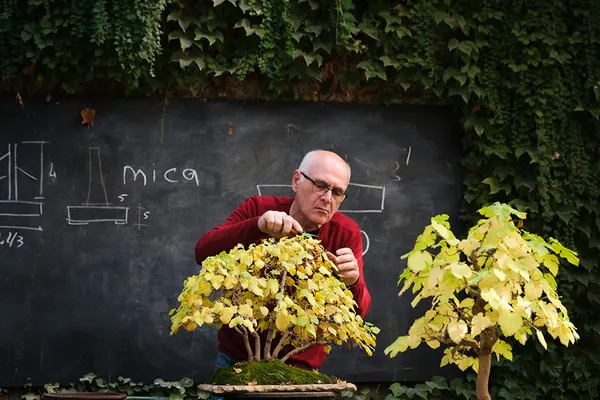
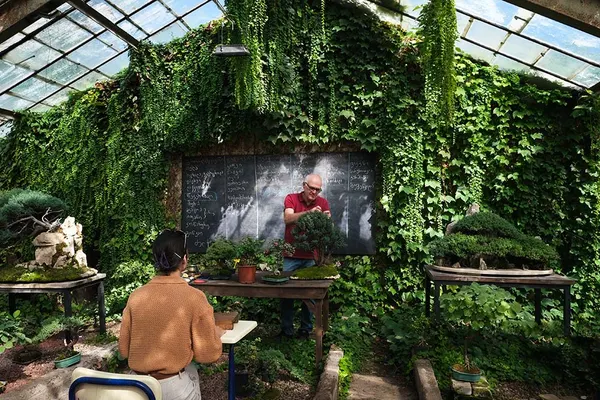
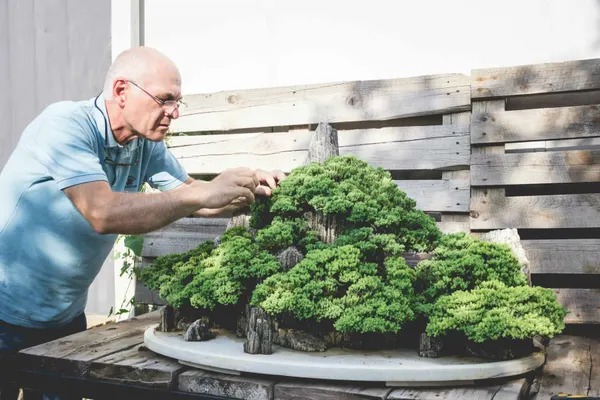
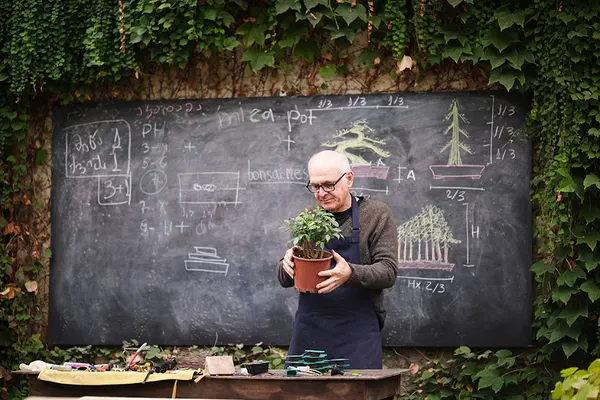
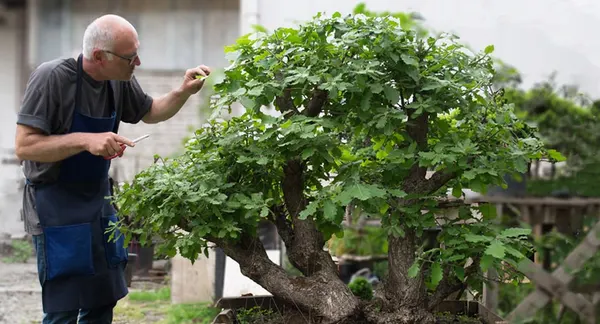
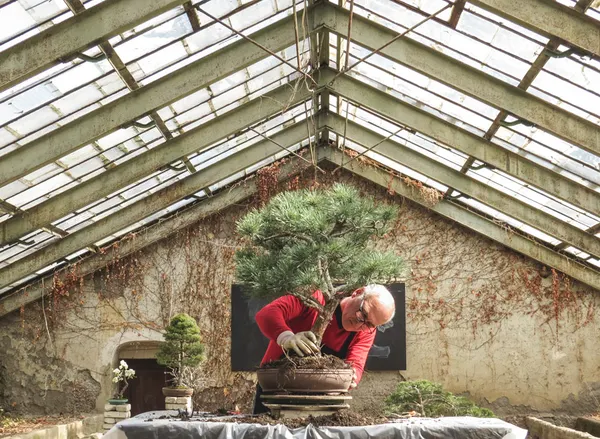
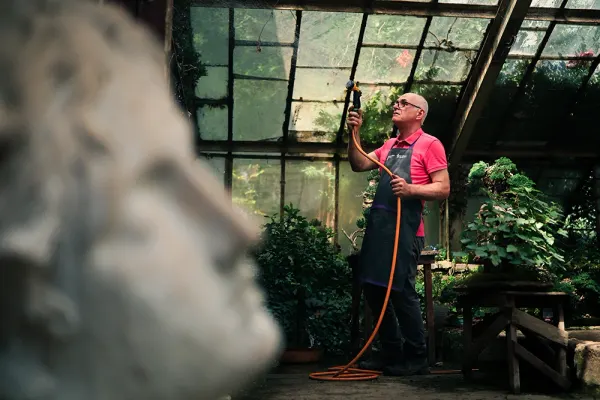
If a person decides to work on bonsai seriously, first of all they must have a good feel for what a bonsai is. They must understand that a bonsai is not simply a small tree growing in a pot. It is not a computer game that you stop when you get bored and pick up again when you feel like playing. Nor is it a decorative object, however beautiful, whose only purpose is to adorn an interior. A bonsai enthusiast must bear in mind that a small tree needs daily attention, and that creating a beautiful form brought “to perfection” takes a long time.