Artificial “aging” of bonsai (deadwood)
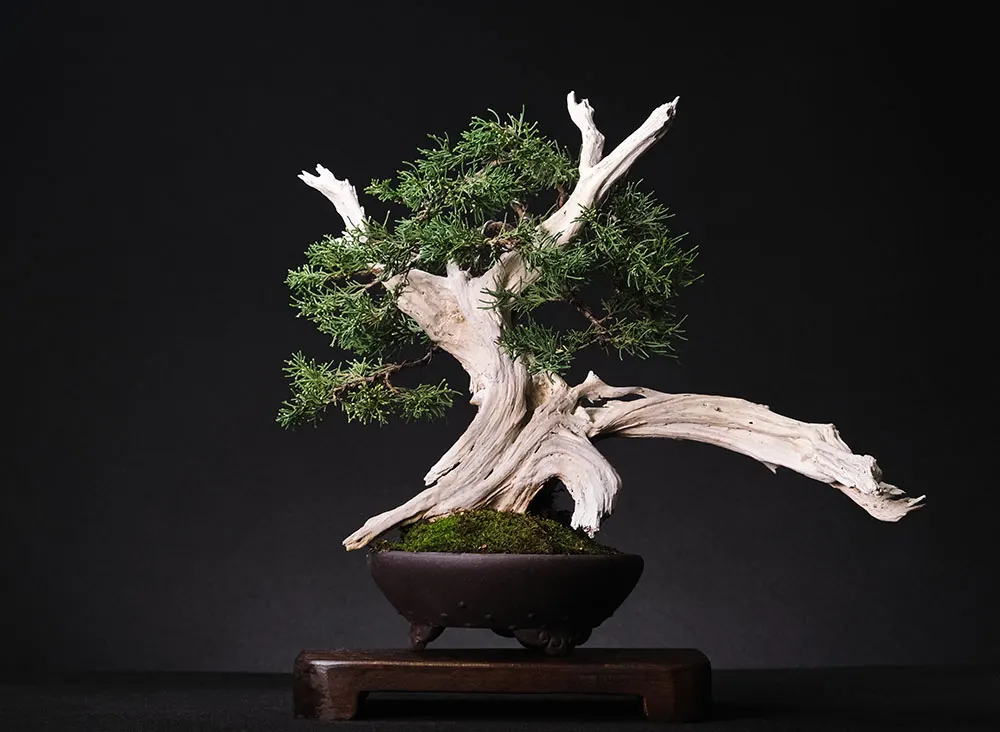
Very often, part of a tree is damaged by the forces of nature. This happens after a lightning strike or a long drought. Branches also break under the weight of snow or in strong winds, or diseases and pests cause parts of the tree to die back.
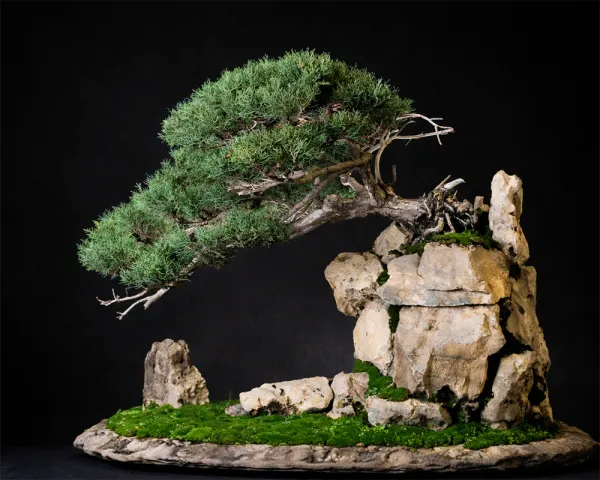
To create the illusion of damaged trees that have survived harsh climatic conditions, a very particular technique is used in bonsai styling: creating a “deadwood” effect by stripping the bark from a branch or a chosen part of the trunk.
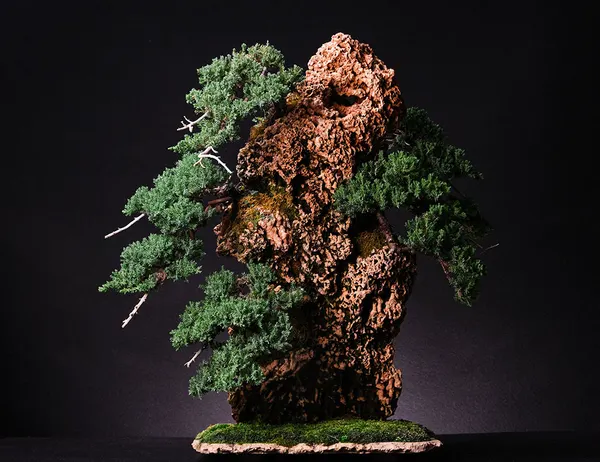
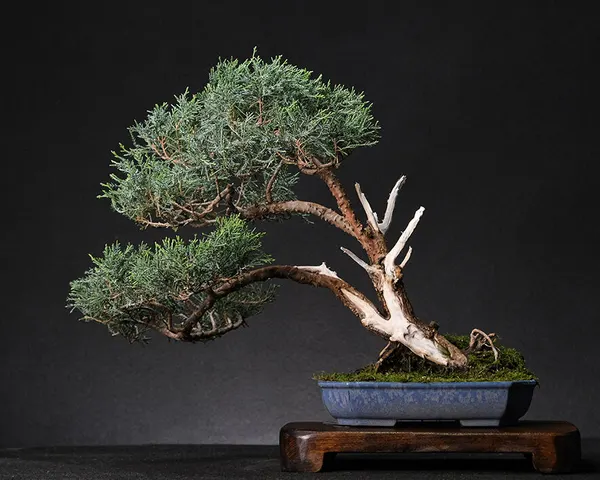
Sometimes a “deadwood” effect is created out of necessity. For example, through carelessness or for some other reason, one of a bonsai’s branches may die. You can cut that branch off completely, or, precisely while styling, use even the dead branch to keep the bonsai looking beautiful. Another case: when we start styling a fairly large piece of nursery stock, reducing its height and “fitting” an overly large branch to the planned size of the bonsai is often only possible by creating deadwood. But mostly, the deadwood effect is used to “age” a bonsai. Bare, dead sections give a miniature tree the look of an old tree that has survived harsh conditions. In bonsai culture these techniques have become established under the Japanese terms JIN, SHARI, SABAMIKI.
JIN is the technique used to create a deadwood effect on a branch or on the apex of the tree. The branch is stripped of bark along its whole length. As a result it soon dies, while the rest of the tree carries on growing as usual. Creating a jin at the apex allows a tall tree to be shortened in proportion without looking unnatural or spoiling the visual appeal of the bonsai. Stripping the bark is easier and more convenient while the branch is still alive (not yet dead).
With the SHARI technique, the bark is stripped from the trunk. It is removed vertically, starting from the base of the surface roots and running up the trunk to a certain height. (Bark can also be stripped from part of a thick surface root.) The stripped area should not have a regular geometric shape.
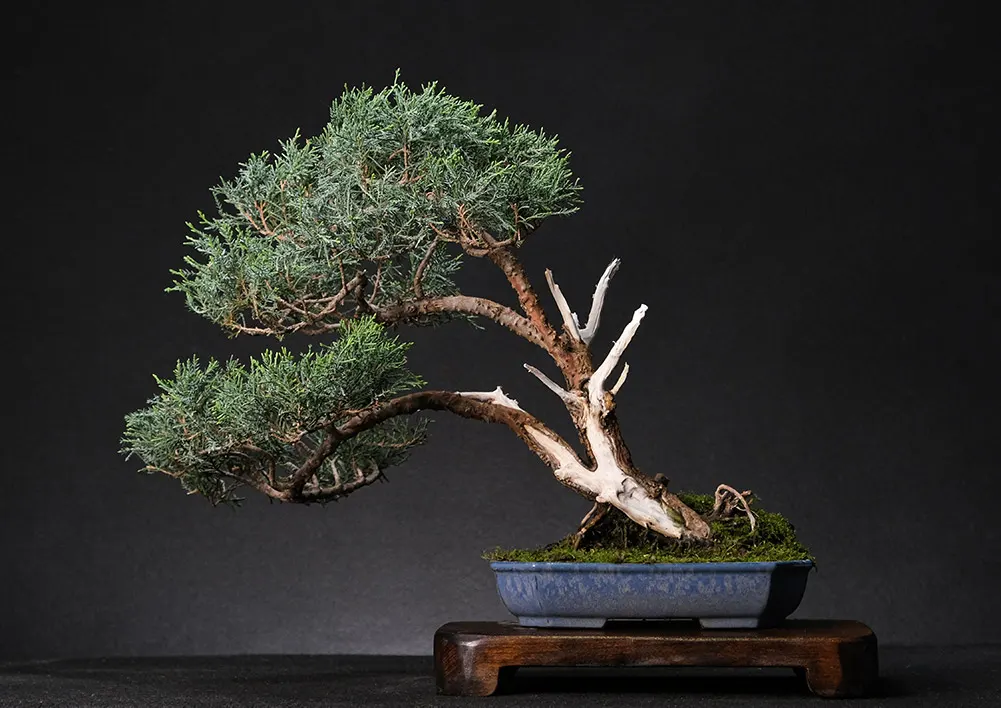
Choose where you want to make the shari. Mark the area where you intend to remove the bark with chalk beforehand. Marking with chalk makes it easier to see clearly which part of the trunk will be left without bark. To rule out any risk of getting it wrong, start by stripping only a narrow strip; you can always widen it later. First, cut through the bark with a sharp knife or chisel along the chalk outline so that you don’t strip more bark than intended. Be sure to keep in mind: if a branch is left without even a narrow strip of bark connecting it to the trunk, that branch will certainly die.
This process demands considerable diligence and care. Never rush; it is better to do the work in stages, thoughtfully. It is better to carry out this work carefully and attentively over several weeks, or even a year, than to disfigure the tree completely through haste.
Once the chosen area has been completely freed of bark, you can “groove” the trunk with carving tools so that its surface resembles wood damaged by the forces of nature. The surface must then be worked with sandpaper. No soft tissue of bark or wood should be left on the surface.
SABAMIKI – a hollow, an artificial cavity, is carved into the wood exposed after the bark has been stripped. Carving begins at the base of the trunk, at its widest point, and narrows toward the top. Probably everyone has seen a hollow in an old tree. The technique of creating this effect artificially is called SABAMIKI.
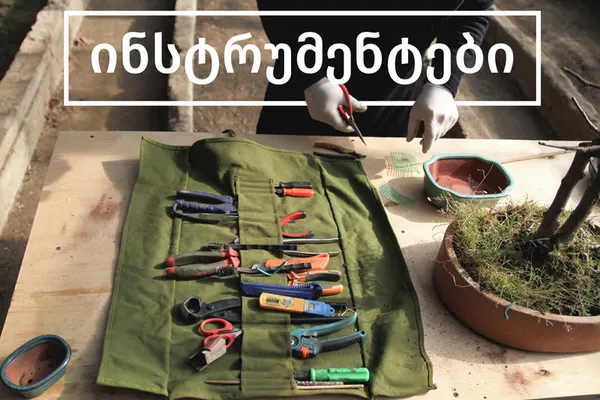
The special chisels used for artistic woodcarving will make the work easier. So will a small drill fitted with a flexible shaft extension. Different bits let you easily work the wood once the bark has been stripped.
In all three cases, once the work is finished, the treated area must be coated with a special protective liquid. Lime sulfur is used for this. It protects the stripped area from rot and disease. Ready-made lime sulfur is sold only in specialist bonsai shops.
You can also make it at home:
- Pour half a liter of water over 50 grams of quicklime.
- Add 120 grams of sulfur powder to the same amount of water.
- Combine both mixtures in one vessel and boil for 1 hour.
- Because of the distinctive, unpleasant smell of sulfur, don’t make this mixture indoors.
Lime sulfur should be applied as soon as the bark has been removed. The liquid penetrates fresh wood better. Before applying it, be sure to wet the area with a sprayer. If the mixture accidentally gets where it shouldn’t (on the live trunk, a branch or a root), it is best to wipe it off at once with a piece of cloth. Lime sulfur is applied with a small brush. The liquid itself is yellow, but after a while it turns a grayish white, and the “deadwood” looks natural on the miniature tree. The stripped surface needs to be treated with this liquid once every 6 months.
Until it dries, lime sulfur has a rather pungent, unpleasant smell. So don’t do this work in the house. Some safety precautions are also needed: work in gloves and safety goggles.
The best time to carry out all of the work described above is autumn or early spring. From a purely aesthetic point of view, creating deadwood is one of the most difficult processes. It is very hard for an inexperienced hobbyist to get everything right – to do the work without harming the tree and, above all, so that the end result does not look unnatural and ugly. To avoid mistakes, it is best to study photos of bonsai created by experienced artists often and get a good grasp of all the nuances.
The JIN technique is normally used only on conifers. On deciduous trees a stripped branch soon rots, whereas on conifers the dead parts keep their shape and, if the work is done properly, look natural over time. SABAMIKI and SHARI, however, can be carried out successfully on both kinds of tree.
On deciduous trees it is not advisable to use pure lime sulfur. While white is quite striking on conifers, on deciduous trees, by contrast, white-coated “deadwood” looks rather unnatural. Specialist bonsai shops sell a special liquid for deciduous trees. You can also add a few drops of black water-soluble pigment to the lime sulfur to darken its color.