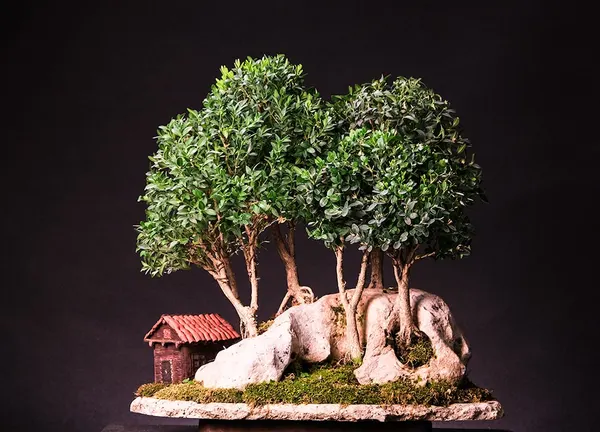
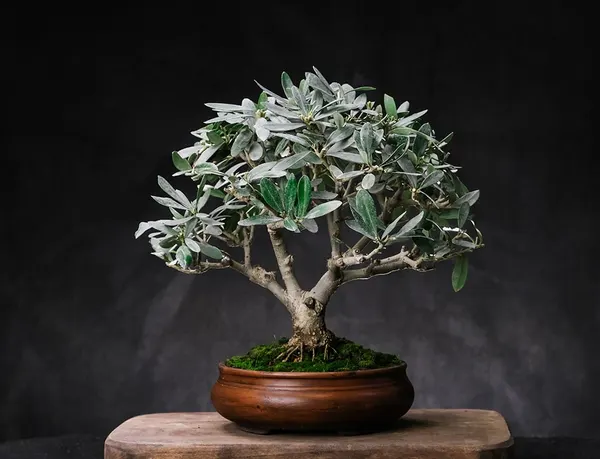
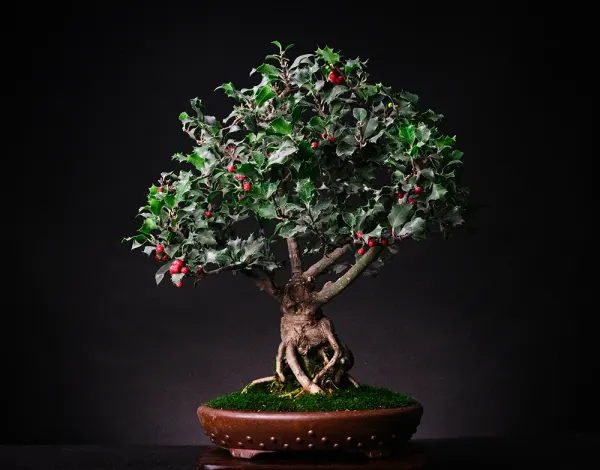
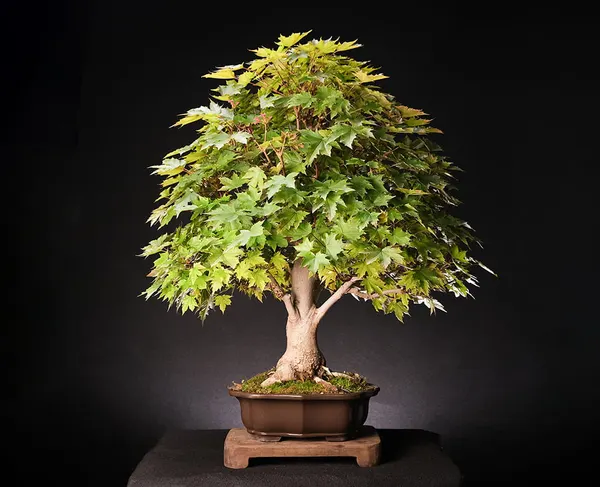
Artificial “aging” of bonsai and various styling techniques (thick trunk and canopy)
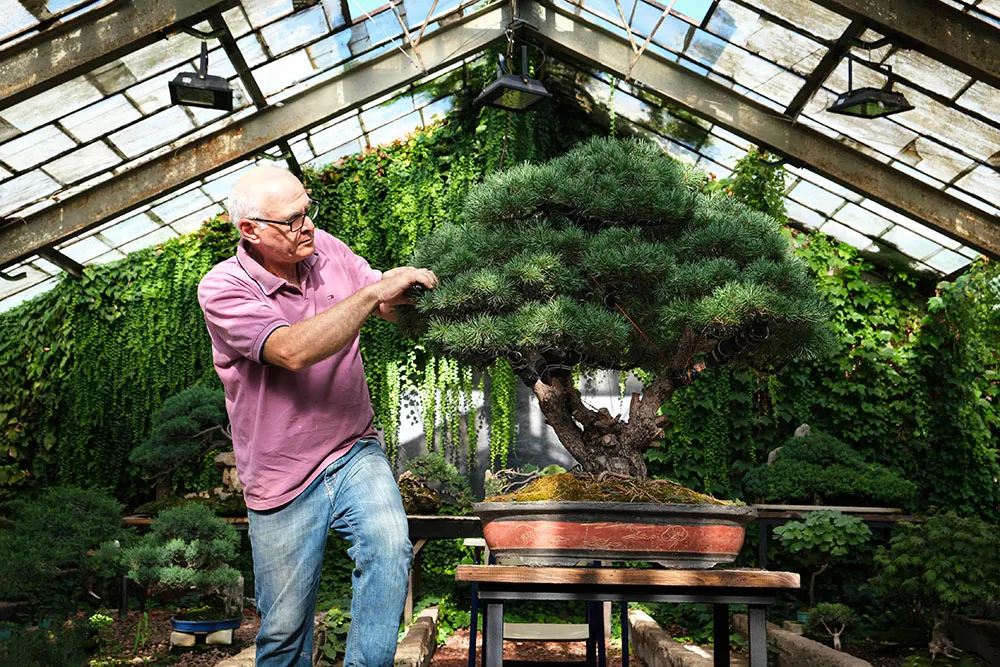
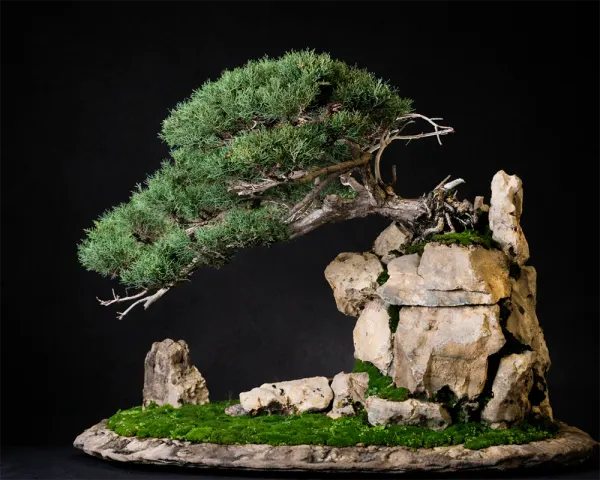
If we look closely at trees growing in nature, we see that the most beautiful and striking ones are those that are several decades old. The aim of creating a bonsai is precisely to give a small young plant the charm and beauty that old trees possess. Yet the actual age of a bonsai is of no particular importance. In most cases, nobody pays any attention to age at all (except for trees with a history spanning several centuries). Where a bonsai’s age is given, it is only nominal – an estimate based on judgment and outward appearance.
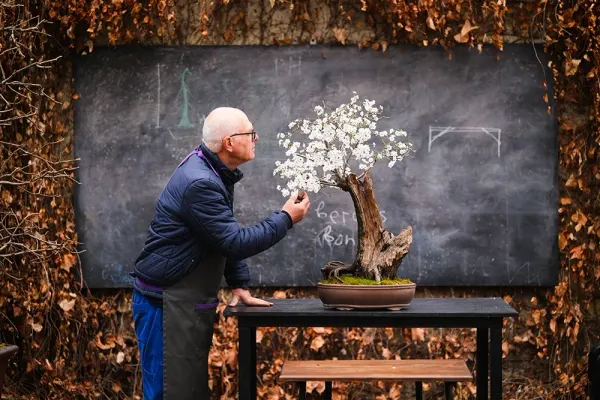
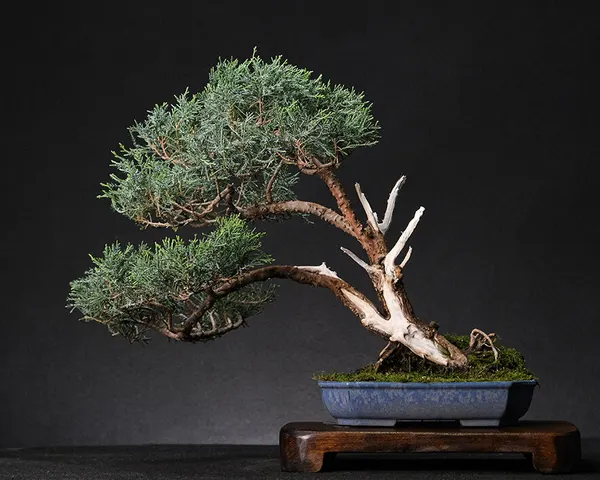
A true bonsai enthusiast tries to make a tree unique and one of a kind – a tree that leaves the viewer with the impression that it has been growing for decades and that various natural events have left their mark on its development. Creating a “perfect, mature” bonsai form is no easy task. The desired result is achieved only through years of work and, in many cases, by using special techniques. These techniques let us “age” a plant artificially and refine its form. Some of them are quite specialized and difficult to carry out. So my advice is that only someone who has already built up a certain amount of experience over several years of work should turn to the techniques described in this chapter.
Thick trunk
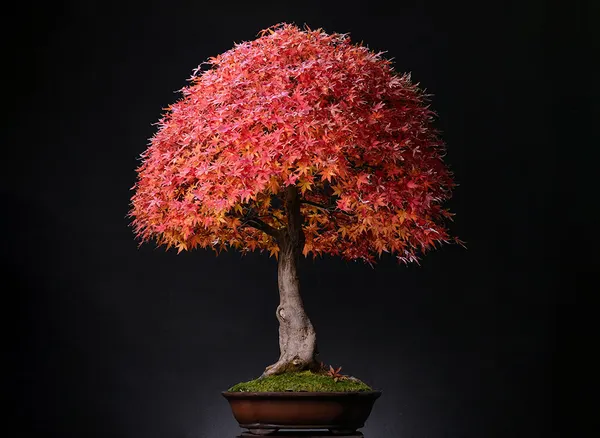
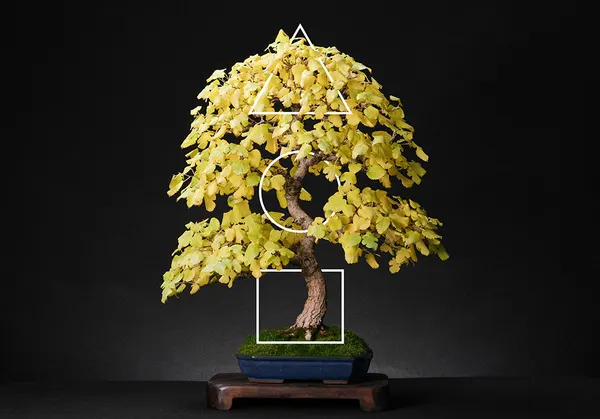
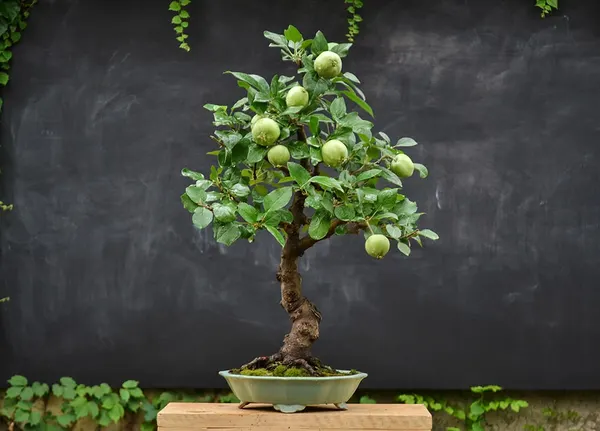
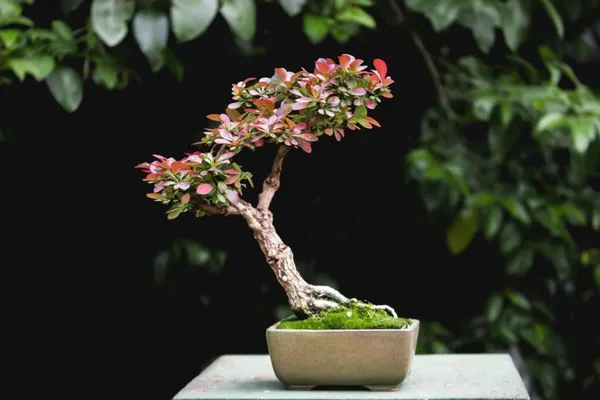
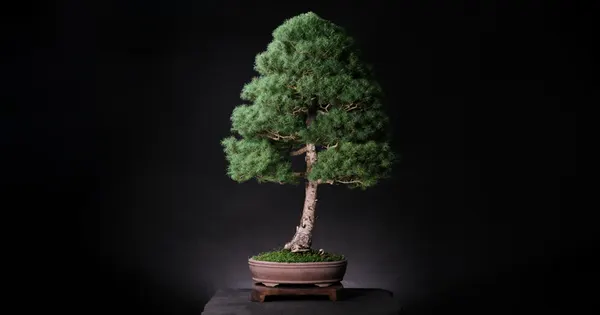
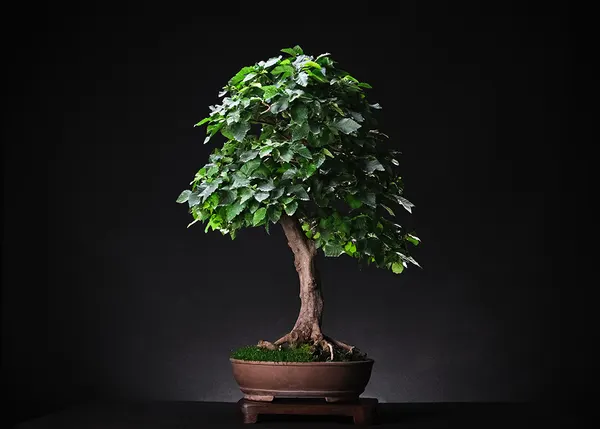
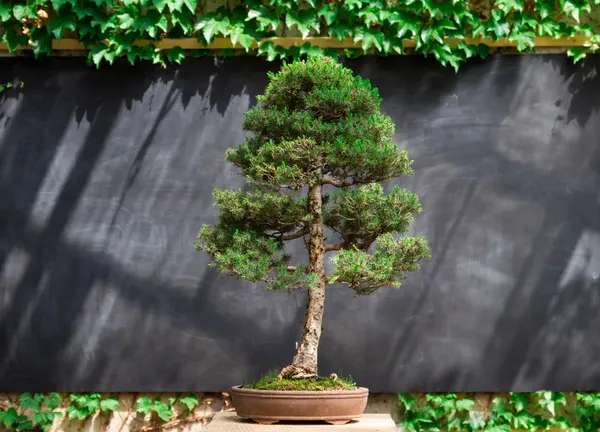
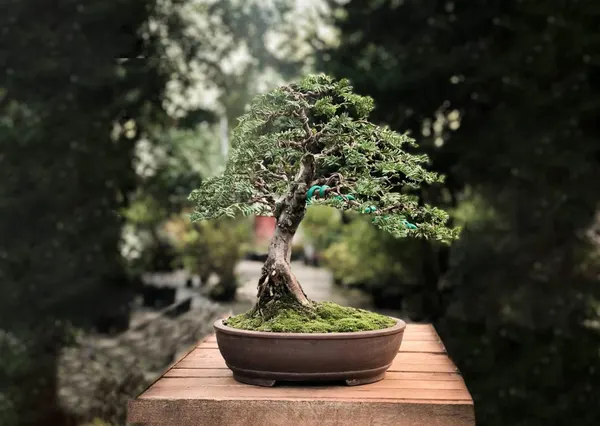
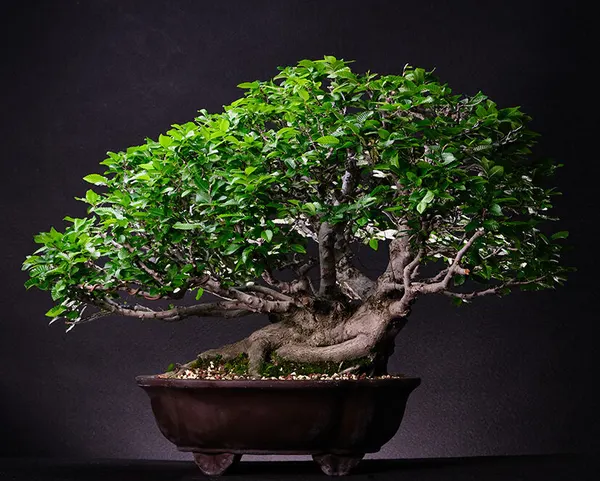
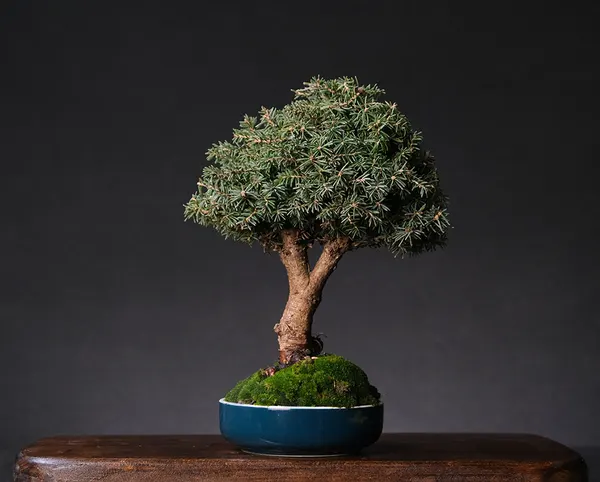
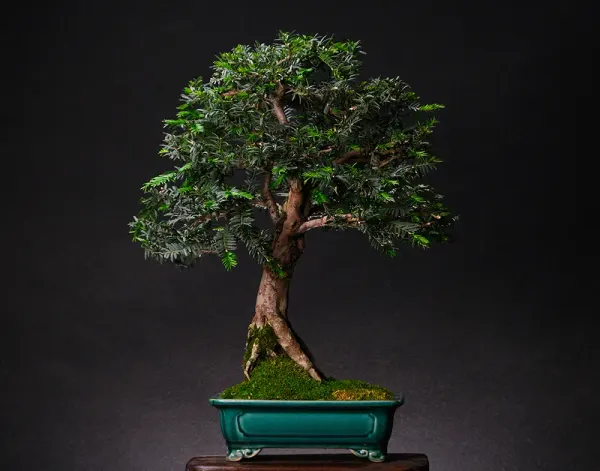
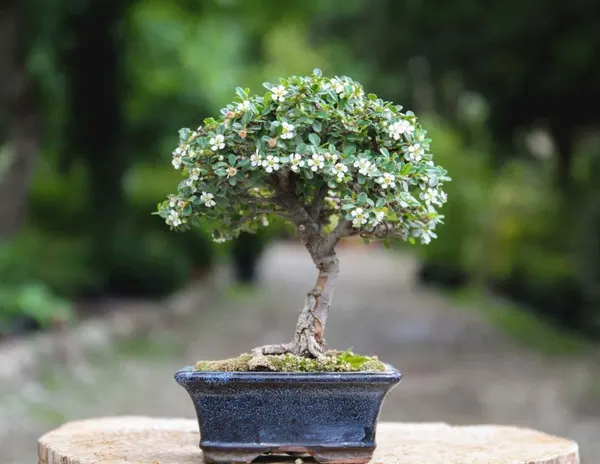
A thick trunk is one of the most important elements of an effective bonsai. Well-developed surface roots and a thick trunk give a small plant an older look. There is a rule-of-thumb proportion: a bonsai’s height should be no more than ten times the diameter of the trunk at its thickest point. Say the trunk is 4 centimeters in diameter at the roots – then the bonsai should be no more than 40 centimeters tall. So in the early stages of styling a bonsai, it is better to focus first on developing the surface roots and a thick trunk, and only then on shaping the canopy.
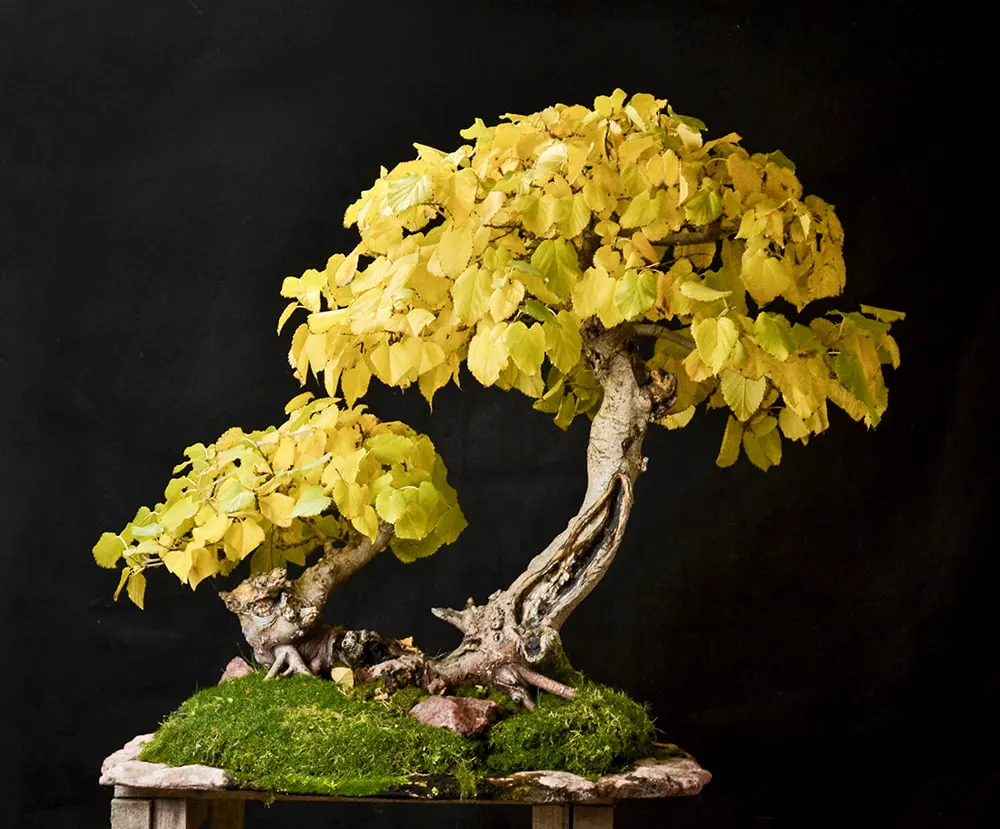
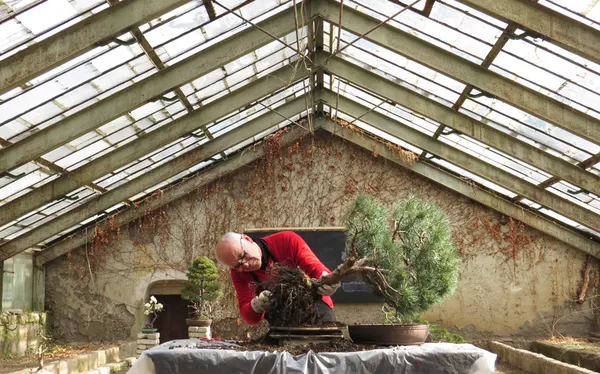
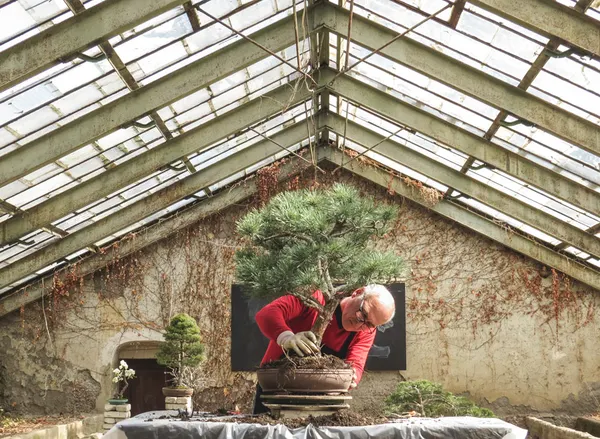
A tree’s trunk thickens in proportion to the plant’s growth. When a plant grows in a small container, the trunk thickens quite slowly. If you feel the trunk’s thickness does not match the tree’s height, it is better to leave the young plant planted in open ground for a few years. With unrestricted root growth in a large space, the plant develops faster, and as a result the trunk thickens too. During this period of free growth it is better not to prune the plant. A few years later, once the trunk has thickened enough, shorten the branches, lift the tree from the ground, trim the roots to the desired size and plant it in a pot.
If you have no way of growing the young plant in open ground somewhere, use some large container instead. While the roots and branches grow freely, the trunk gains thickness accordingly. Once the roots have completely filled the container, the trunk’s thickening slows noticeably.
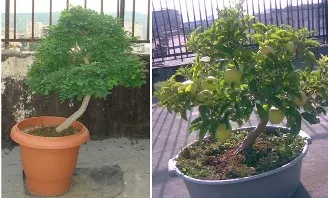
Branches growing close to the roots also help thicken the trunk. In the early stages of working on a bonsai, do not cut these branches off, even though they will play no part in the bonsai’s future form. Only once you decide the trunk has thickened enough and the young plant is ready to be planted in a pot should you cut them off.
Growing a plant in open ground or in a large container has a downside too: the branches grow and thicken freely. After they are cut back to the desired size, it takes years for the cut to be covered with bark. This spot never really “disappears” and will always be visible on the plant.
This technique can be used on both deciduous and coniferous plants. But it is better to choose species that grow fast and can produce new shoots from dormant buds.
There is another technique for thickening the base of the trunk: wrap thick wire around the young plant just below where the surface roots are expected to be and fix it tightly in place. Then plant it in a pot or some large container.
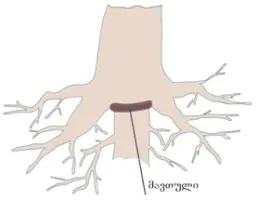
The spot where the wire is wrapped should be covered with soil. After a while, the part of the trunk just above the wire will swell. Then carefully clear the soil away and unwind the wire. If you leave it too long and the wire has bitten into the trunk so deeply that you cannot remove it, wait until the repotting season and cut the roots off at the line of the wire.
Canopy
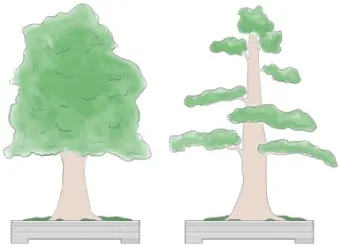
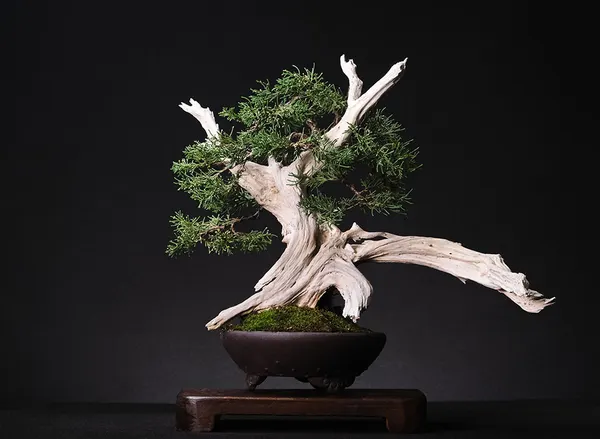
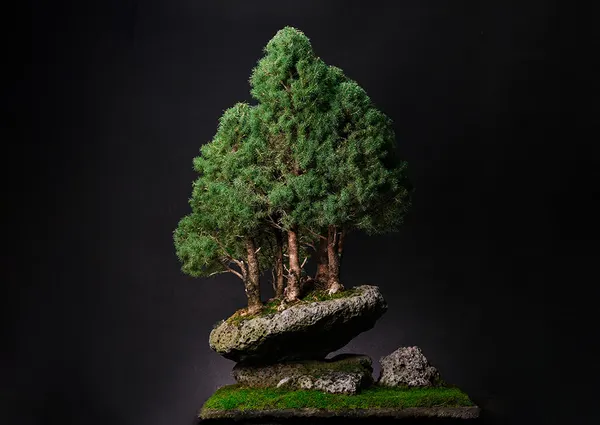
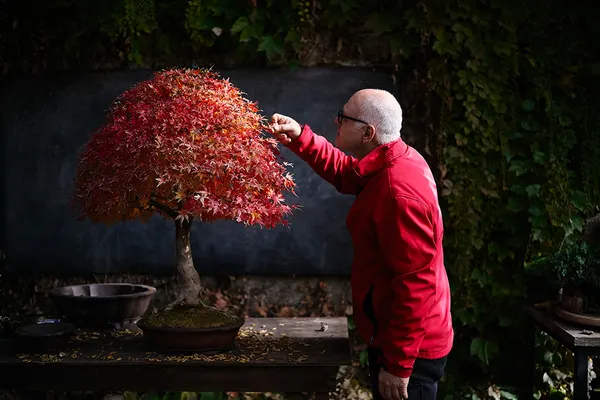
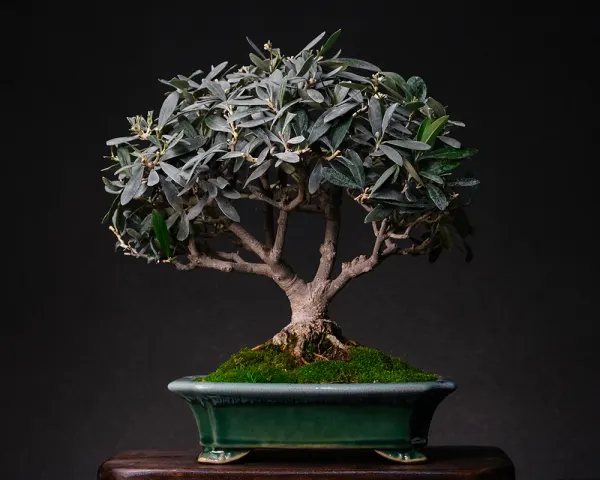
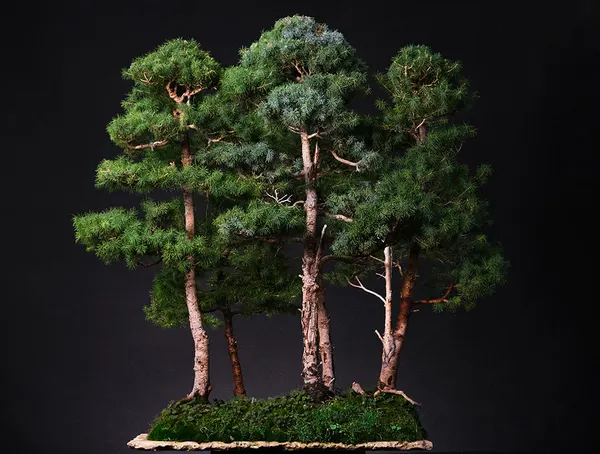
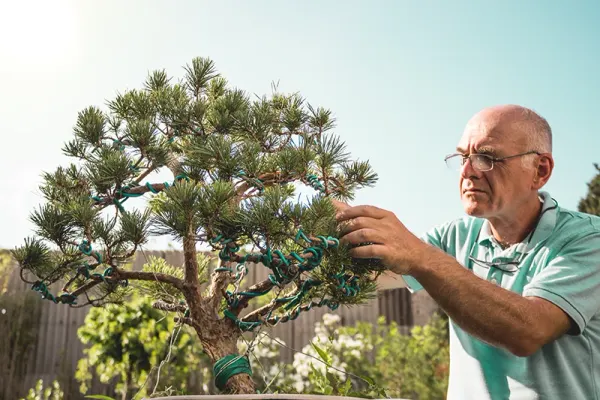
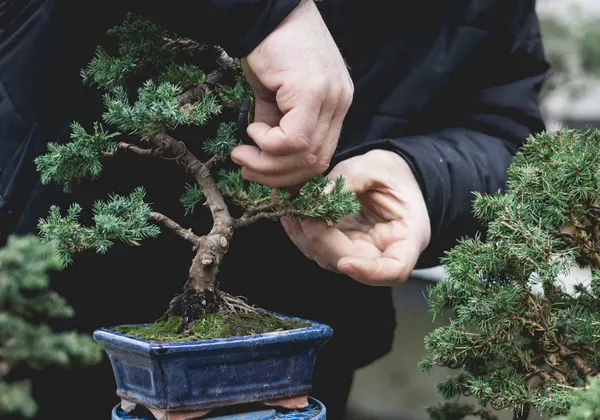
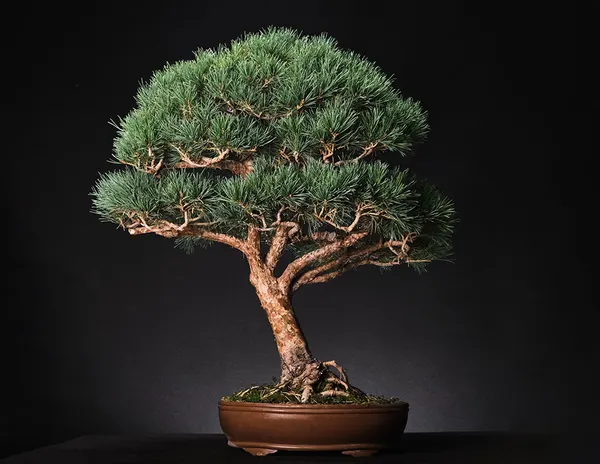
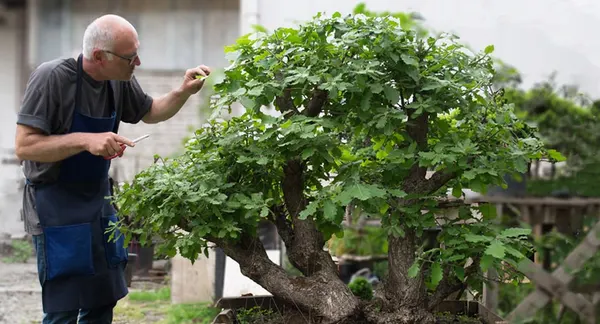
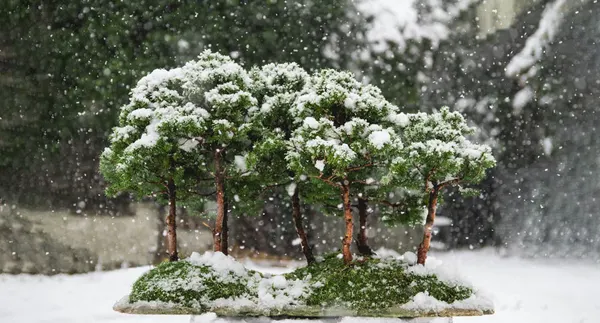
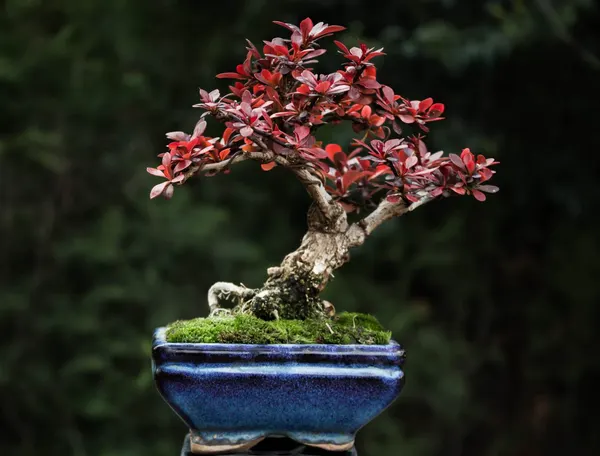
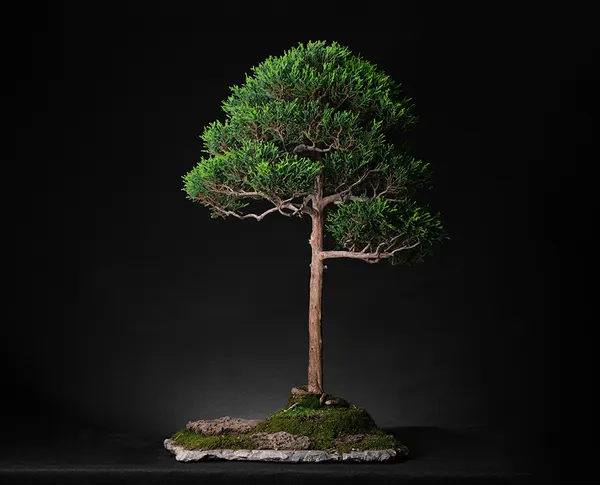
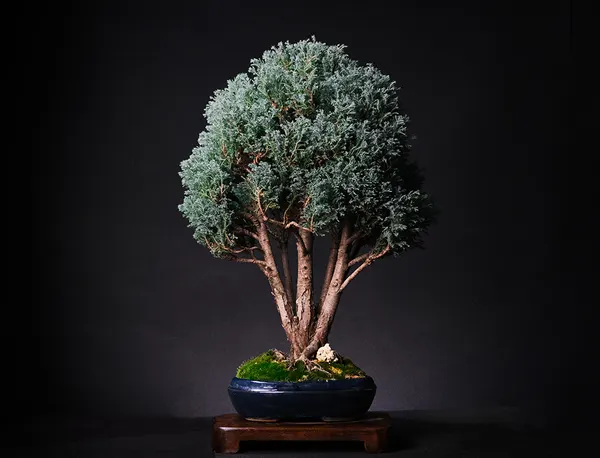
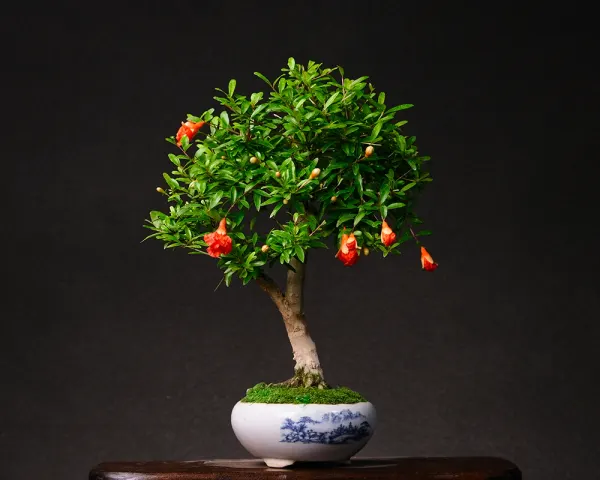
After several years of pruning, a plant develops a denser and more varied branch structure. But you need to keep a close eye on the number of leaves and secondary branches. There is no need for a bonsai to look like a “clipped shrub”. On a well-styled plant, the shape of the trunk and the arrangement of the main branches should ideally be visible. A canopy can be so dense that only the lower trunk and the surface roots show. But a bonsai looks more effective when some open space can be seen between the styled, thick branches. Such a bonsai creates the illusion of an “older” plant. This effect is achieved by shaping the fine branches.
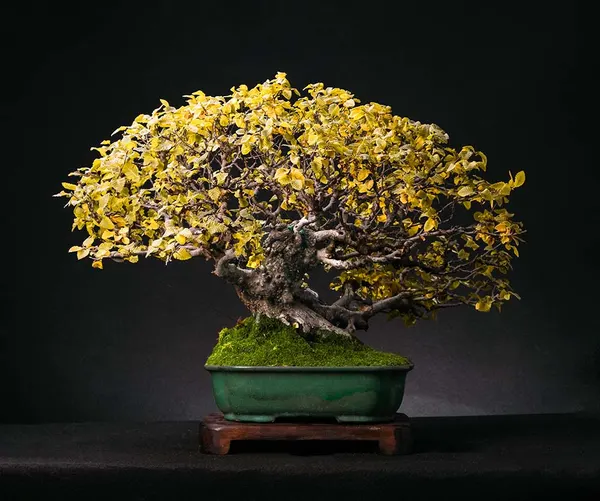
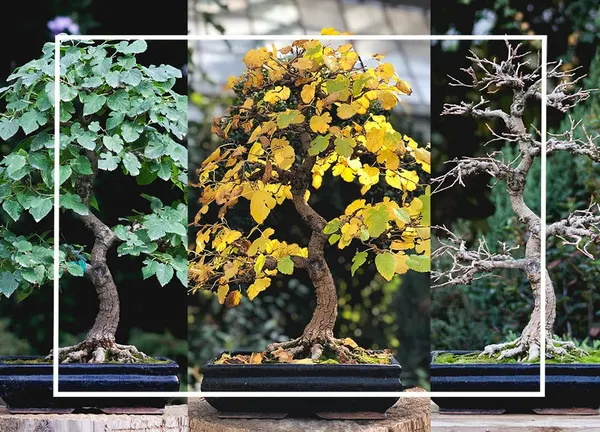
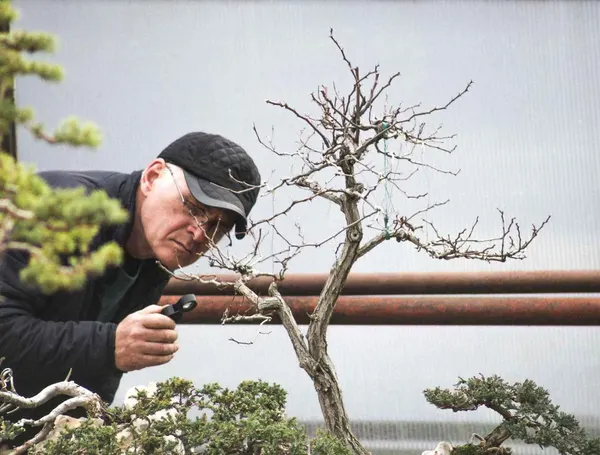
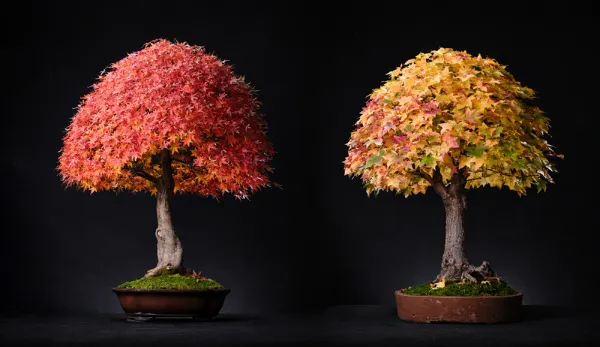
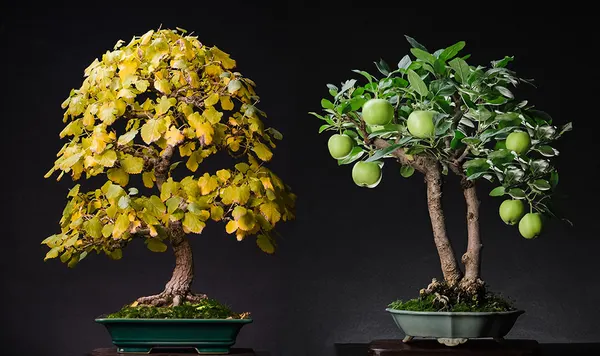
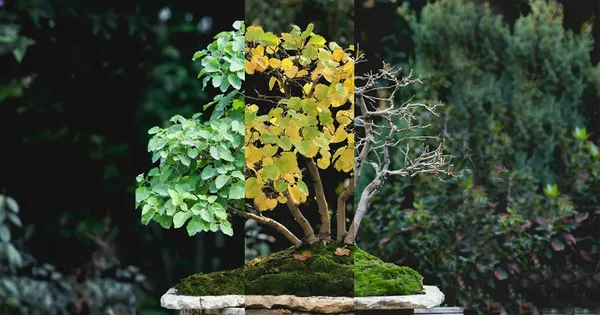
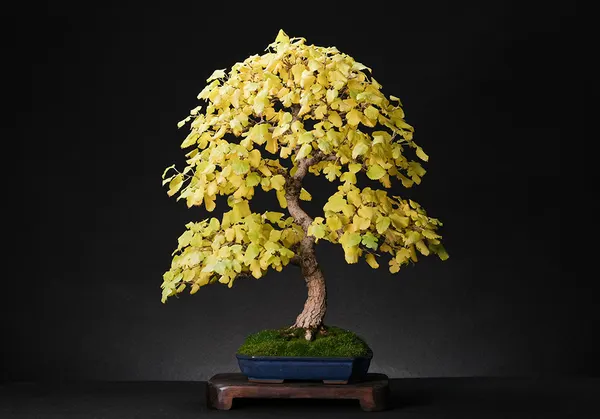
It is also worth noting that if a deciduous plant has well-developed secondary branching, it is just as beautiful to look at in winter as at any other time of year. Trees that have dropped their leaves have a distinctive beauty all their own.