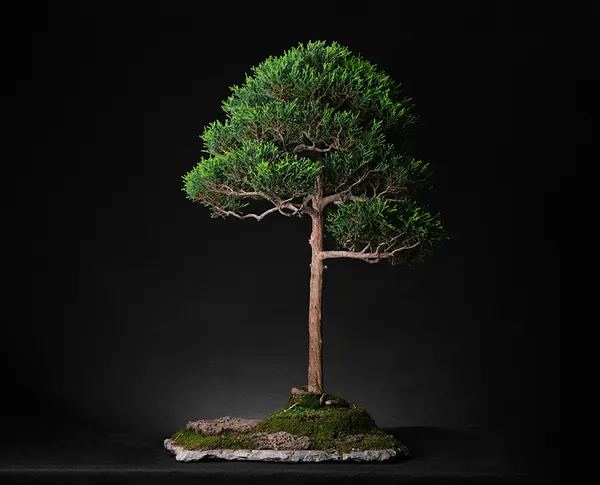
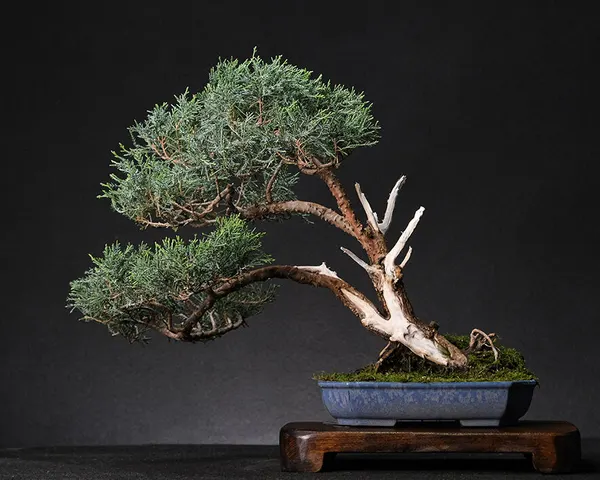
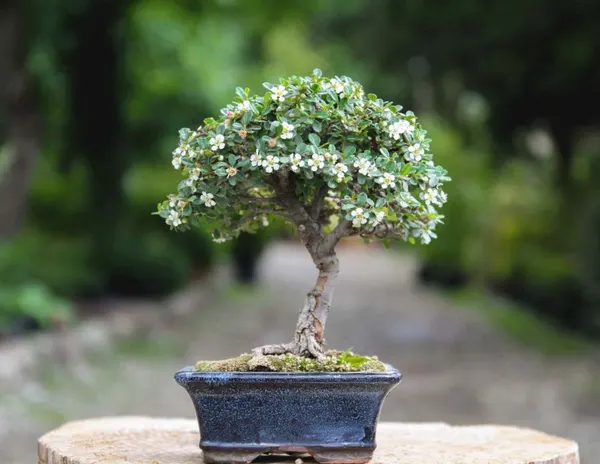
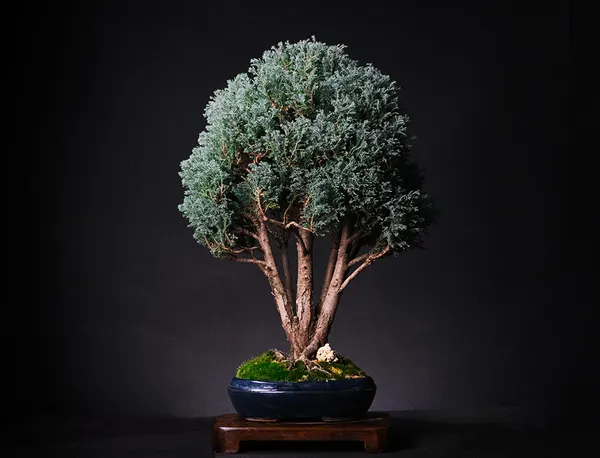
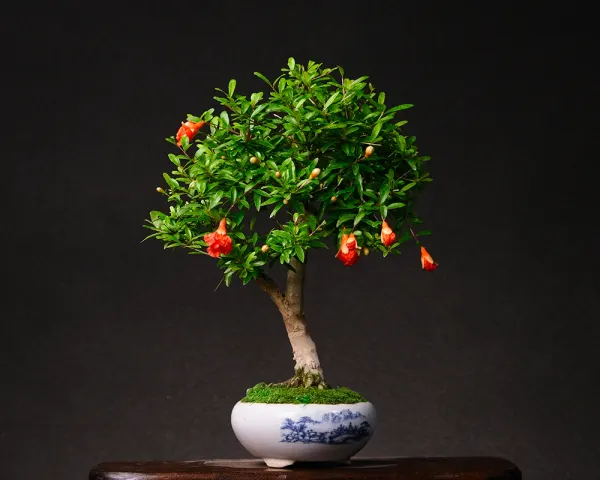
Creating different bonsai styles. The forest. Yose-ue (寄せ植え) and Kabudachi (株 立)
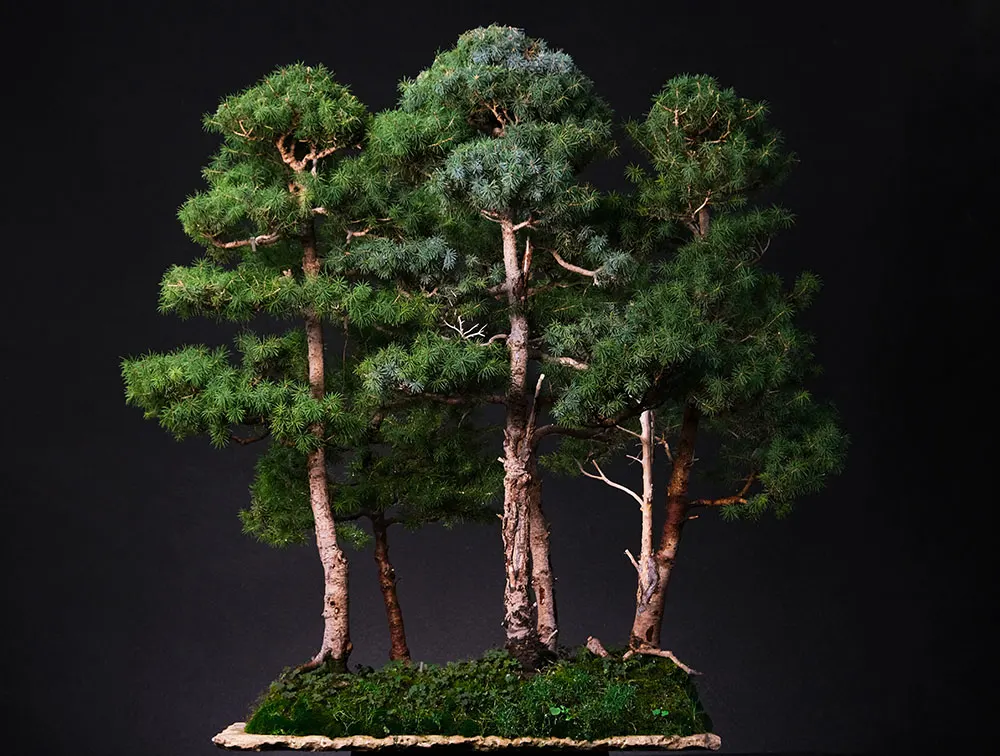
Yose-ue (寄せ植え)
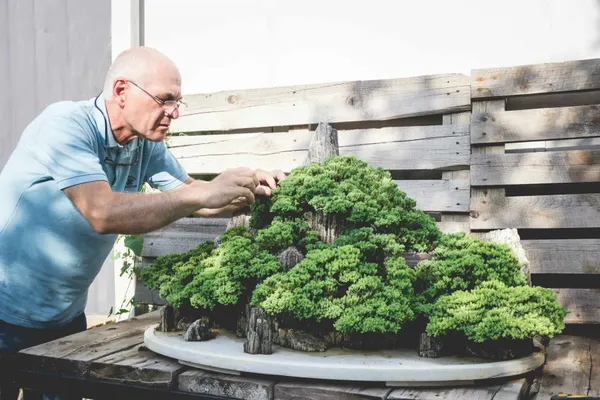
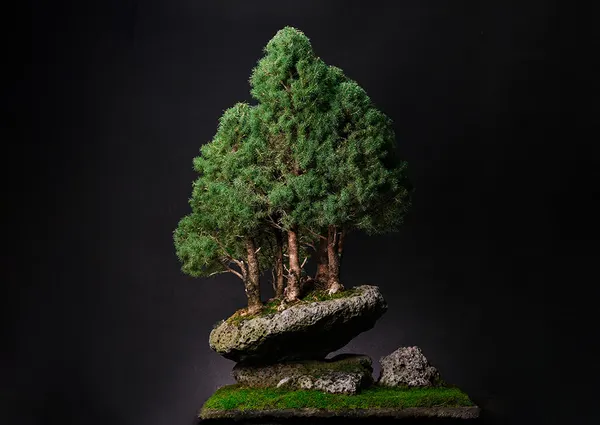
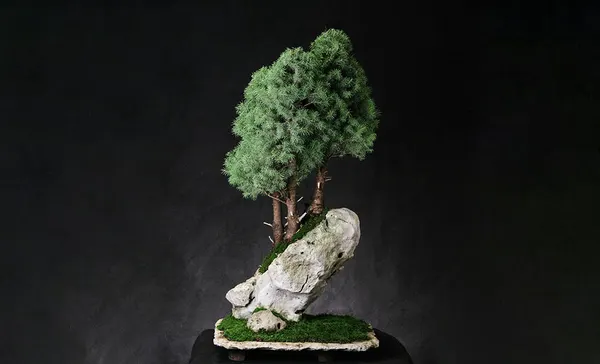
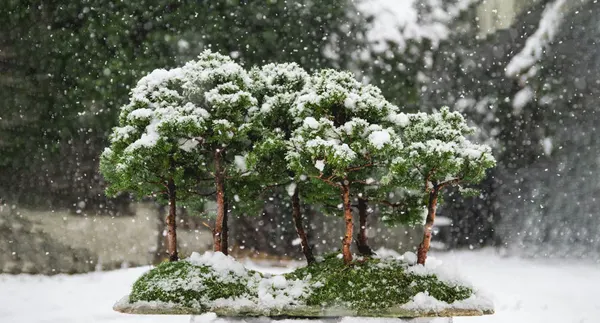
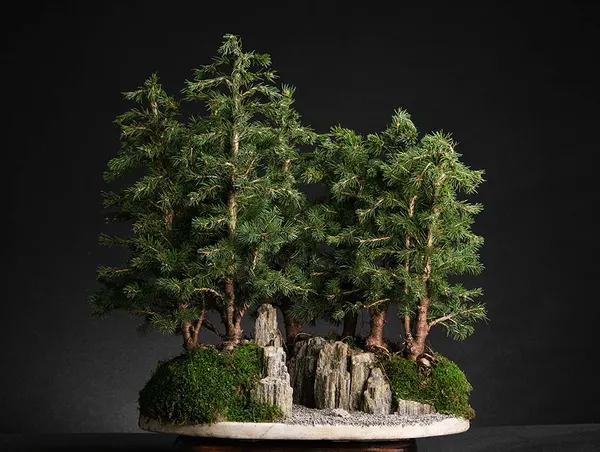
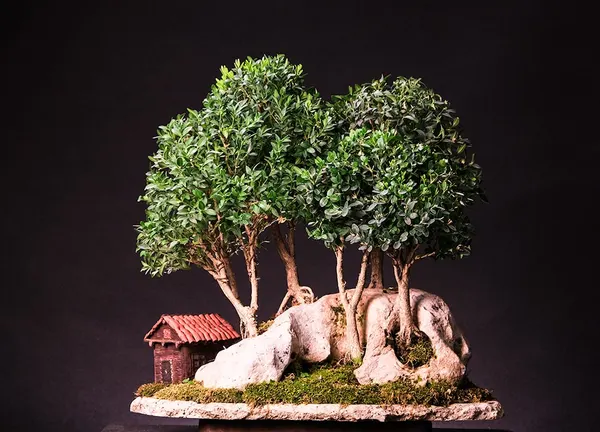
The Yose-ue style is a miniature model of a small forest. Groups of trees like this can be found in any climate zone. Making a bonsai in this style has its advantages. You can use 2–3-year-old young plants to create a Yose-ue. Beginners who are eager to see the results of their work can start out in this style. Even young plants whose branches are not well developed will do for this style – gaps are easily filled by the branches of the other trees in the group. It is best to choose trees of a single species with small leaves or needles. Of course, a “mixed forest” is also possible. But in that case you will need to choose species that grow at the same rate and have leaves of at least roughly the same size. Because of the miniature scale, a sharp contrast in leaf size makes this style unattractive. A combination of conifers and deciduous trees doesn’t work either. The number of young plants also matters. An odd number of trees is chosen to create a Yose-ue. An oval or rectangular pot, relatively shallow and long, suits this style. How the trees are arranged in the pot is very important: the tallest tree with the thickest trunk should be placed in the foreground, and the smaller ones planted toward the back.
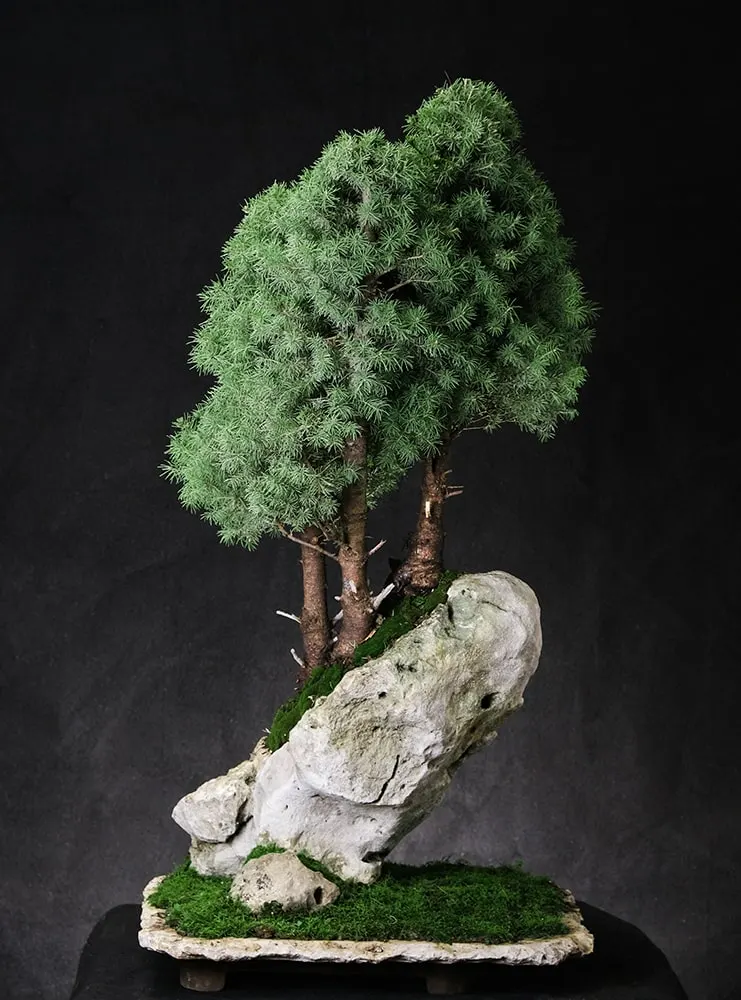
First, prepare the number of young plants you need and a suitable pot. When arranging them in the pot, keep in mind that every trunk should be clearly visible; don’t plant the trees in a line, and avoid any kind of symmetry. In this style the trees can also be split into two separate groups with an open space between them. The group can also be placed on a slightly raised area in the pot, a “hill”. If there are two groups, both can stand on raised ground with the space between them left level with the rim of the pot. Or one group can sit on a “hill” and the other on the “lowland”. Use pruning to adjust the heights of the individual trees so that the overall shape of the group forms an asymmetrical triangle.
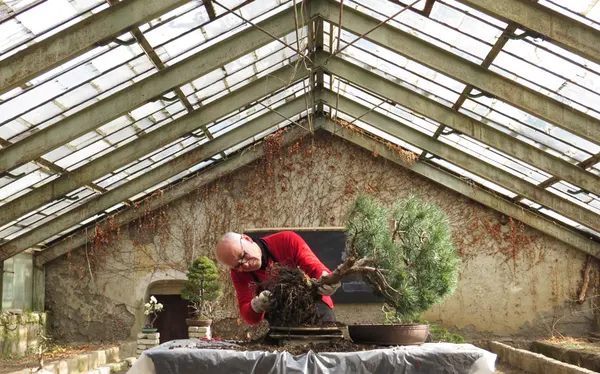
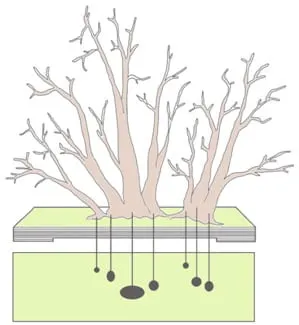
Well-developed plants have roots growing in every direction. This can cause difficulties when planting: the trees sit quite close together in the pot, and the roots will often stop you from placing them exactly where you want. So first, decide clearly which tree goes where. Then, on the side where the roots are likely to get in the way, cut back as many roots as needed for the tree to fit comfortably. Try not to cut off more roots than the plant can spare and still grow normally. It is a good idea to make a few extra small holes in the pot in addition to the drainage holes. In this style you are placing several trees instead of one, and the extra holes make it easier to wire each tree in the position you want. After a while, the roots of the individual trees will intertwine. From then on, repotting, root pruning, replacing the soil and pruning are done in this style just as for an ordinary bonsai.
Kabudachi (株 立)
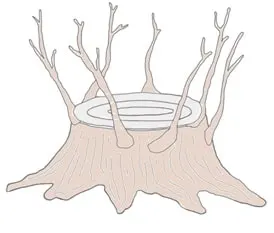
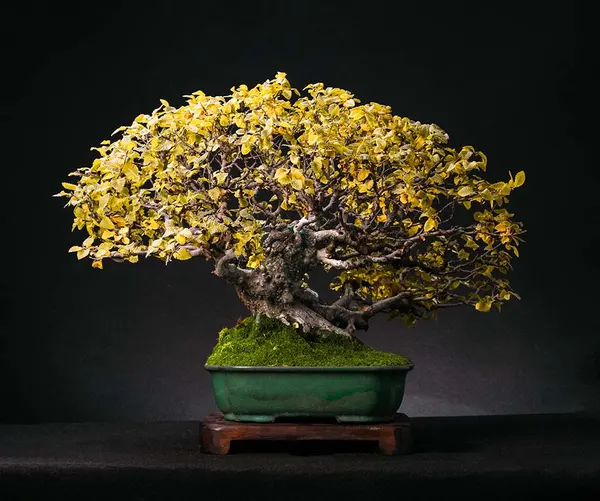
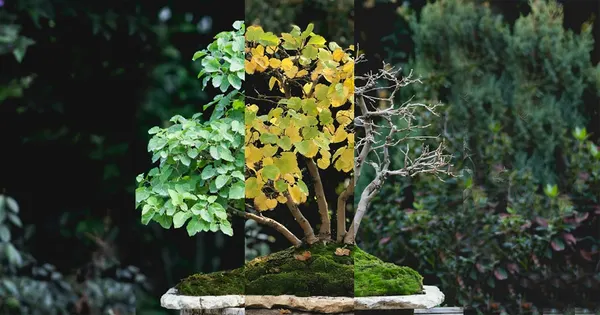
To create this style, a young tree is allowed to grow freely until its trunk thickens to a certain size. In early spring, before the buds start to grow, the tree is cut down completely close to the surface roots, so that only a small stump is left above the soil. In spring, the dormant buds remaining on the trunk produce a mass of new shoots. Once they have grown to a certain size, keep only the shoots you consider necessary for styling the future bonsai. Creating the Kabudachi style this way works only for deciduous trees.