The particulars of creating different bonsai styles. Miniature landscape. Saikei (栽景)
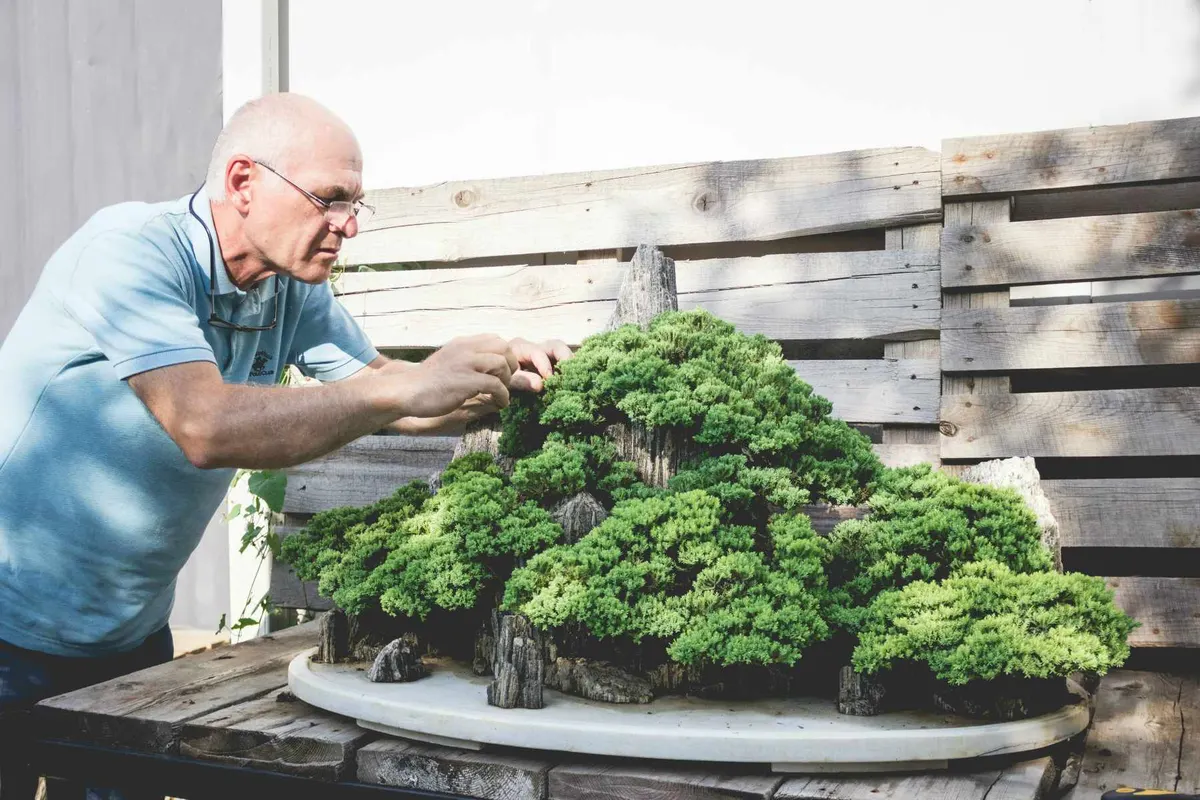
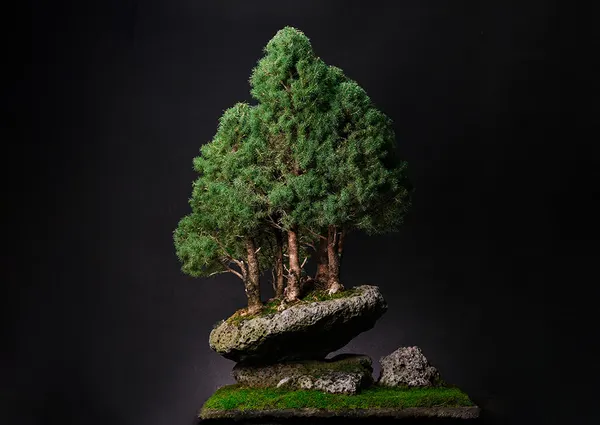
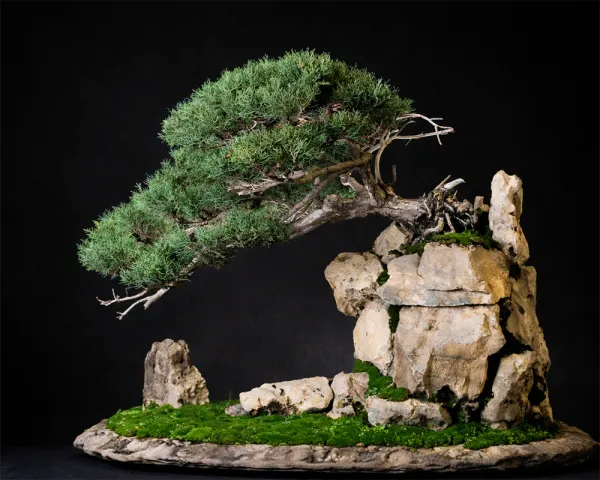
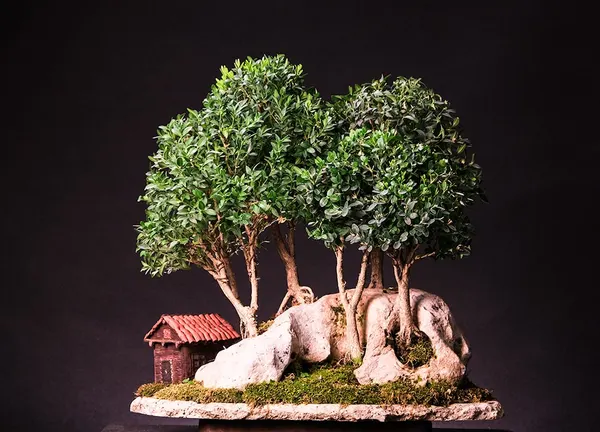
Saikei is the creation of a miniature landscape using stones, soil, water, herbaceous plants, moss and small trees. A saikei should create the illusion of harmoniously composed nature in miniature. Every component must be placed in the container so that all proportions are respected and the composition looks natural.
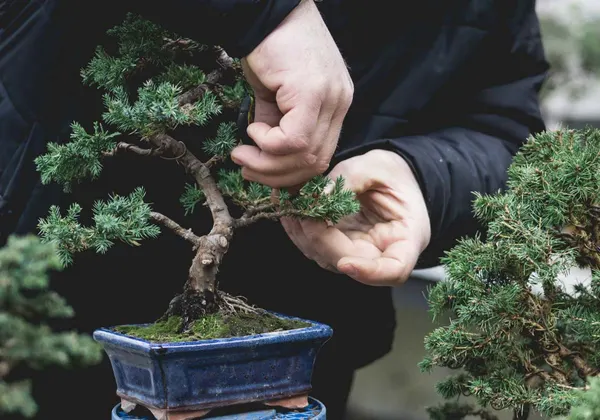
In a saikei, the soil, stones and plants are arranged so as to create a natural model of a seashore, a hilly meadow or a mountainous place. The trees themselves are much the same as in classic bonsai. Besides trees, various herbaceous plants are used as well, which further strengthens the illusion of a natural landscape. Saikei allows a freer choice of trees; we can even use quite small, 2–3-year-old young plants. Pruning, wiring and repotting are the same as for bonsai.
Trees
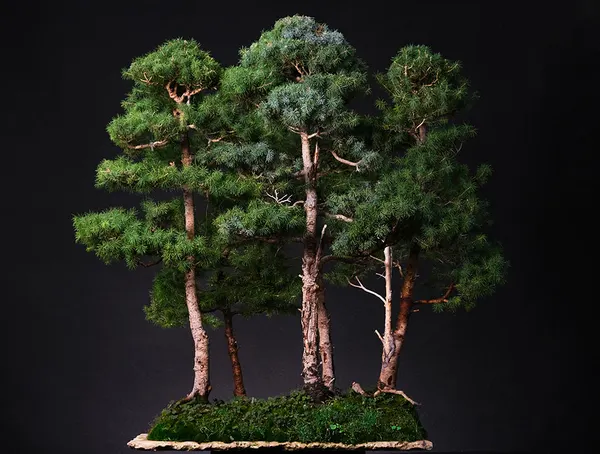
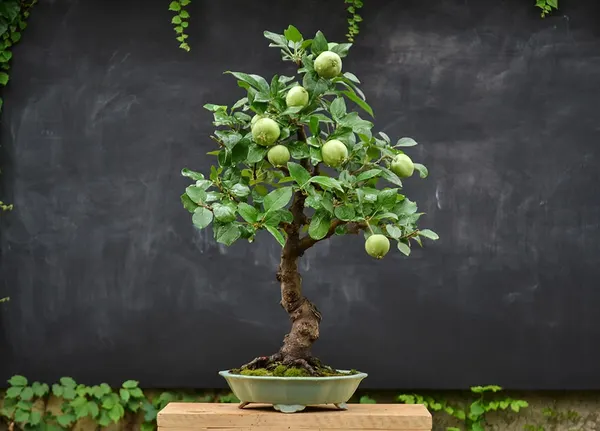
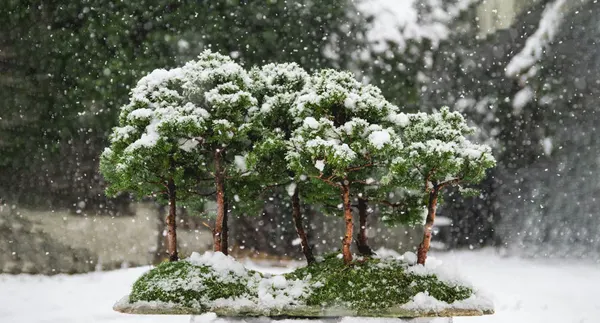
Small or medium-sized trees, both deciduous and coniferous, can be used for a miniature landscape. Fruiting trees, as a rule, are not used here. The number of trees is entirely up to the taste of the artist. Unlike miniature forests, an even number of trees is acceptable. Quite a beautiful saikei can be made even from a single tree. You can use trees of one species or of several. Try to choose trees with the smallest possible leaves or needles. When you decide to make a mixed-species planting, think carefully about whether the plants suit one another, if you want your saikei to look natural. The particular needs of the plants must also be taken into account:
- Different species need different soil, watering and placement. So choose trees with the same “requirements” to plant together.
- The trees are planted between the stones or close to them.
- Use trees of different sizes and plant them at different levels to create a certain illusion of space.
- The trees should not be lined up in a row, and should not be hidden behind the stones.
- Initial pruning and styling are best done before the trees are placed in the composition.
- The composition should be arranged so that the front of the container is left as open space.
- The “deadwood” effect can also be used on the trees.
- Herbaceous plants and moss are also very important elements. Moss of different colors and sizes is very often used as well.
Stones
When choosing stones, it is essential that they are all of the same geological type and roughly the same color. Their shape should be as close as possible to a rock formation, with a rough, furrowed surface. Here too, river pebbles or artificially worked, smooth-surfaced stones won’t do. If the composition is made up of several stones, they should be of different sizes. No open gaps should be left between the stones; they should be filled with soil and covered with moss and herbaceous plants. Fine gravel is also used to create the illusion of paths.
Soil
The soil used is the same as for bonsai, suited to the species of tree chosen. Unlike bonsai, however, the shape of the soil surface is especially important. Whereas the soil surface in a bonsai pot is leveled, the uneven surface of a saikei should recall a natural landscape.
Container
Saikei is made in a shallow container, as a rule rectangular, oval or round in shape. A flat stone with an uneven surface can also be used. The size is relatively large; the length may even exceed 1 meter. Colors: white, gray, dark green, brown. Brightly colored containers can be used as well, though.
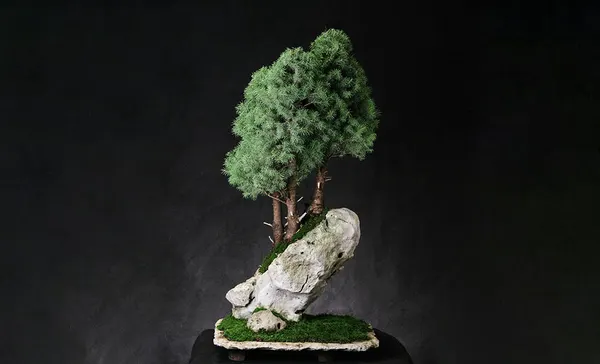
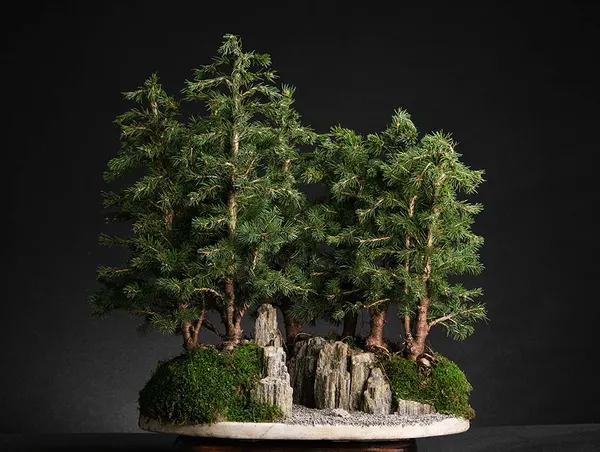
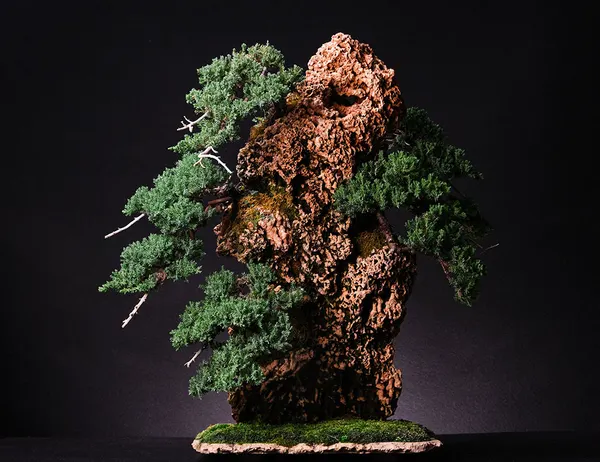
To create the miniature landscape shown in the photo, I chose natural stones brought from Italy and a juniper. In this case I found it harder to “tame” the stones than the tree. They are quite heavy and turned out to be difficult to work with. To give this composition a natural look, I had to change the shape and arrangement of the stones many times.