Bonsai care (diseases and pests)
Diseases and pests
Like any garden plant or houseplant, a bonsai can fall ill and be attacked by various harmful insects. Keeping an eye on the plant’s condition is a daily task for the bonsai enthusiast, especially in spring and summer. That is when pests become active and the risk of the plant being damaged by various diseases is greater. So constant attention is essential, so that harmful insects or disease don’t do the plant irreparable damage. The main cause of plant disease is improper care:
- an unsuitable location
- too little or too much watering,
- too much or too little fertilizer,
- the wrong soil mix,
- poor drainage,
- strong wind.
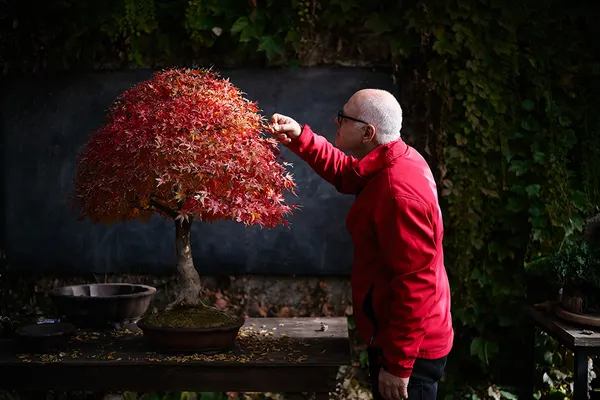
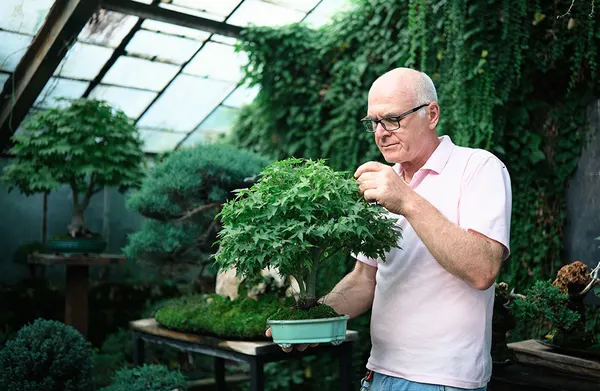
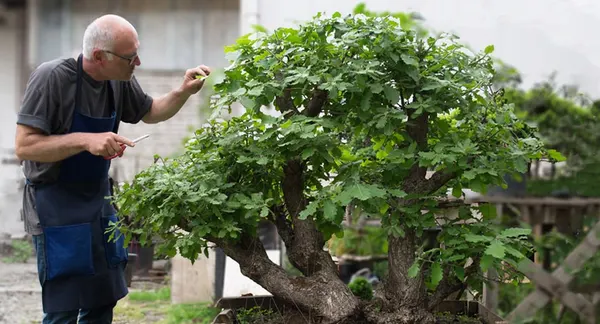
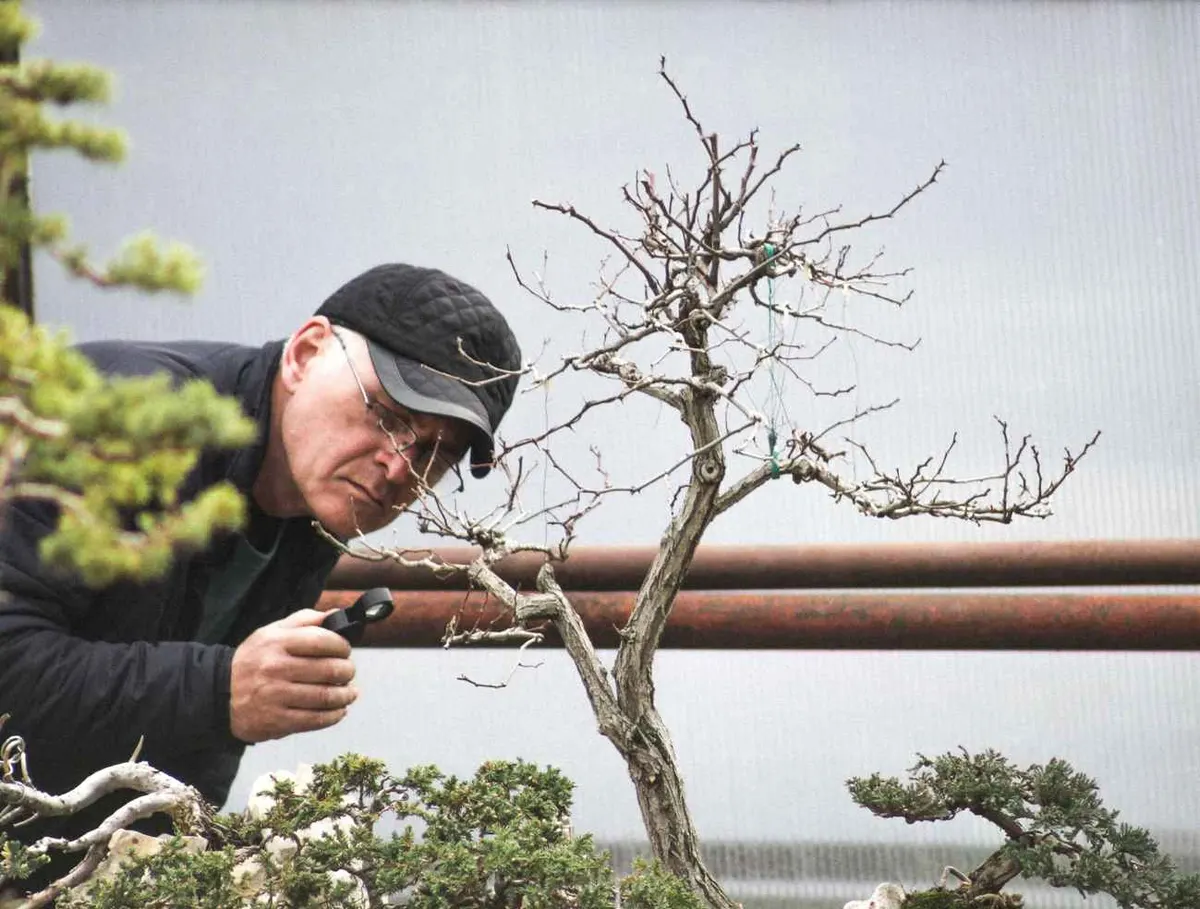
If you do everything right and the plant still falls ill, remember that a well-cared-for bonsai copes with any kind of stress far more easily than a neglected, weakened plant. The first signs of disease appear on the leaves and needles. Regularly inspect both the upper surface and the underside of the leaves. The first symptoms of disease or pest damage are: a change in leaf color, curling, spots, a white coating, sticky or shiny deposits, and discolored leaf edges. Diseases and pests are controlled with special plant-protection chemicals. There is no single product that will solve every disease or insect pest problem a plant may have. So you need to establish the cause of the damage and use whatever treatment is needed to save the plant. Because of its miniature size, even slight damage can disfigure a bonsai. So, unlike plants growing in nature, a bonsai needs a careful inspection every day. Time lost through inattention can have irreversible consequences. First of all, leaves that have dropped because of damage must be collected and burned. Likewise, if you notice that a leaf on the plant is badly damaged, it’s best to cut it off and burn it. If you discover a disease, isolate the plant. Pests and diseases spread easily to other plants.
Diseases
Powdery mildew Powdery mildew is a fungal disease caused by powdery mildew fungi. It develops on plants from the beginning of summer. A grayish, powdery coating appears on the leaves, shoots and fruit. The leaves turn yellow prematurely and drop. The fruit hardens and splits. The infection usually appears first on the leaves closest to the ground and then spreads over the whole plant.
Rust Rust is a disease caused by fungi. Symptoms: small rust-colored pustules develop on the leaves. The diseased plant’s metabolism and water balance are disrupted, and its photosynthetic capacity declines.
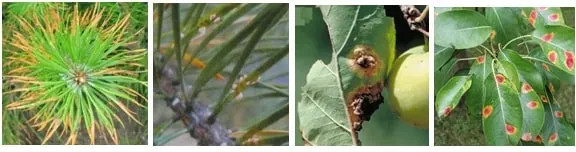
Chlorosis In chlorosis the production of chlorophyll is disrupted and photosynthetic activity drops markedly. As a result: leaf edges curl,
- leaves partly or completely lose their green color
- leaves drop early,
- new leaves come in smaller,
- the plant’s growth slows.
The cause of the disease may be either infectious or non-infectious. Infectious chlorosis is caused by viruses, fungi and other microorganisms. This infection is often spread by pests (mites and aphids). Non-infectious chlorosis can be caused by:
- improper watering,
- insufficient light,
- air humidity unsuited to the plant,
- a shortage of certain elements in the soil (iron, magnesium).
Verticillium wilt Verticillium wilt is a disease that attacks the tree’s vascular system and causes wilting. It is caused by the fungus Verticillium; it enters the plant through damaged roots and can kill a tree in just a few days. With verticillium wilt, the leaves on the lower part of the tree turn yellow first, but they don’t drop. Then the same happens to all the leaves, after which the shoots weaken too. To prevent verticillium wilt, follow a few basic rules: don’t water your bonsai more than it needs; don’t overdo nitrogen fertilizer; don’t damage the roots when repotting.
Root rot The hardest thing of all is spotting root damage, because the roots can’t be checked every day. You can really only inspect them when repotting. So damage can be found only once the process is well advanced. When repotting, examine the roots carefully: a rotten root is dark in color and breaks easily. Be sure to cut off all rotten or broken roots with sharp scissors. The soil must be clean, free of any grubs or insects. You also need to keep an eye on the drainage holes. Water collecting in the pot is the main cause of root rot.
Pests
Insect pests are very small parasites that feed on a plant’s leaves or sap. First and foremost these are various kinds of aphids and mites, which are so small that they are practically impossible to see without a magnifying glass.
Spider mites This microscopic parasite, 0.5 mm in size, lives on the underside of the leaves. It spins a very fine web over the plant. It lays up to ten eggs a day, attached to the web. The spider mite pierces the surface of the leaves and sucks out the contents of the cells. Its salivary glands secrete a substance that damages the chloroplasts (the cell structures in which photosynthesis takes place). At first reddish spots appear on the leaves; then the leaves darken, dry out prematurely and drop. If spider mites multiply massively, the plant dies. Aphids Aphids are the most widespread insect pests, attacking both deciduous trees and conifers. They range from 0.5 mm to 6 mm in size. They breed very quickly, at least twenty times a year. Aphids leave a characteristic shiny, sweet coating on the leaves that is easy to spot if you look carefully. Aphids descend on a plant in large numbers, especially on fresh new shoots. They can very quickly spoil a bonsai’s ornamental appearance, and if not treated in time, they will kill the plant. On conifers you may find white, flaky, fluffy deposits. This is one kind of aphid. They breed very quickly and can kill a plant completely within a single season. Caterpillars Because of their size, caterpillars are easier to spot than mites or aphids. The first signs of damage are:
- holes in the leaves,
- chewed leaf edges,
- leaves rolled into cones, which the caterpillar uses as a “nest.”
Ants Ants carry various diseases. If you notice a large number of ants near the place where you keep your bonsai, be sure to use a chemical treatment to get rid of them. Protecting a plant from diseases and pests is quite a difficult task for a non-specialist. To begin with, making the right diagnosis is not all that easy, and the chemicals that will cure a given disease and wipe out pests change from year to year. The list of pests and diseases above is, of course, incomplete. Different species are affected by different diseases. So the main thing is not to leave your plant unattended. If you notice any suspicious symptom, consult a specialist right away who can choose the right plant-protection product for you, and follow their recommendations carefully.