How to start styling a young tree (Part II)
Main branches
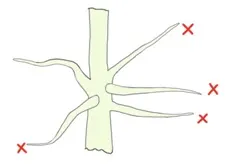
There are a few rules for deciding which branches to cut because they would get in the way of the future bonsai’s shape. The pictures show a likely branch arrangement, with the branches to be cut marked:
-
Of branches growing from the same point, only one should remain. A branch on the front that points straight at the viewer should be cut.
-
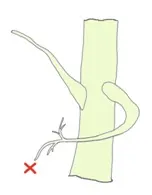
A curved branch that crosses the trunk when seen from the front.
-
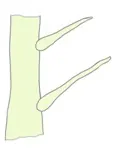
Of branches growing close together one above the other, only one should remain.
-
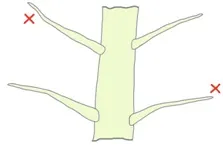
Branches on opposite sides should not grow from the same level. In that case, one of them should be cut.
-
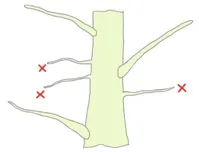
All the small branches between the main branches should be cut.
-
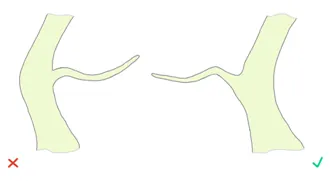
When cutting thick branches, there’s one more point to keep in mind: if the trunk is curved, a main branch should grow from the outside of the curve.
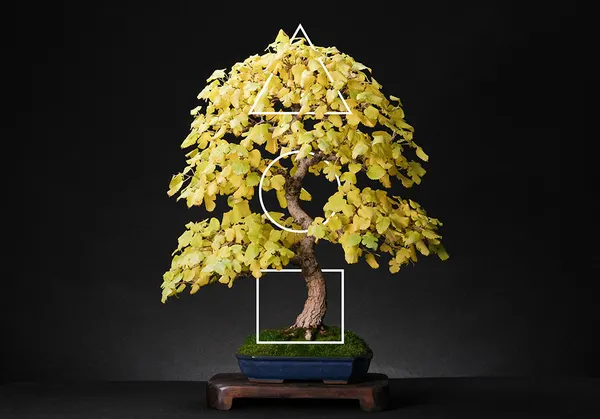
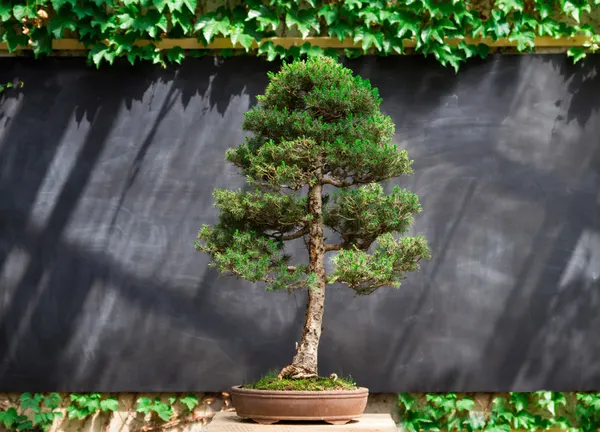
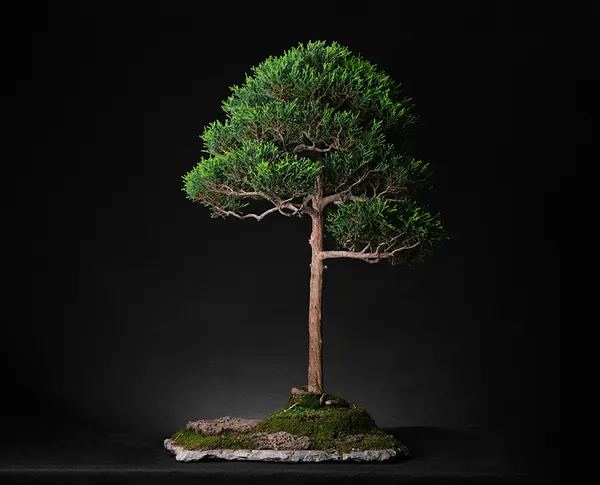
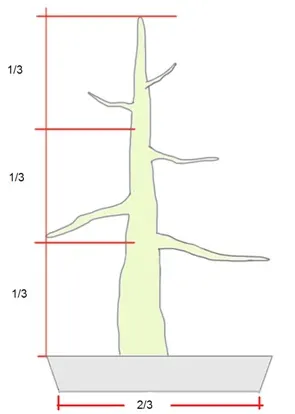
To get a better idea of how to choose the placement and number of branches, let’s look at the Chokkan style. On the lower 1/3 of the total height, the branches have been removed entirely. Branches on opposite sides don’t grow from the same level, and the branch closest to the base is thicker and longer than all the rest. Each subsequent branch sits on the opposite side from the one before, slightly higher, and is shorter than the branch below it. The apex and the base of the trunk lie on one vertical line. Ideally the bonsai should have two or three branches at the back, which creates a certain illusion of depth. The lower branches should slope downward, the way they do on old trees growing in nature.
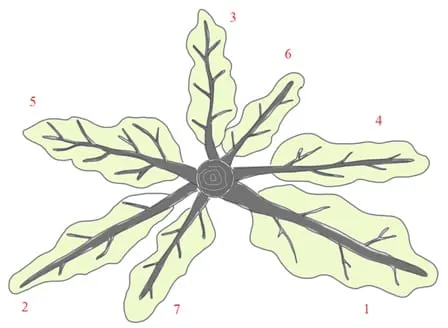
Secondary branches
Only the thick main branches that the future bonsai needs are now left on the tree. Next we begin pruning the secondary branches. Each secondary branch should be shortened to the desired length and given a shape that suits the particular style. Here too there are certain rules that are worth following to style a bonsai properly. First of all, every branch that clearly points upward or downward should be cut.
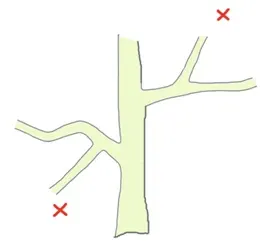 If secondary branches are tangled together, you need to work out carefully which of them to keep, and cut back the rest. To show off part of the bonsai’s trunk well, on the thick branches lower down you should cut off all the secondary branches growing close to the trunk.
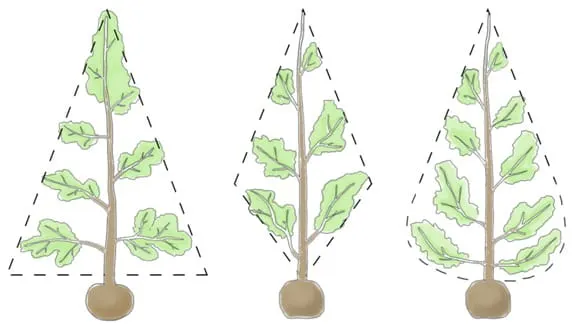
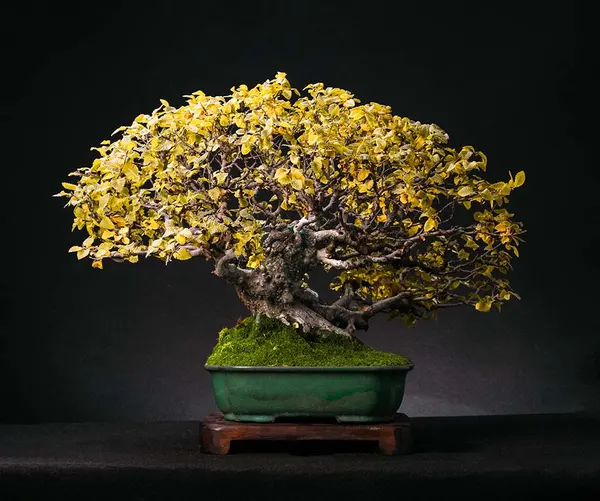
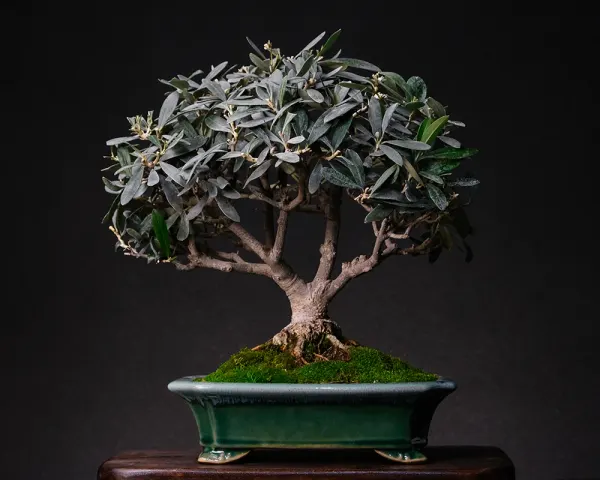
If we look at the picture, we can see that secondary branches should also be arranged on the main branch according to a certain principle. At the tip of the branch there are only a few leaves and shoots. Their number and length increase steadily toward the trunk. Ideally, branches on opposite sides should alternate in their distance from the trunk: if the branch closest to the trunk is on the left, the next one, a little farther out, should grow on the right, and so on. If a main branch is curved, a secondary branch should grow from the outside of the curve.