How to start styling a young tree (part I)
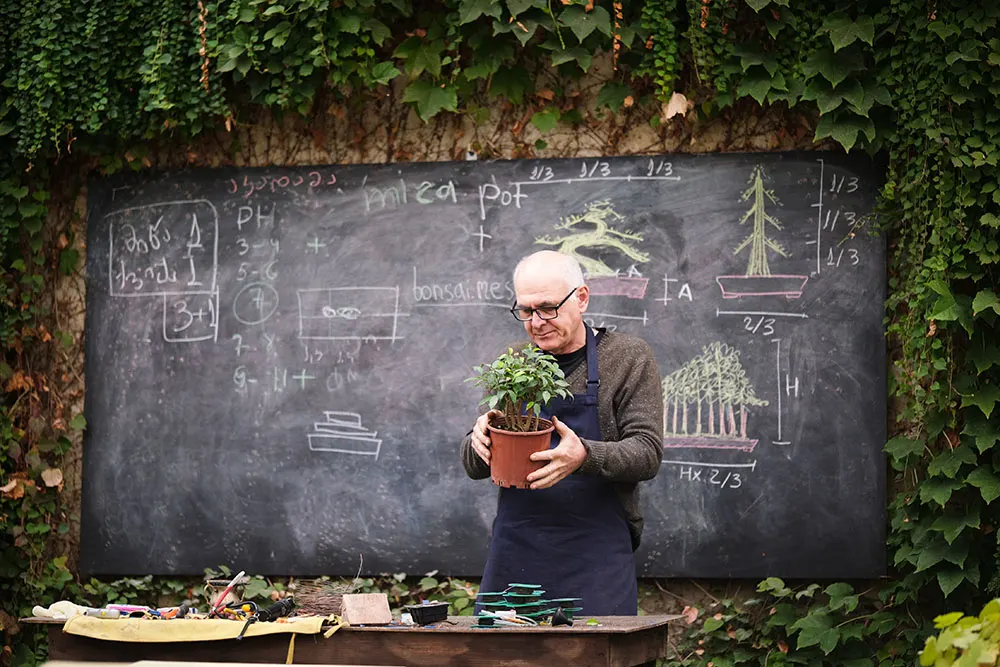
A seedling grown from seed
Let’s say we have a seedling we’ve grown from seed. Between late autumn and early spring we cut back the apex, leaving 3–4 well-developed buds.
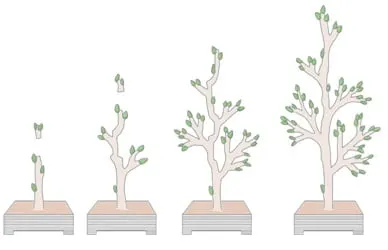
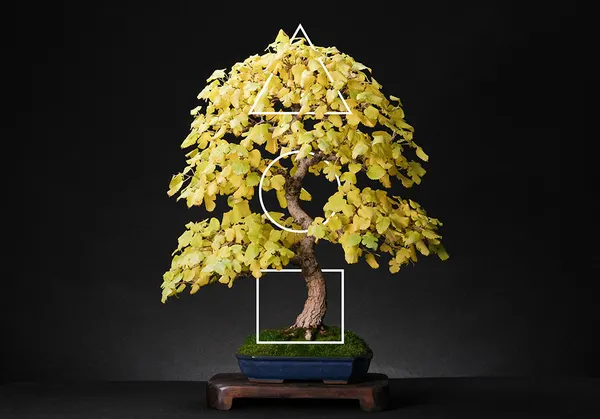
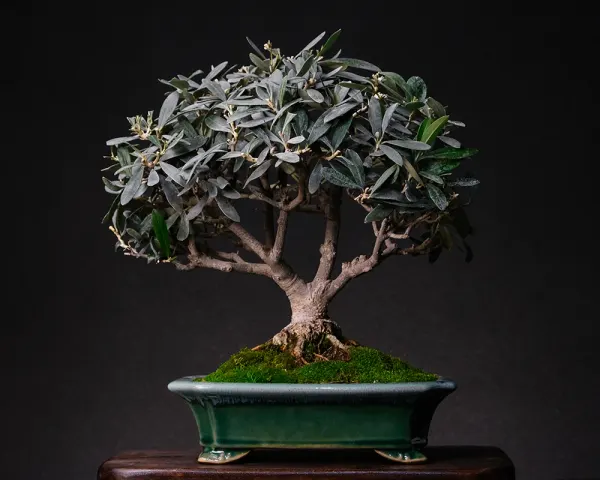
After the cut, new shoots will start growing from the remaining buds. We let the new shoots grow freely for one growing season. The following season we again cut back the apex and the tip of any branch that has grown noticeably longer. After 3–4 years we will have a young tree with a fairly well-developed canopy (the branches grow in different directions, the trunk has thickened to a certain size and the roots are well developed). This will allow us to start styling the tree in whatever style we choose. An experienced specialist already knows in advance what style the future bonsai will be; beginners would do better to carry on according to how the new shoots develop after pruning. We can also let the tree grow freely for a few years and only then start styling it. The same steps are needed when the young plant has been grown from a cutting. A seedling grown from seed is best used to make a small bonsai. Making a medium or large bonsai would take considerably longer.
Nursery stock
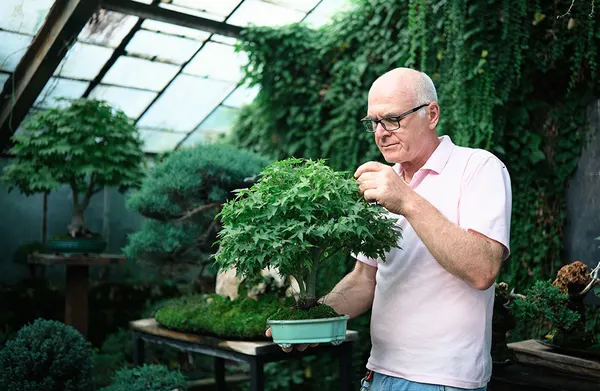
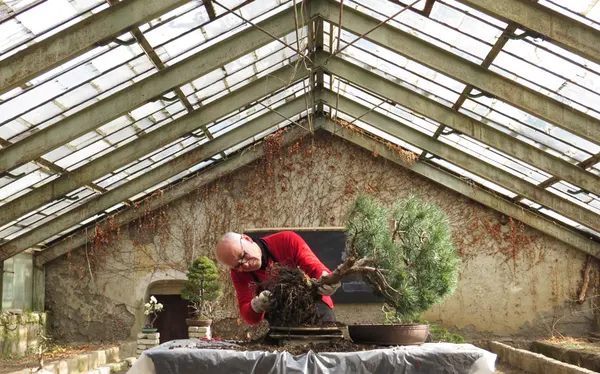
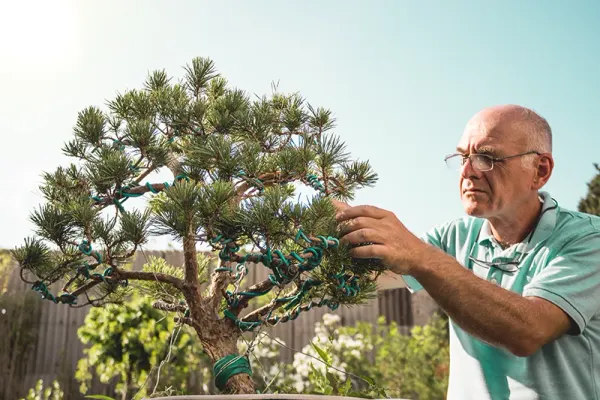
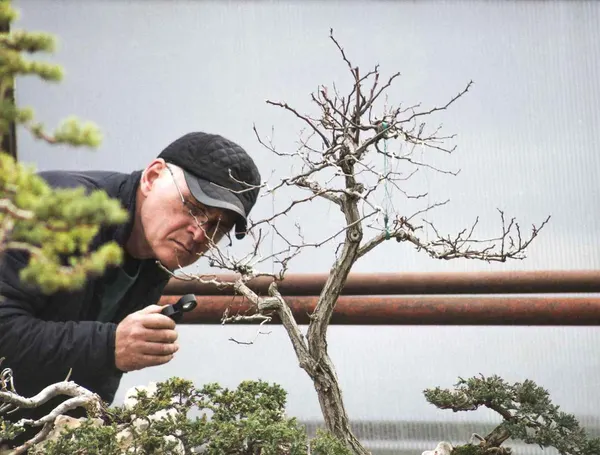
A plant bought from a nursery is a few years old and already has a number of well-developed branches. After buying it, you should examine the young tree carefully and decide what size and style the future bonsai will be, and which side will be the front — the viewing side. When choosing the front, the thick roots (the future bonsai’s surface roots) very often play the deciding role. Nurseries usually sell plants in plastic containers. Take the plant out of its container and carefully start removing soil from the surface until the thick roots come into view. To remove the soil, use a three-pronged root rake, a pointed stick or a small brush. Cut off all the fine roots lying above the thick roots. It’s rare for the thick roots of a young tree to be evenly spread around the trunk. So it’s best to choose as the front the side from which the thick roots look most natural and attractive. Examining the young tree beforehand, and above all deciding on its future shape, usually takes quite a long time — a few hours, or perhaps even a week. Never rush: thinking the future shape of the bonsai through carefully in advance is very important for getting the result you want. Once everything has been well thought out, we begin pruning the young tree.
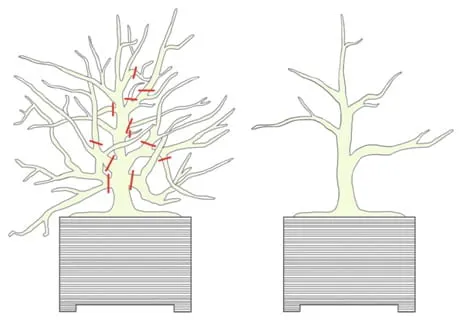
The initial pruning lets us create the bonsai’s initial “skeleton” — the basic shape on which all further styling of the bonsai will be based. First we cut off all the unnecessary thick branches and shorten the remaining branches to the length we want.