Watering bonsai
You may hear or read somewhere: “Watering encourages a plant to grow, so if you water your bonsai rarely, it won’t get big and you’ll reach the result you want more easily.” This is completely wrong. If you don’t water a bonsai properly, the tree will be weak and unattractive, and a lack of water can kill it altogether. A bonsai needs regular, careful watering. Keeping it miniature calls for other methods. The growth and development of plants depend on water at all times. Water is drawn up from the soil by the roots. It then travels to the trunk and branches and evaporates into the atmosphere through the leaves. This process allows the tree to distribute the essential nutrients it takes from the soil in every direction. A plant cannot absorb nutrients from the soil in a dry state. So when there is no moisture around the roots, water stops moving through the tree and nutrients are no longer delivered.
In nature, a tree’s roots grow deep into the ground. If it doesn’t rain for a while, the tree can still get the water and nutrients it needs through those deep roots. Confined to a pot, a bonsai has no way to steer its roots in the direction it needs. There is very little soil in a pot, so a bonsai depends far more on watering than a tree growing in nature does.
Watering a bonsai properly is not as easy as it may seem at first. You may even lose several trees before you realize that incorrect watering was what killed them. In Japan they even say that a beginner needs at least 3 years to learn how to water a bonsai correctly. It is also worth noting that on hot summer days, the movement of water through the tree and its evaporation from the leaves regulate the plant’s temperature and protect it from overheating. As long as the soil is moist, a tree can keep developing normally even in very high temperatures. When water runs short, however, “scorch” spots appear on the leaves and shoots, which ultimately causes the tree to dry out and die.
How much and how often to water
How often a bonsai needs watering depends on the conditions it’s kept in, the soil in the pot and the species itself. A bonsai should be watered not on a strict schedule, but as it needs it. In late spring and summer, for example, watering once a day may not be enough. There is another common misconception: that watering while direct sunlight is falling on the tree is harmful. In summer it is sometimes even essential to water a bonsai during the sunny part of the day. So don’t set yourself a routine along the lines of: “The bonsai must be watered once a day, in the evening.”
Some species need soil that is constantly moist, others need less moisture, but letting the soil dry out completely very often kills the tree. Be sure to check the condition of the soil every day and water whenever it is needed. There are a few simple signs that the soil is drying out: as the soil begins to dry, its surface changes color; dry soil is also noticeably harder on the surface; if your bonsai has been in its pot for a few months, you can also tell whether it needs water by picking it up. The difference in weight is quite noticeable too — dry soil is considerably lighter. Some specialists recommend using a moisture meter, but in my opinion there’s no need for one.
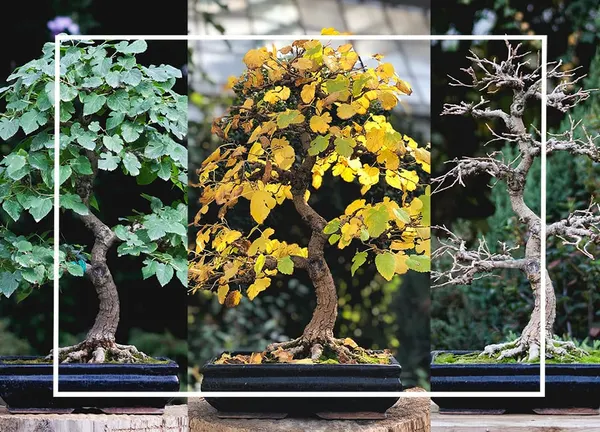
On deciduous trees, the first sign of late watering is drooping leaves and fresh shoots. Inadequate watering is harder to spot on conifers. While watering a deciduous tree just a few hours late can make its leaves droop, with conifers as much as a week may pass before you realize you have been regularly underwatering the tree.
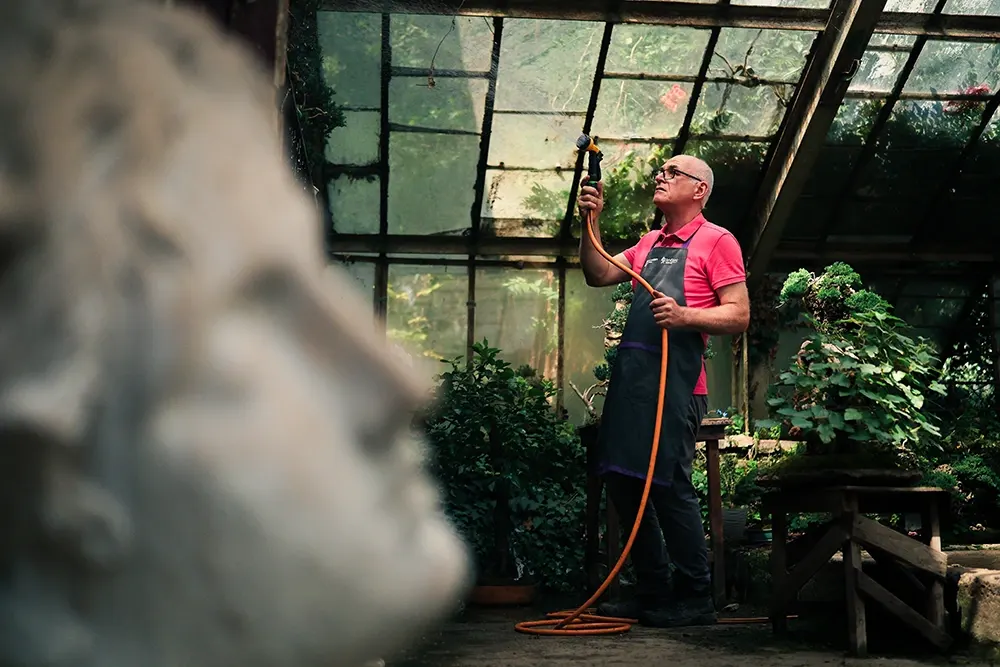
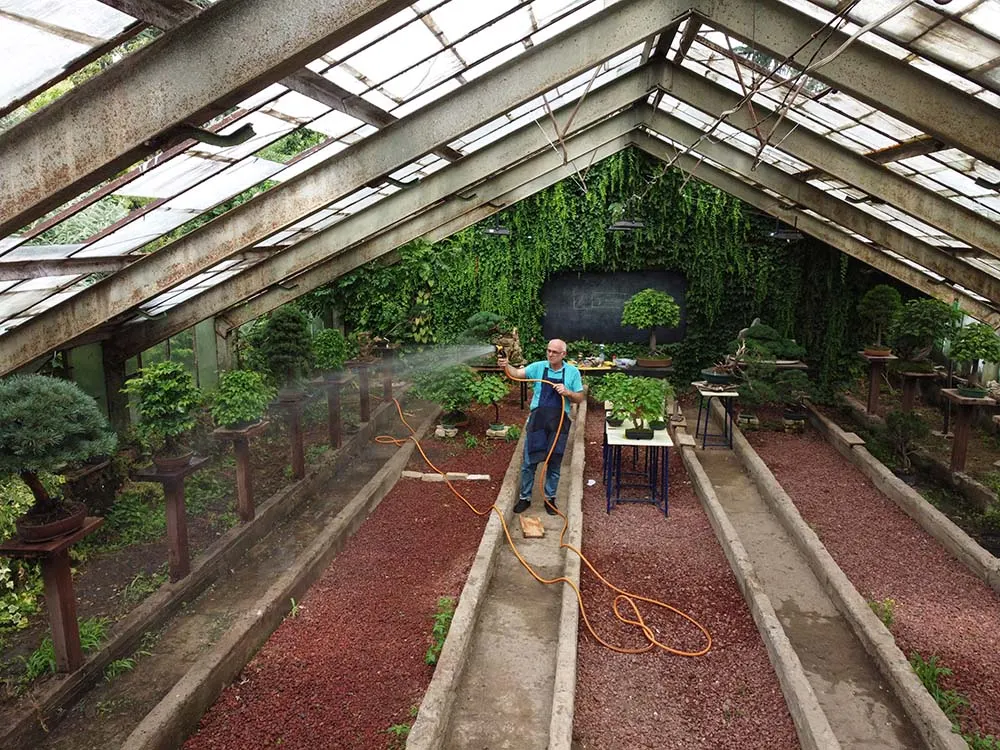
Bonsai are watered with a special small watering can that lets the water flow out gently. Pouring a large amount of water all at once washes away the soil surface, leaves hollows here and there, and exposes fine roots on the surface, which will inevitably dry out and die. All this noticeably spoils the tree’s overall appearance, to say nothing of the harm that dying fine roots can do to the tree.
The best water for watering is rain, spring or lake water. But if you have a fairly large collection of trees, it’s hard to keep enough in stock. So use ordinary tap water. Its downside is the chlorine and high mineral salt content. After regular watering with such water, the surface roots and the rim of the pot become covered with a white deposit, so you will need to remove it from time to time.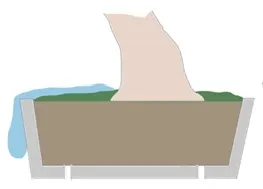
Pay attention: if a lot of the water runs off the surface and over the edge of the pot, pour it slowly, only as much as the surface can hold without overflowing, wait for it to soak in, then add more. After watering, water should come out of the drainage holes, because otherwise only the surface may get wet while the soil deeper down stays dry. That way you’ll be sure the soil in the pot is thoroughly wet. And the sign of thoroughly wetted soil is precisely water running out of the drainage hole.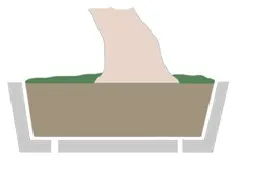
Suppose the soil in the pot has dried out completely. If you look closely in such a case, you’ll see a gap has formed between the pot and the soil. If we water a bonsai in this state, most of the water will run straight through the gap and out of the drainage hole.
In that case it is better to use the same method we use for the first watering after repotting. Set the tree in a vessel larger than its pot, fill it with water up to the rim of the pot, and lift it out once the soil surface is wet. The excess water will drain out through the drainage holes. But don’t use this method regularly.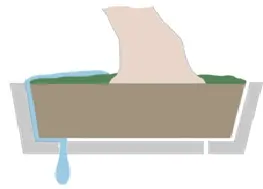
In spring and summer a tree needs much more water than in late autumn or winter. In winter you may water the tree only once a month for the whole season (do not water a bonsai during frosts). The time of day you water a bonsai also matters. In late spring and summer, when temperatures are high, try to water so that the soil in the pot stays moist through the night. Water in the evening. If you water only in the morning or at midday, the soil will soon dry out and the tree will spend practically the whole night in dry soil. In autumn, when the sun is no longer so fierce, you can water your bonsai at any time of day.
As for overwatering: when the soil around the roots is constantly wet, the amount of oxygen in the soil drops. This then causes the fine roots to deteriorate. The damaged roots begin to rot, and if the process is not stopped, a large part of the root system gradually rots away. As a result, the tree first weakens and, if the situation is not corrected, dies. So once you have watered a bonsai thoroughly, let the soil dry out gradually, and only then water again.
Soil in a pot can also become waterlogged from prolonged rain. Even a week of non-stop rain will not harm the tree. The danger is when the soil in the pot stays saturated with water constantly, throughout the whole season. There is one more mistake beginners make. In summer, after a brief shower, only the surface of the soil in the pot gets wet, while deeper down it stays dry. If you’re not sure the soil is thoroughly wet all the way through, water the bonsai as usual. In this case the extra watering will do no harm.