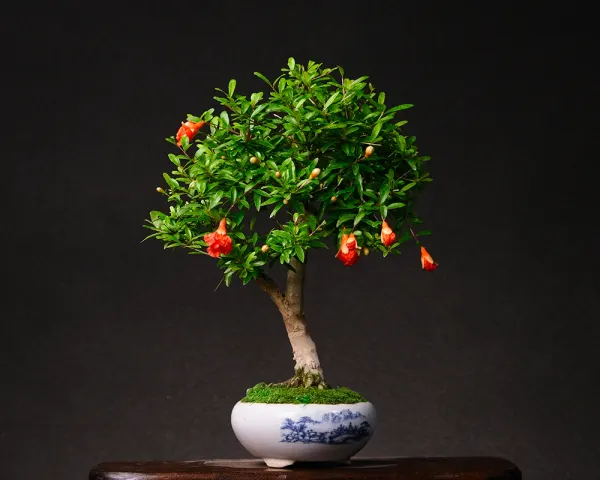
Bonsai care in winter
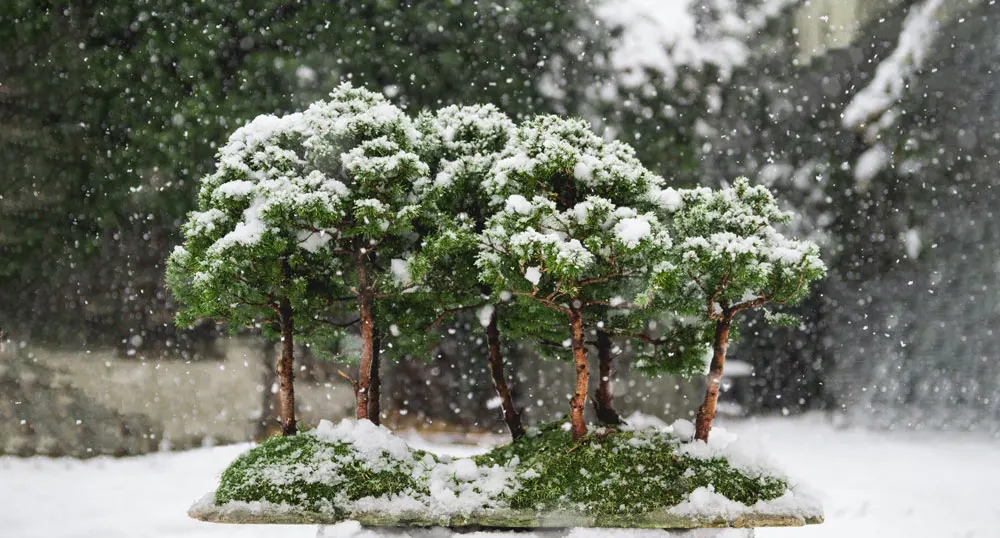
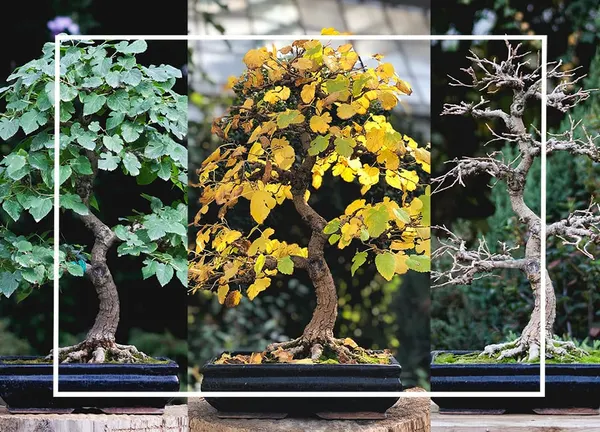
In winter a tree is dormant, and its active growth is suspended until spring. The dormant period is just as essential to a plant’s vitality as the period of active growth. That is why bringing a bonsai into the warmth in winter merely because it “might catch cold” is fatal for the plant. Of course, bringing it indoors for a day or two to decorate the interior will do no harm. But if it spends the whole winter in the warmth, sooner or later it will certainly die.
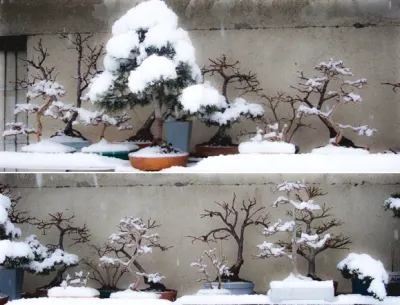
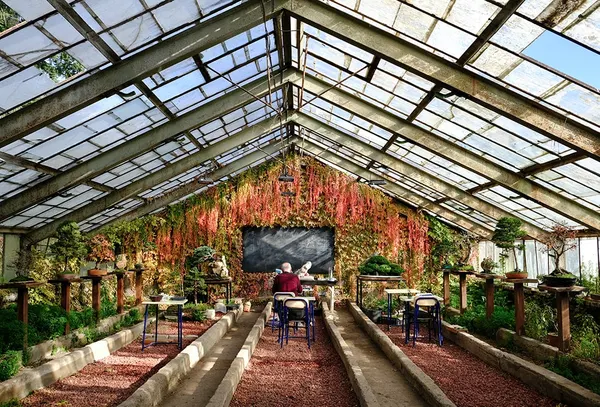
In temperate regions where winters are not too harsh, a bonsai does not need any special conditions to overwinter. But in regions where winter temperatures drop low (-5° and below), the plant must be protected from frost. This applies above all to the roots. A bonsai’s roots are not buried deep in the ground, so they can easily freeze. For overwintering bonsai, people use so-called cold frames: a small greenhouse-like frame of wood or metal is built and covered with semi-transparent white polyethylene sheeting. Before putting the plant itself into the cold frame, water it well once and cover it, pot and all, with sand or sawdust. In these conditions the roots are protected from frost and the plant needs almost no watering for nearly the whole winter. If you can’t build a cold frame, take some large container, place the bonsai in it and fill it with sand so that the bonsai’s soil surface is covered by at least 5 cm. Bonsai can also be overwintered in the ground. Dig a hole, place the bonsai in it, pot and all, as deep as possible, and fill it in with soil.
Sometimes in spring, after the buds have opened, the temperature suddenly drops below 0°. When this happens, the newly opened leaves and shoots very often freeze and die back. So always stay alert, and in such cases either wrap the plant up or move it somewhere safe from frost.