Bonsai styles
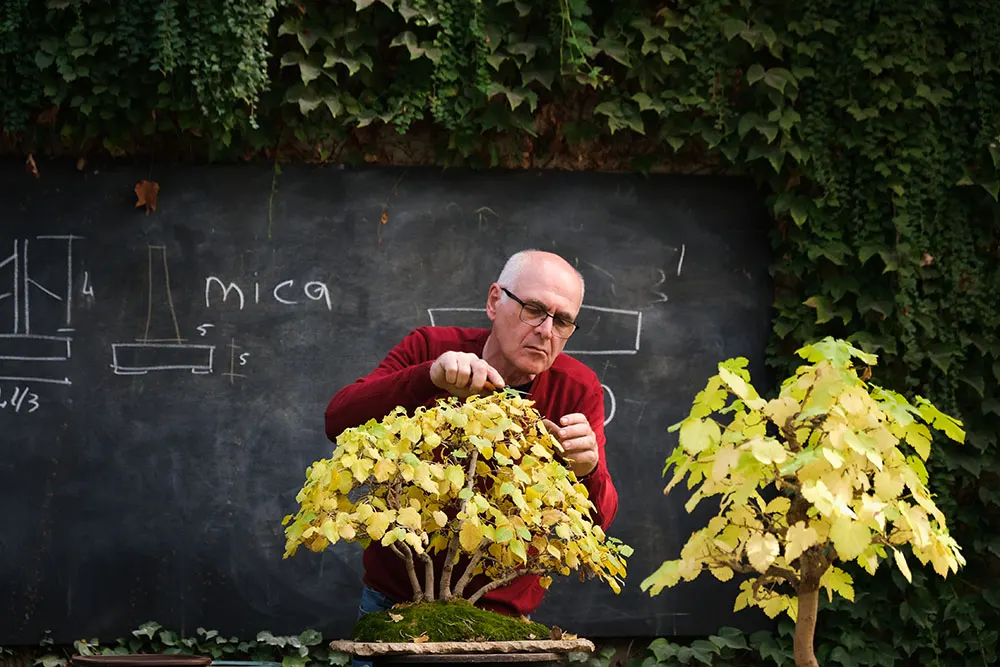
The natural conditions in which trees grow vary enormously. Some have almost ideal conditions for development: enough light, the water and nutrients they need, and open space for the canopy to develop normally. Other trees are deprived of such “luxury”. Some grow on steep rocky slopes, so their roots search for a place to “cling” firmly to the rock. Others grow in soil that lacks water or nutrients; some don’t get enough sunlight; and some lean to one side because of the prevailing winds. In nature, trees very often have to put up a great “fight” to survive in unfavorable conditions. All of this has a strong influence on how a tree develops. That is why trees grown in different environments have canopies, trunks and roots of different shapes and sizes. This diversity of forms in nature laid the groundwork for the established, “standard” styles of bonsai culture. Of course, it is hard to fit the shapes of trees grown in nature into any fixed framework, but in Japan a system of bonsai forms was developed — the bonsai styles, with their own Japanese terminology, used by bonsai enthusiasts and professionals all over the world.
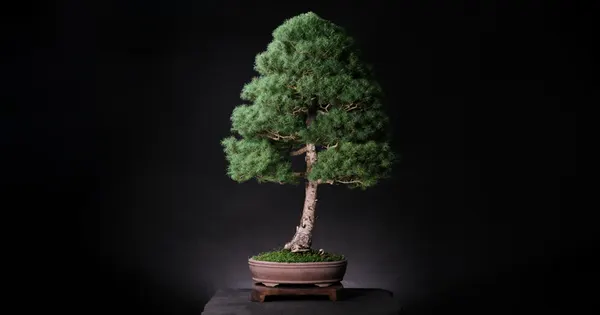
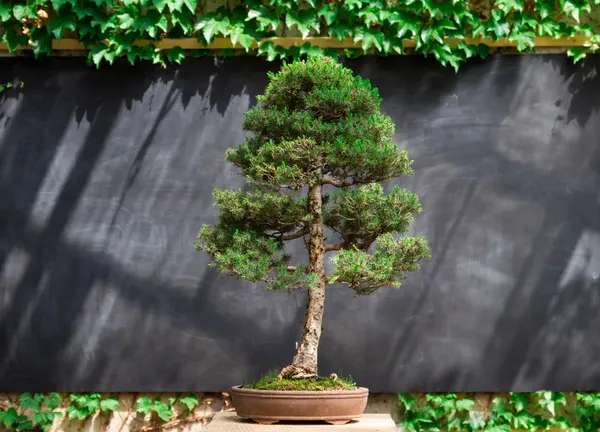
Formal upright trunk. Chokkan (直幹)
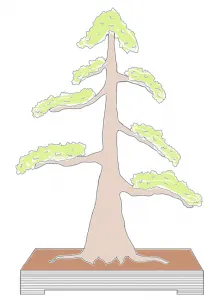
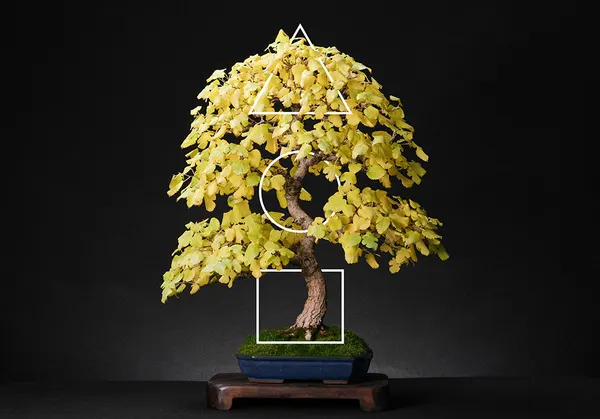
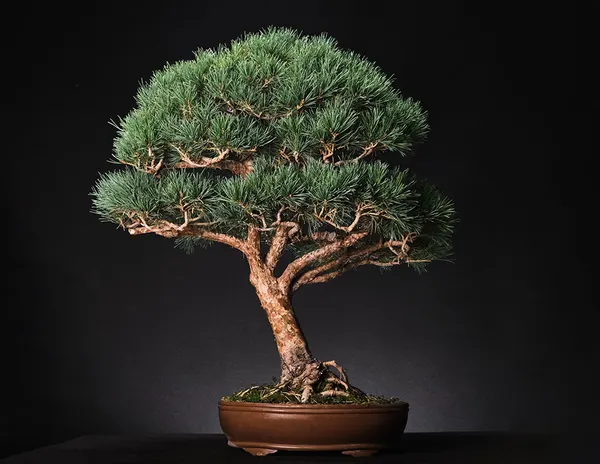
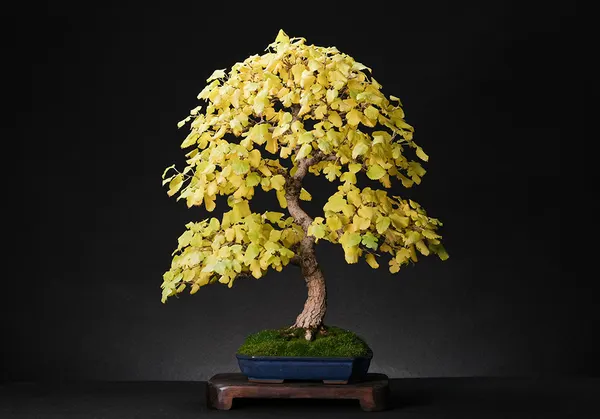
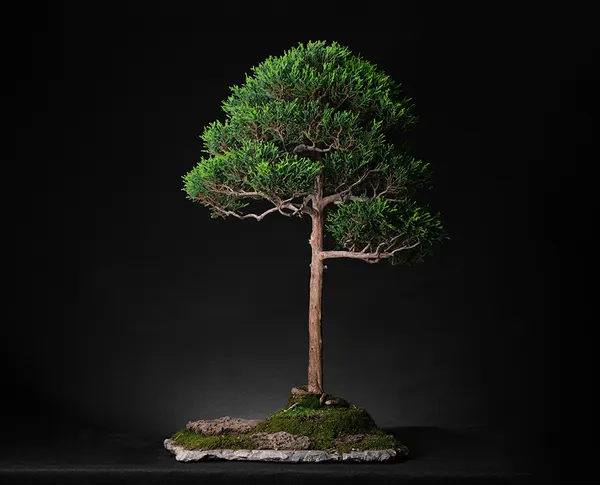
The trunk is straight, without any deviation. The canopy should have a conical shape. The apex and the base of the tree lie on one vertical line. No branches grow on the lower third of the tree’s total height. The surface roots spread out in all directions
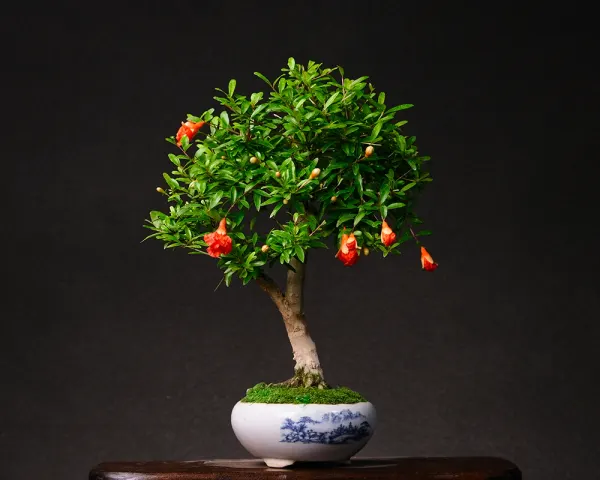
Trunk bent in one or several places. Moyogi (模様木)
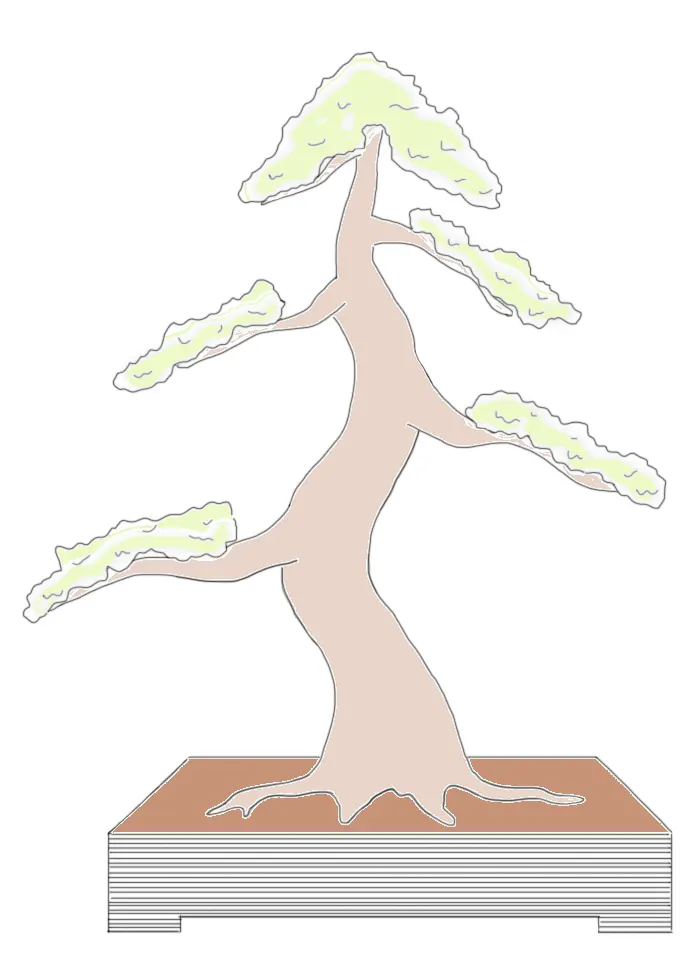
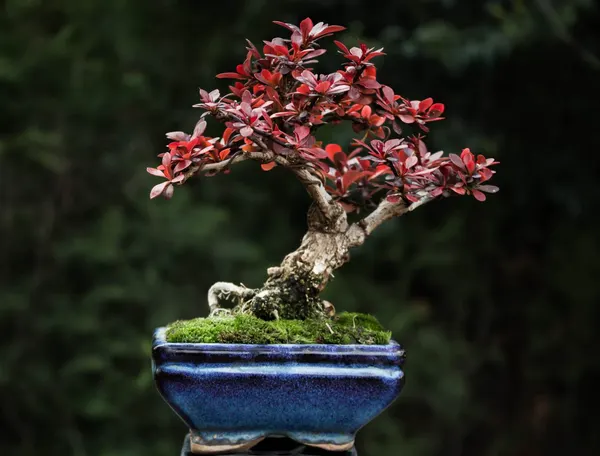
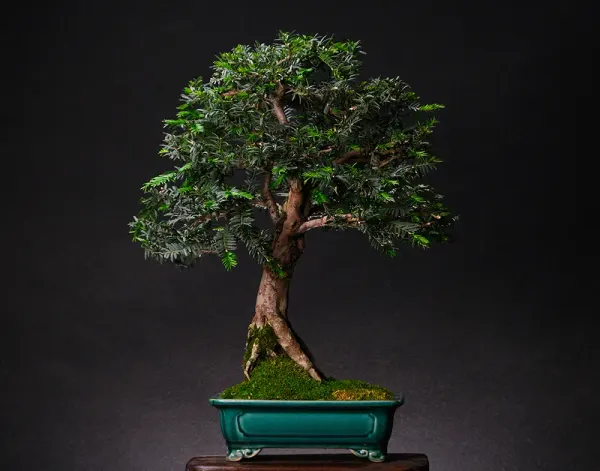
The trunk curves back and forth. Here too, as in the Chokkan style, well-developed surface roots spread out in all directions. Despite the curving trunk, the apex and the base of the tree lie on one vertical line. No branches grow on the lower third of the total height
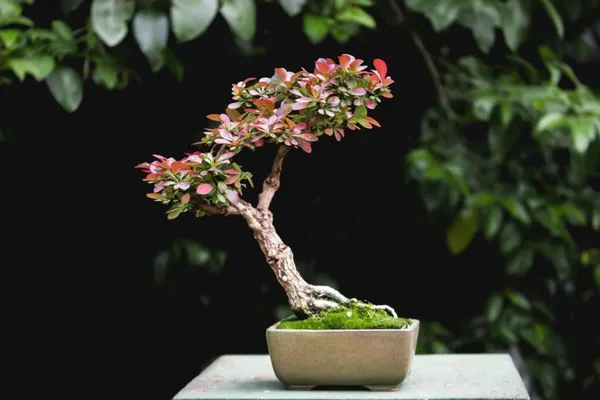
Straight or curved trunk leaning to one side. Shakan (斜幹)
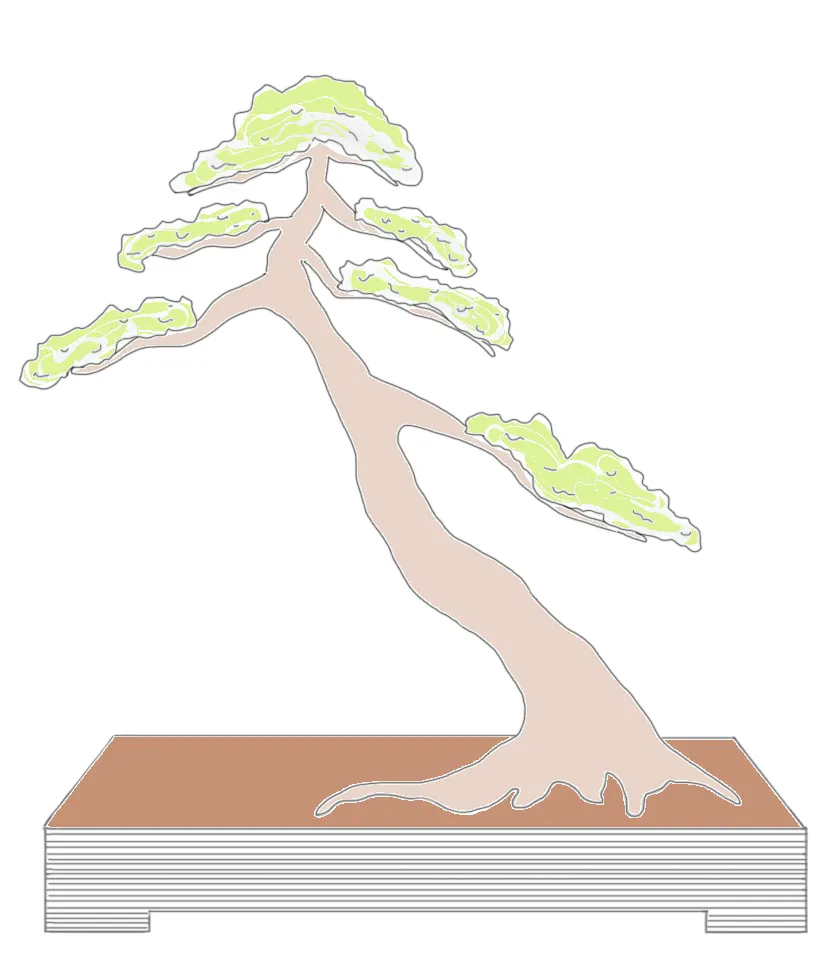
The trunk leans at 60–70 degrees to the surface. The first, lowest branch should be on the side opposite the lean. The trunk may be straight or bent in several places.
Zigzag trunk. Bankan (蟠幹)
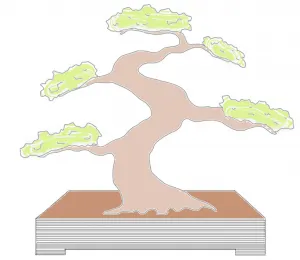
In the Bankan style the trunk has a zigzag shape, roughly like the Latin letter “S”. The main branches grow outward from the bends in the trunk, while the apex and the base lie on one vertical line.
Twin trunk. A single tree whose trunk divides in two at the roots. Sokan (双幹)
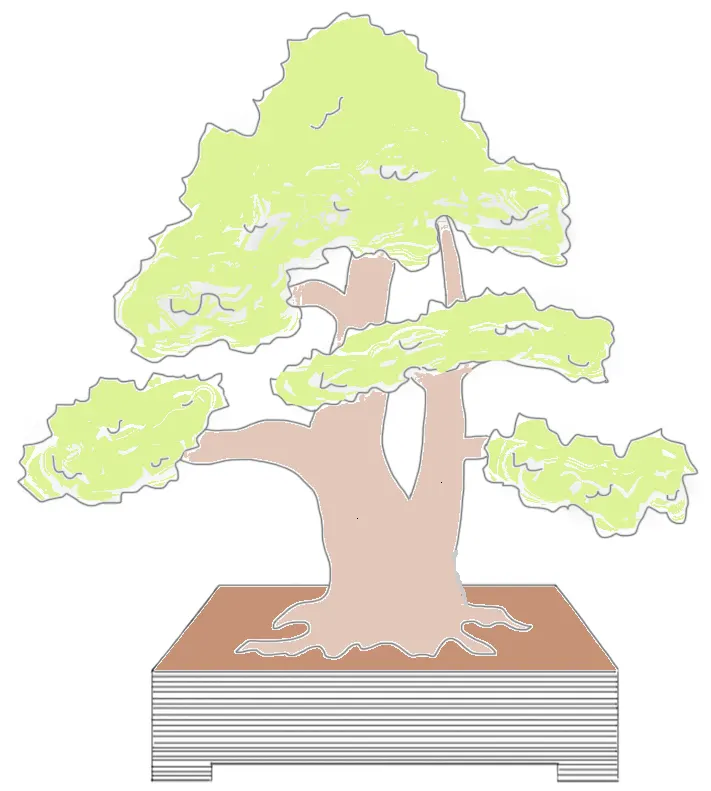
The split starts from a shared root. Two trunks of different size, both in thickness and in height. The thicker, better-developed trunk is the taller one. Together the two trunks should form a single shared canopy and have the shape of one complete tree.
Cascade: a tree “hanging down” in one direction. Kengai (懸崖)
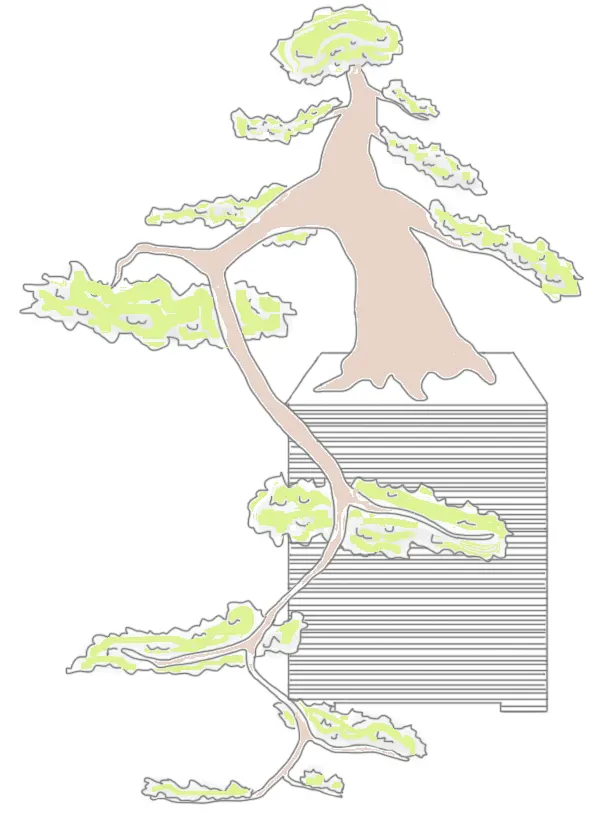
A bonsai in this style resembles a tree growing on the steep side of a ravine. The roots are anchored deep in the ground, and the branches hang down into the ravine. The upper part of the canopy stays above the level of the pot. The main part bends downward in a zigzag. The tip of the canopy must be below the level of the pot’s surface, and in many cases it reaches even below the bottom of the pot. Bonsai in this style are displayed on a special tall stand.
Semi-cascade. Han-kengai (半懸崖)
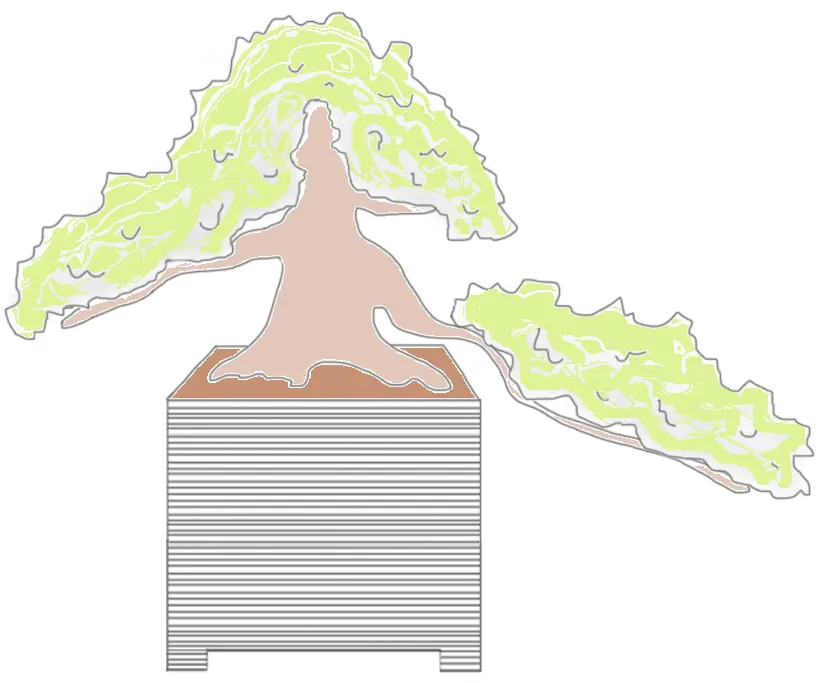
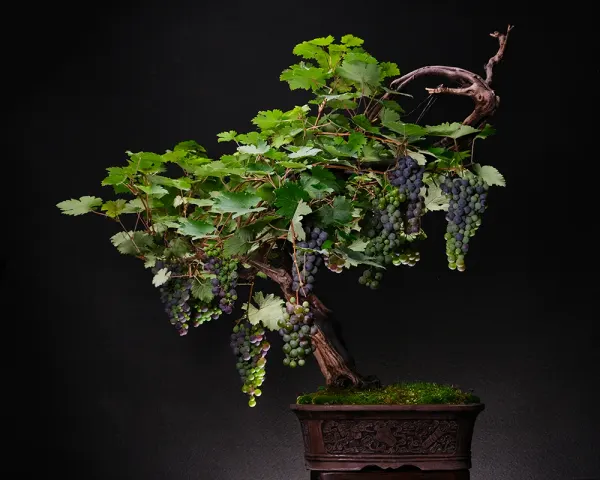
In the Han-kengai style, the tip of the canopy should be level with the surface of the pot or only slightly below it. Trees of this shape are often found on cliffs and on the steep banks of rivers and lakes. The tree grows upward only a little, while one or more branches bend downward.
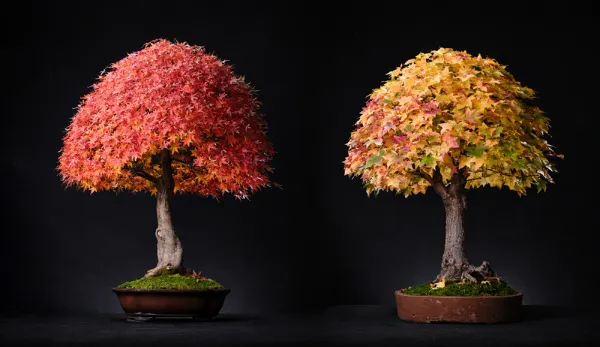
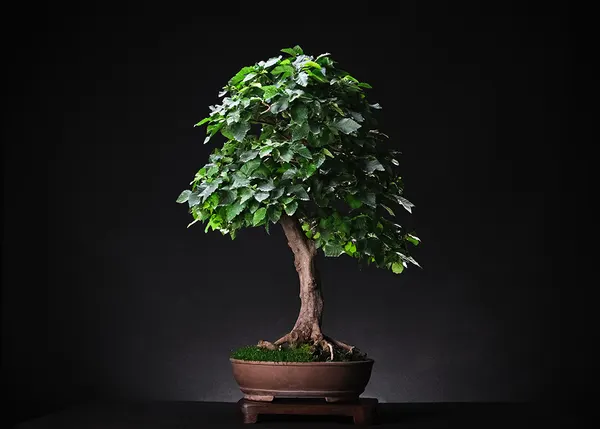
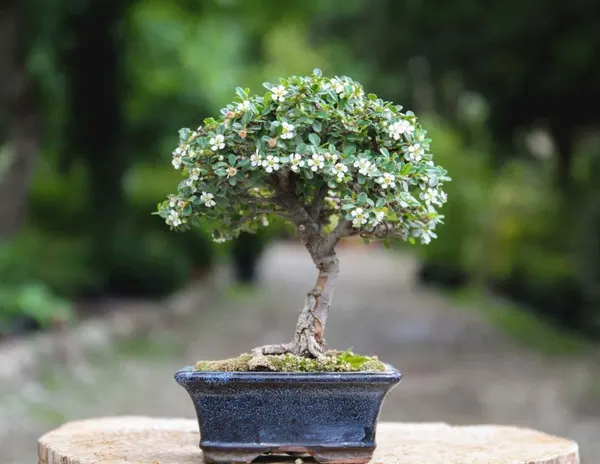
Broom style. Hokidachi (箒立ち)
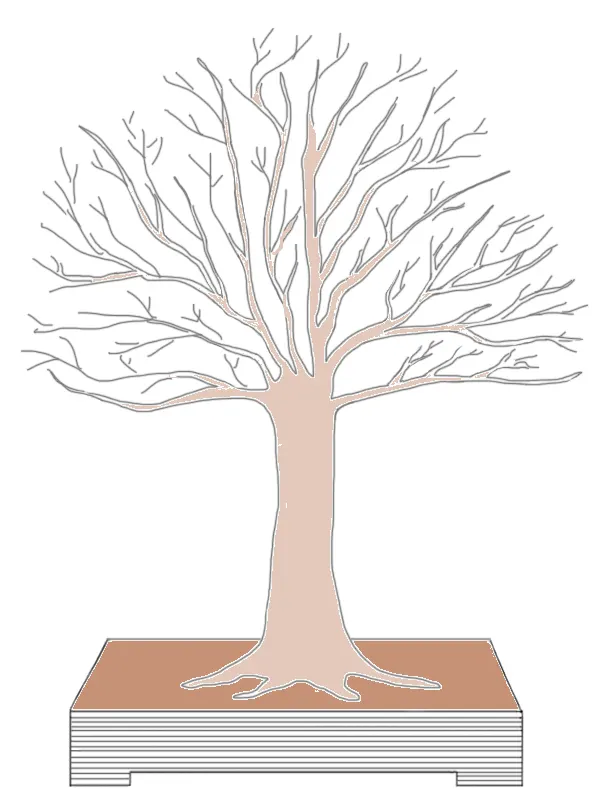
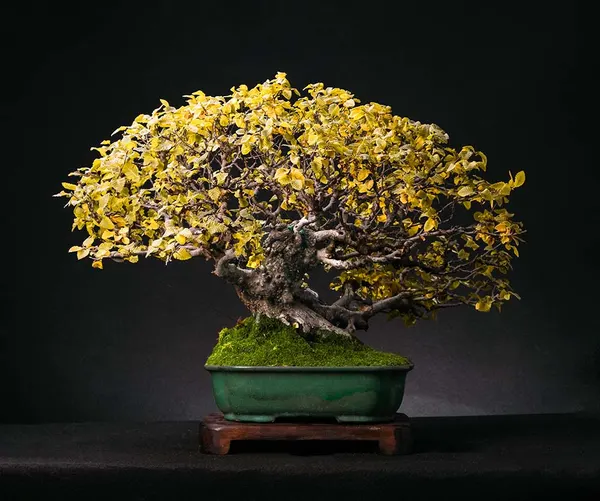
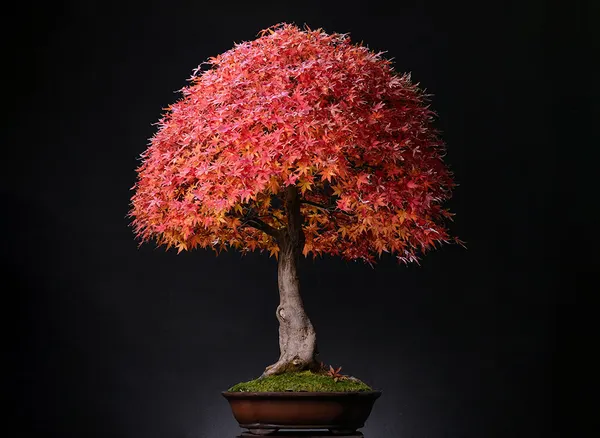
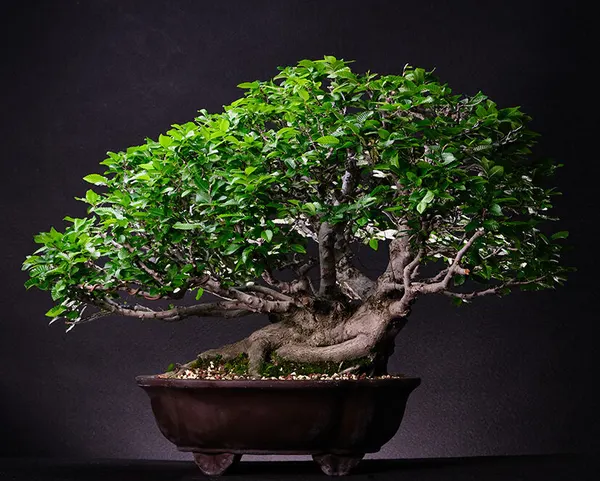
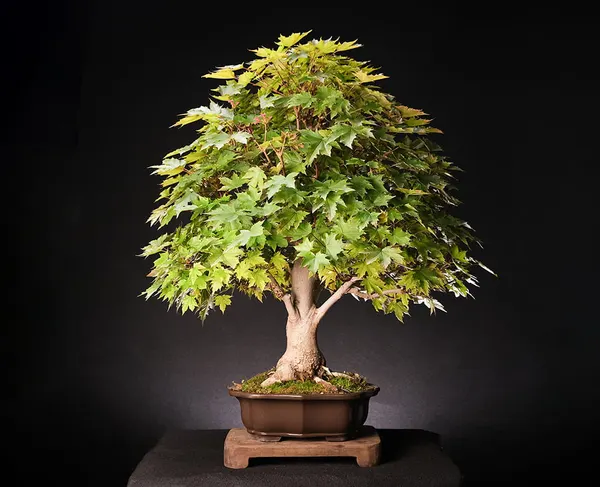
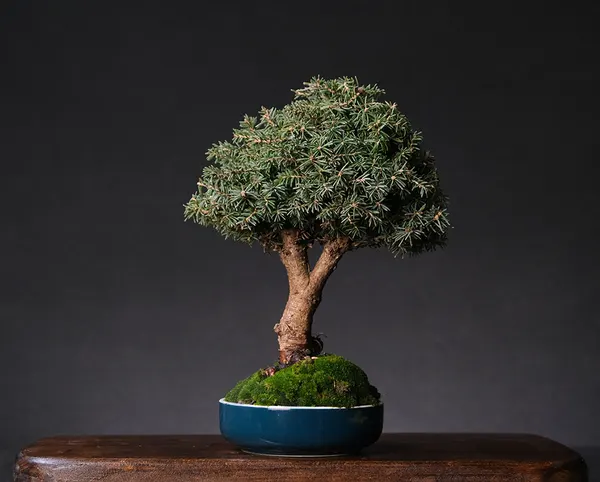
This style is suitable only for deciduous trees. No branches grow on the lower third of the tree’s height. The lower, branchless part of the trunk is perfectly straight. The tree has no apex. The branches are fine and very dense and grow in all directions; no single branch stands out, and all of them are roughly the same thickness. The canopy is hemispherical.
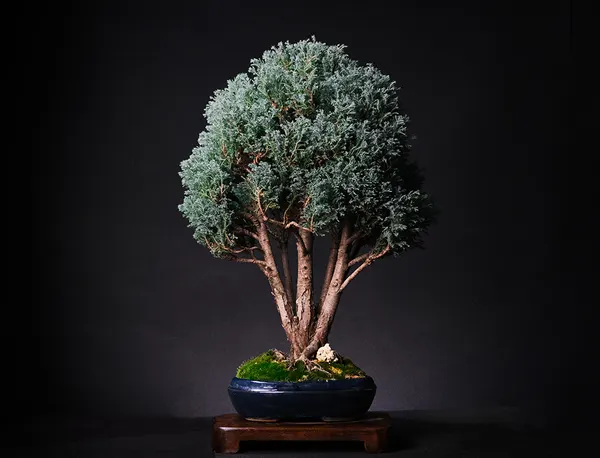
Multi-trunk. Kabudachi (株 立)
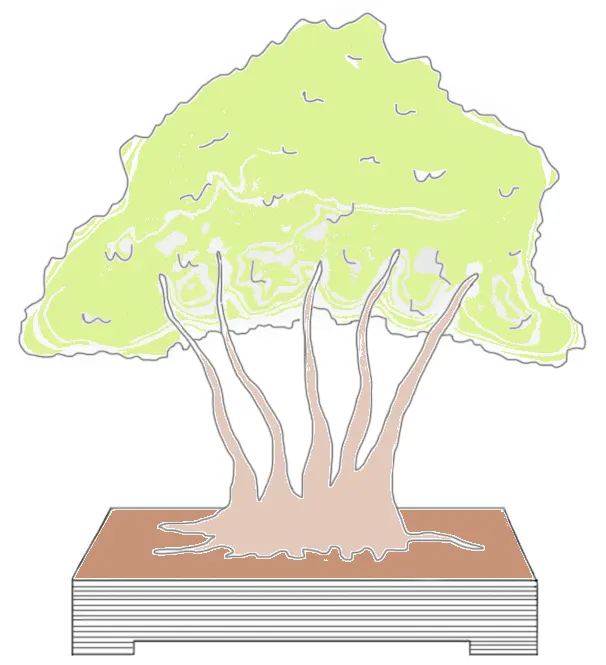
The trunk starts to divide close to the roots. Although a bonsai in this style has several trunks, its canopy should have the shape of a single, complete tree. In theory this style is the same as “Sokan”, but there must be 3 or more trunks.
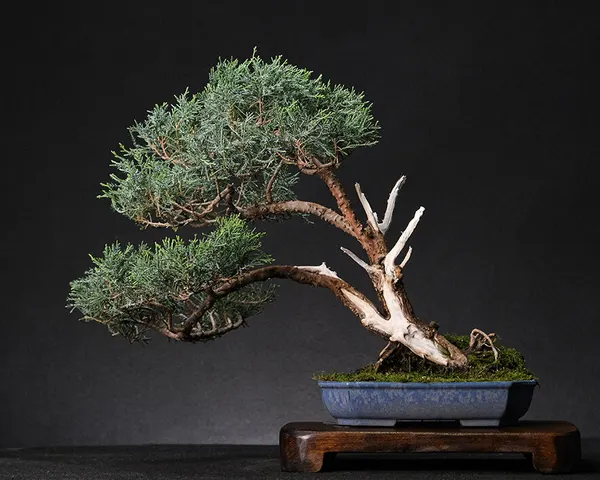
A tree leaning to one side under the influence of the wind. Fukinagashi (吹 き 流 し)
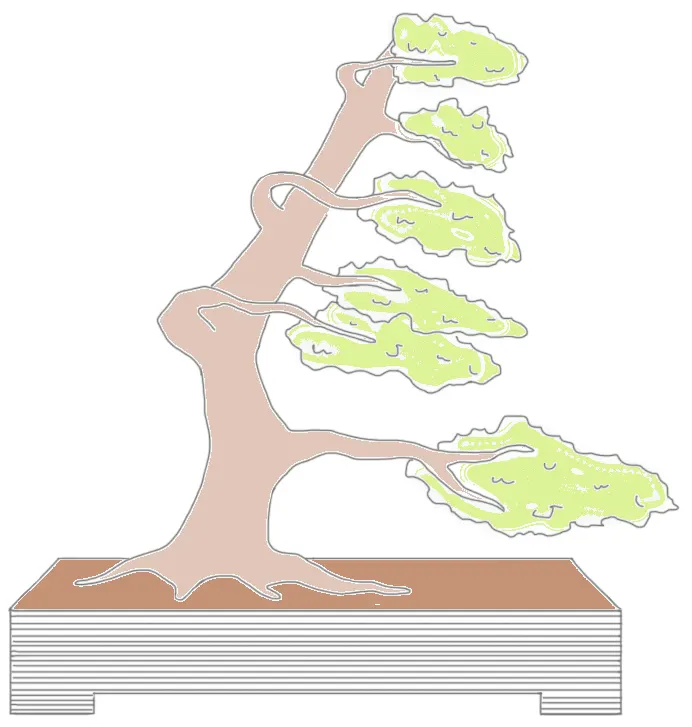
The trunk leans slightly to one side, and the branches grow in one direction only, the direction in which the trunk leans. Imagine a strong wind blowing and the tree bending the way the wind blows. Styling a bonsai in this style demands quite a lot of imagination and experience from the hobbyist.
Literati style. Bunjingi (文人木)
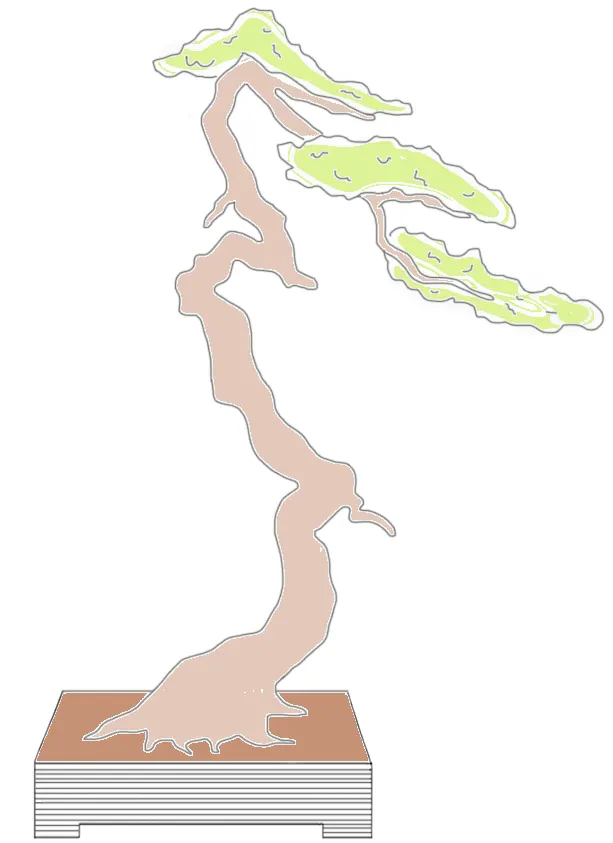
This style is suitable only for conifers. It has a tall, elegantly curving trunk. The canopy is formed only in the upper part of the tree. A literati bonsai has a very particular form. Only people who truly understand what bonsai is can really appreciate it.
The idea of the style is to create a tree that looks as though it grew in unfavorable conditions and had to make an enormous effort to survive.
A group of trees sharing a common root. Netsuranari (根 連 な り)
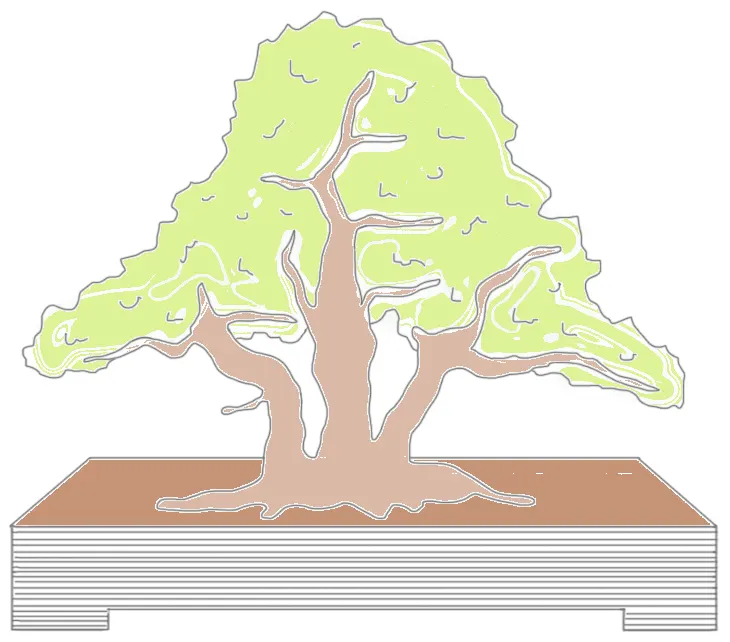
In the Netsuranari style the trees grow from a common root. In this style there should be an odd number of trunks: 3, 5, 7… The trees are arranged almost in a single line. The thickest trunk should be the tallest.
A tree laid in the ground. Ikadabuki (筏吹き)
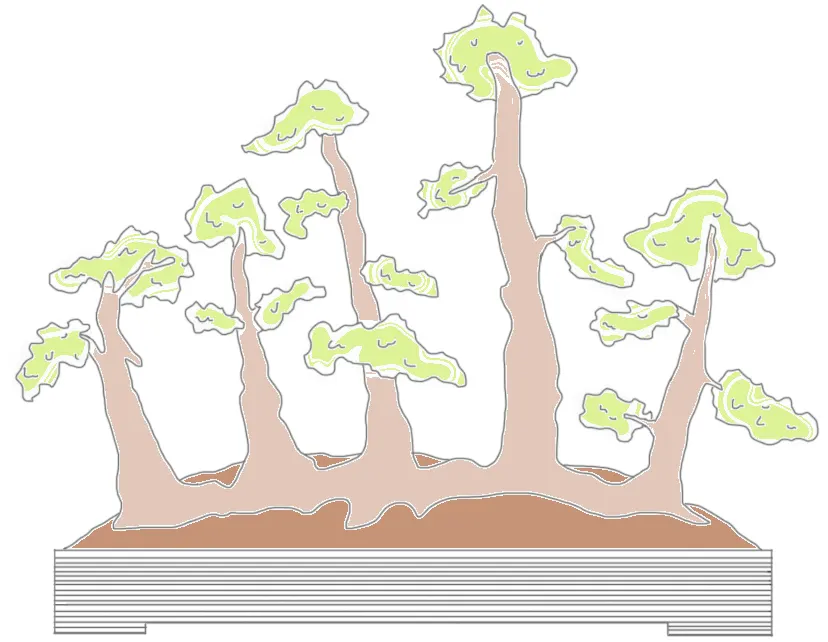
A tree with all the branches cut off on one side is laid horizontally in the soil, so that its trunk shows on the surface like a single root. The thickest and best-developed branch is the tallest.
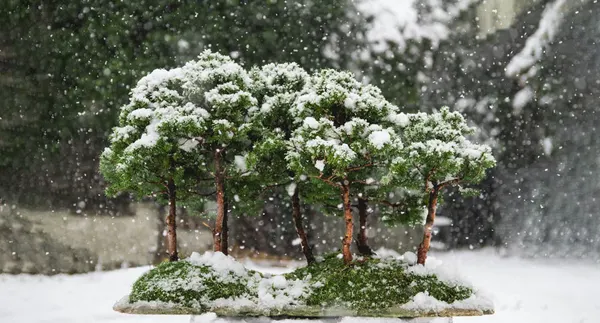
Forest. Yose-ue (寄せ植え)
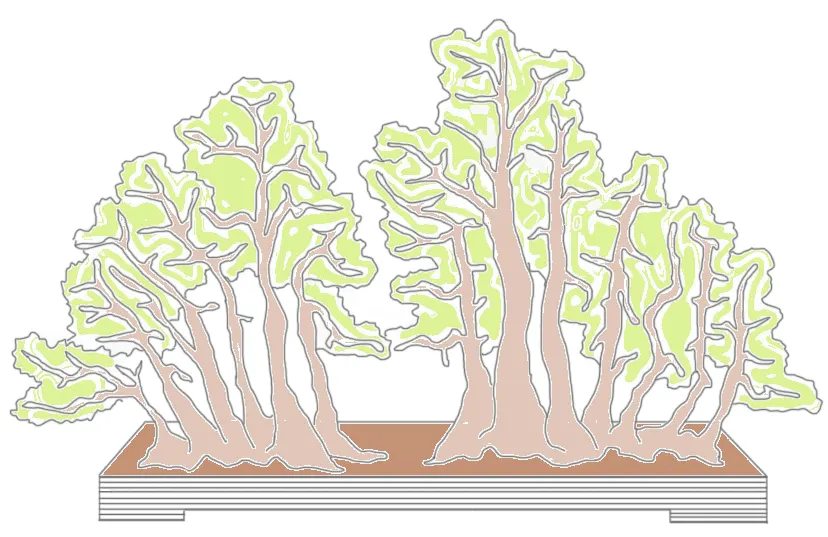
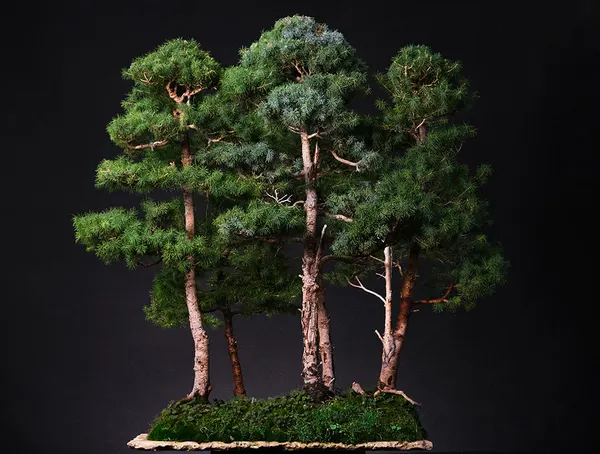
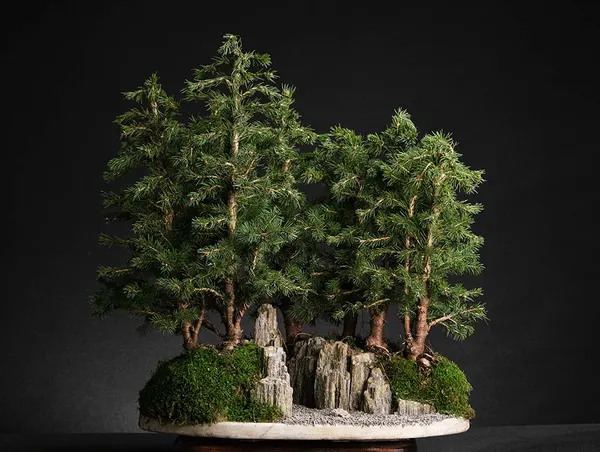
The Yose-ue style is a miniature model of a small forest. Groups of trees like this can be found in any climate zone. Making a bonsai in this style has its advantages. You can use 2–3-year-old young plants to create a Yose-ue. Beginners who are impatient to see the results of their work can start out in this style. Even young plants whose branches are poorly developed will do for it, since gaps can easily be filled by the branches of the other trees in the group.
It is best to choose trees of a single species, with small leaves or needles. A “mixed forest” is of course possible too, but then you will need to choose species with the same rate of growth and leaves of at least roughly the same size. Because of the miniature scale, a sharp contrast in leaf size makes this style unattractive. A combination of conifers and deciduous trees won’t work either. The number of young plants also matters. For a Yose-ue, an odd number of trees is chosen.
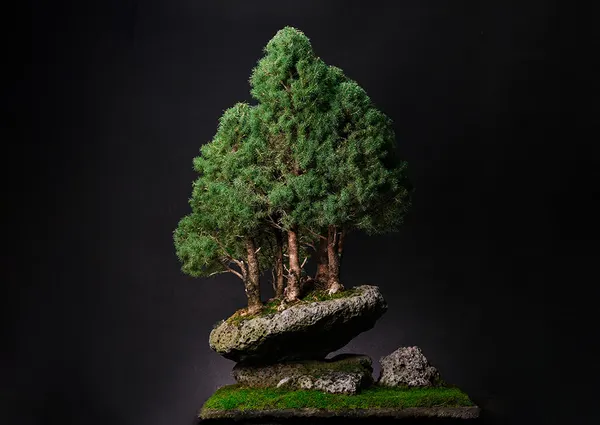
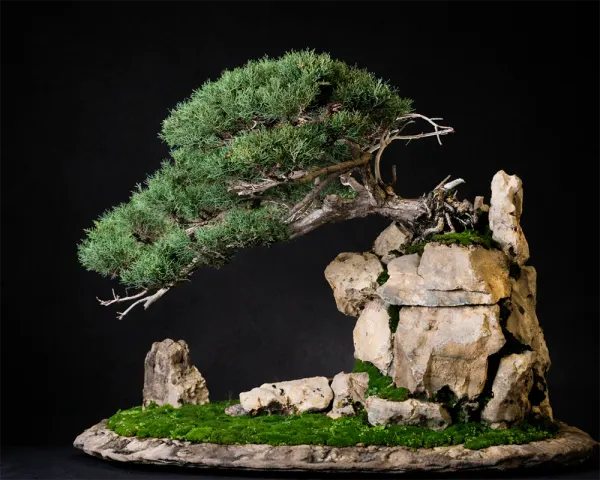
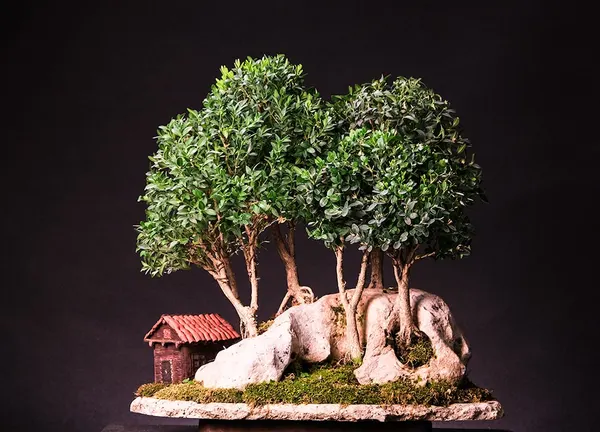
Composition on a rock. Ishitsuki (石付) and Seki-joju (石 上 樹)
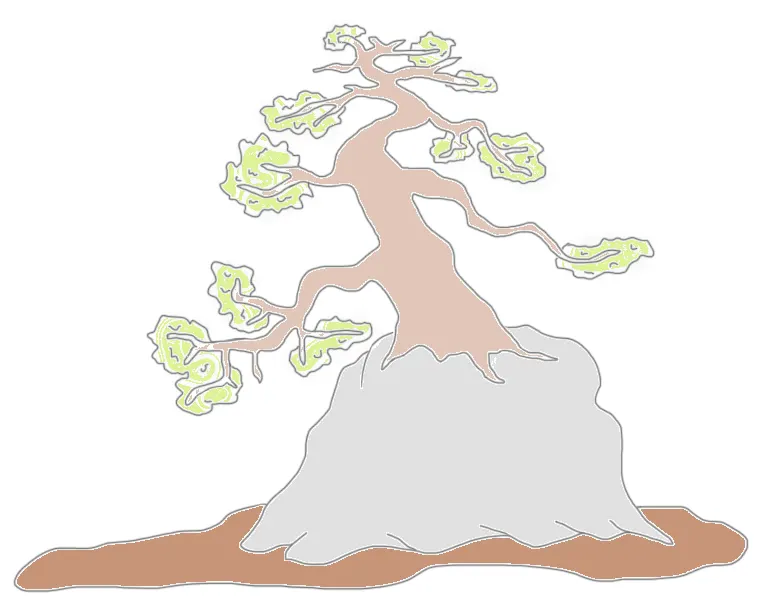
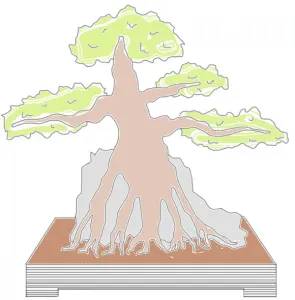
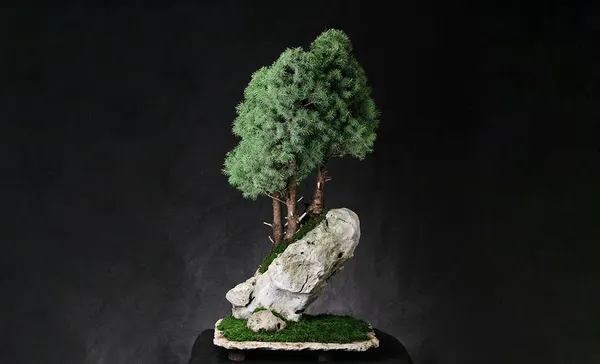
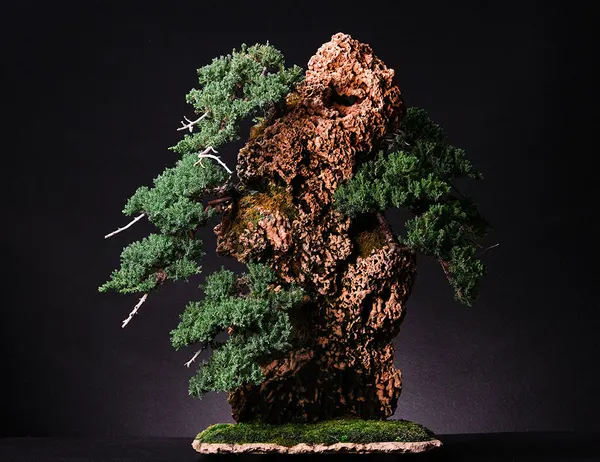
Ishitsuki is an imitation of a tree growing on a cliff. Two categories can be distinguished within this style: Ishitsuki — the tree’s roots grow entirely in the rock — and Seki-joju — the tree’s roots wrap around the surface of the rock. Like every style, a composition on a rock must look natural. When choosing a tree, keep in mind that the first branch should be close to the roots. In other styles the distance from the roots to the lowest branch is a third of the tree’s height; in the Ishitsuki and Seki-joju styles that space should be filled by the rock. The proportion between rock and tree depends entirely on the taste of the creator. To understand this style well, it is best to study carefully examples made by experienced bonsai artists. The rock should have holes, ridges and hollows; it should be clear that natural forces played a large part in “shaping” it. The rock chosen for this style should somehow call a cliff to mind. A river pebble or an artificially worked, smooth-surfaced stone is of no use whatsoever for this style of bonsai.
Miniature landscape. Saikei (栽景)
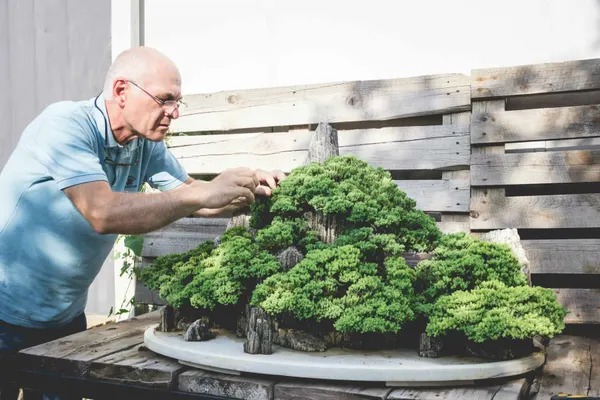
Saikei is the creation of a miniature landscape using stones, soil, water, herbaceous plants, moss and small trees. A saikei should give the viewer the illusion of a piece of nature in miniature, with all its elements in harmony. Every component must be placed in the container so that all the proportions are respected and the composition looks natural.
The soil, stones and plants are arranged to create a natural model of a seashore, a rolling meadow or a mountainous place. The trees themselves are much the same as in classical bonsai. Besides trees, various herbaceous plants are used as well, which further strengthens the illusion of a natural landscape. Saikei allows a freer choice of trees: you can even use quite small, 2–3-year-old young trees.
For a miniature landscape you can use small or medium-sized trees, both deciduous and coniferous. Fruiting trees are generally not used here, and the number of trees depends entirely on the taste of the creator. Unlike miniature forests, an even number of trees is acceptable. Quite a beautiful saikei can be made even from a single tree. You can choose trees of one species or of several.
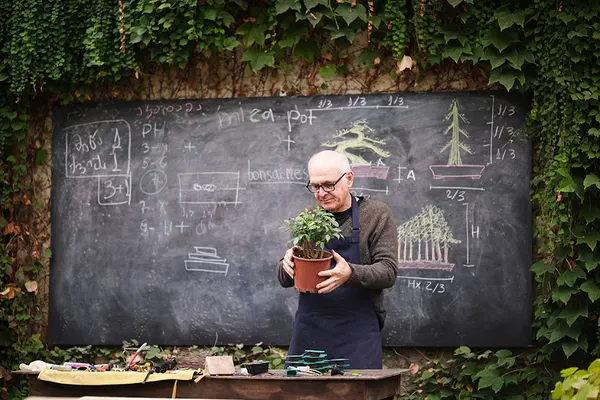
Thanks to Salome Lashkhi for creating the bonsai illustrations